Dry skin and dehydrated skin may look similar on the surface, but they need completely different nutritional support. Dry skin lacks oil, while dehydrated skin lacks water — meaning the foods that help each condition work in very different ways. Understanding the difference helps you nourish the skin from the inside out and support long‑term barrier health.
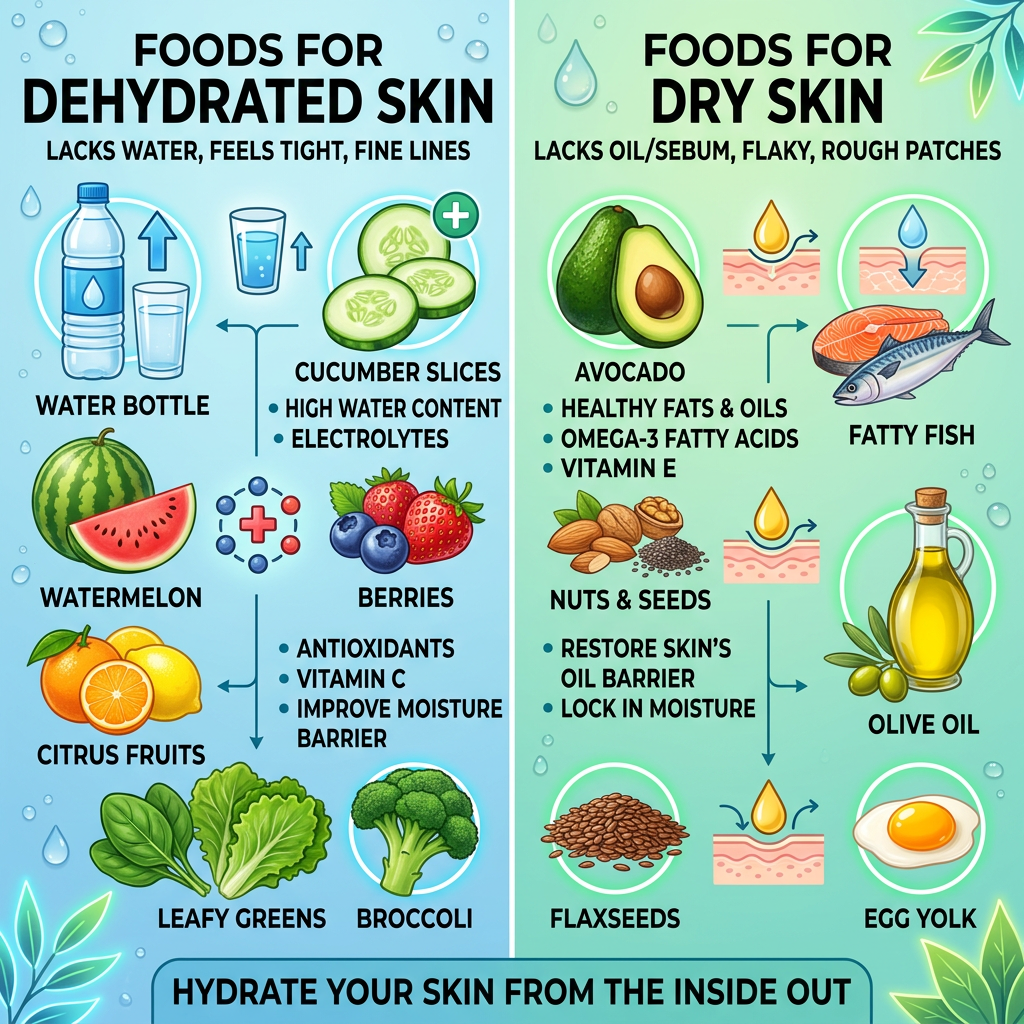
Foods for Dehydrated Skin (Needs Water + Electrolytes)
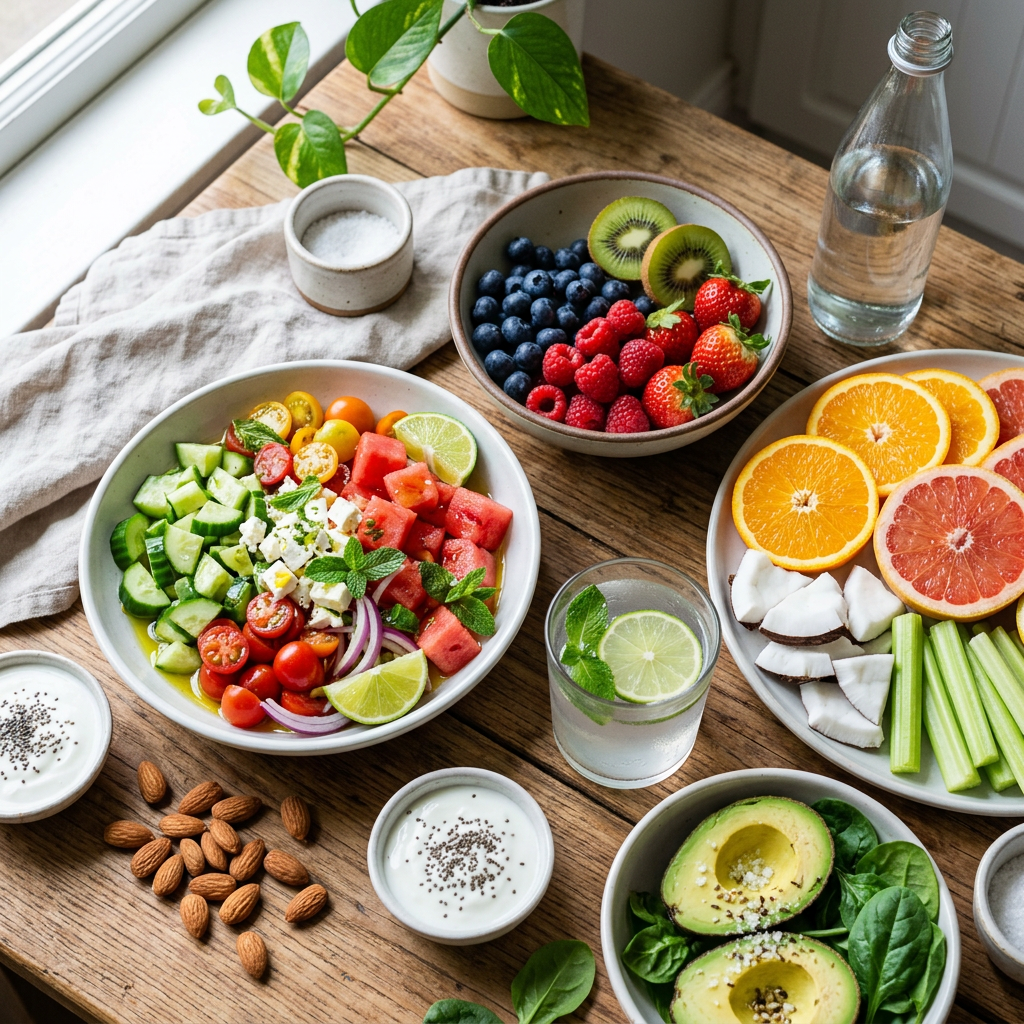
Dehydrated skin benefits most from foods that restore water levels, support electrolyte balance, and help the skin hold onto moisture. These foods hydrate from within and improve plumpness, bounce, and comfort.
- Water‑Rich Fruits: Watermelon, strawberries, cucumber — high water content + electrolytes.
- Citrus Fruits: Oranges, grapefruit — vitamin C supports moisture retention.
- Leafy Greens: Spinach, kale — water + minerals + antioxidants.
- Tomatoes: Lycopene helps protect against environmental dehydration.
- Coconut Water: Electrolytes restore hydration quickly.
- Aloe Drinks (unsweetened): Naturally soothing and hydrating.
- Berries: Antioxidants help reduce dullness linked to dehydration.
These foods help replenish water, improve glow, and support the moisture barrier’s ability to hold hydration.
Foods for Dry Skin (Needs Oil + Healthy Fats)
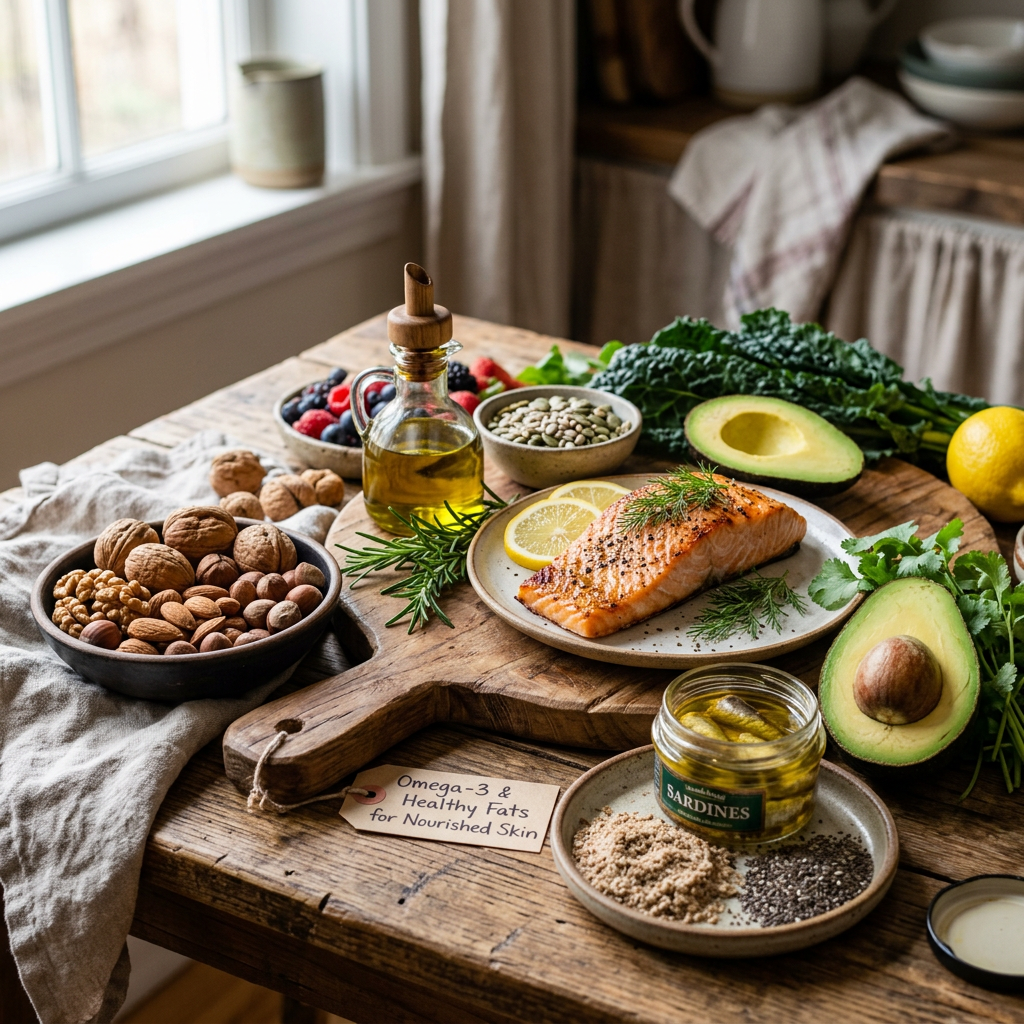
Dry skin needs foods that nourish the lipid barrier, replenish oils, and support long‑term softness. These foods help reduce flakiness, roughness, and tightness.
- Avocado: Healthy fats + vitamin E strengthen the barrier.
- Olive Oil: Monounsaturated fats improve moisture retention.
- Fatty Fish: Salmon, mackerel — omega‑3s replenish the lipid layer.
- Nuts & Seeds: Walnuts, almonds, flaxseed — fats + vitamin E.
- Sweet Potatoes: Beta‑carotene supports natural oil production.
- Eggs: Protein + fats help repair the skin’s structure.
- Coconut: Medium‑chain fats nourish dry skin from within.
These foods help restore softness, flexibility, and long‑lasting comfort.
Takeaway
- Dehydrated skin = needs water.
- Dry skin = needs oil.
Both benefit from antioxidants, but their nutritional needs are fundamentally different — and supporting them properly makes every skincare routine work better.
I’m Stacey Hobbs, thanks for reading Face by Stace! Until next time.
do you feel fabulous today?

