Prohibition in Canada didn’t unfold the way it did in the United States. Instead of a single national ban, Canada’s restrictions varied province by province, creating a patchwork of rules that shaped nightlife, fashion, and beauty in unique ways.
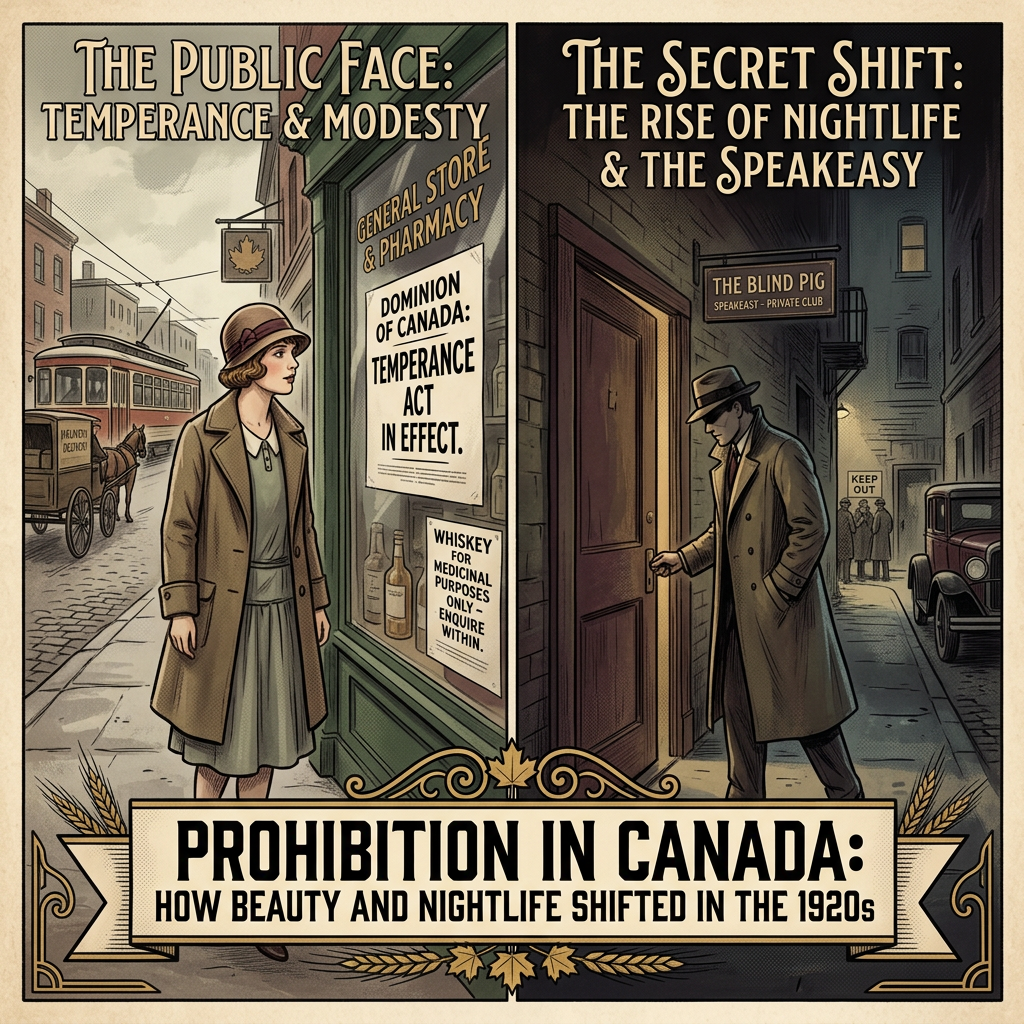
By the early 1920s, most provinces had some form of alcohol prohibition — but enforcement and duration differed dramatically. Québec ended Prohibition in 1919, becoming the country’s nightlife capital. Montréal’s cabarets, jazz clubs and dance halls flourished, attracting Americans who crossed the border for legal drinking and a more glamorous social scene. This made Montréal a beauty hub: dramatic makeup, French‑influenced fashion and bold evening looks.
Other provinces, like Ontario and the Prairies, maintained stricter bans longer. Speakeasies existed but Canadian flappers in these regions tended to adopt softer, more “respectable” beauty — waved bobs, lighter rouge and modest dresses. Social norms were conservative and beauty reflected that restraint.
The result was a divided beauty culture. Montréal: smoky eyes, sculpted brows, sequins, nightlife glamour. Toronto, Winnipeg, Calgary: softer waves, lighter makeup, more modest silhouettes.
Prohibition didn’t suppress beauty in Canada — it regionalized it. Each province developed its own version of the flapper aesthetic, shaped by law, culture and the freedom (or restriction) of the night.
I’m Stacey Hobbs, thanks for reading Face by Stace! Until next time.
do you feel fabulous today?

