Cold cream is often credited to Galen in the 2nd century CE, but its origins reflect a much broader Roman fascination with texture, luxury, and skin preservation. Roman women — and many men — lived in a climate of sun, dust, and heat, making moisturization essential. Early cold‑cream‑like formulas emerged from this need: soft, cooling blends meant to soothe, cleanse, and protect the skin.
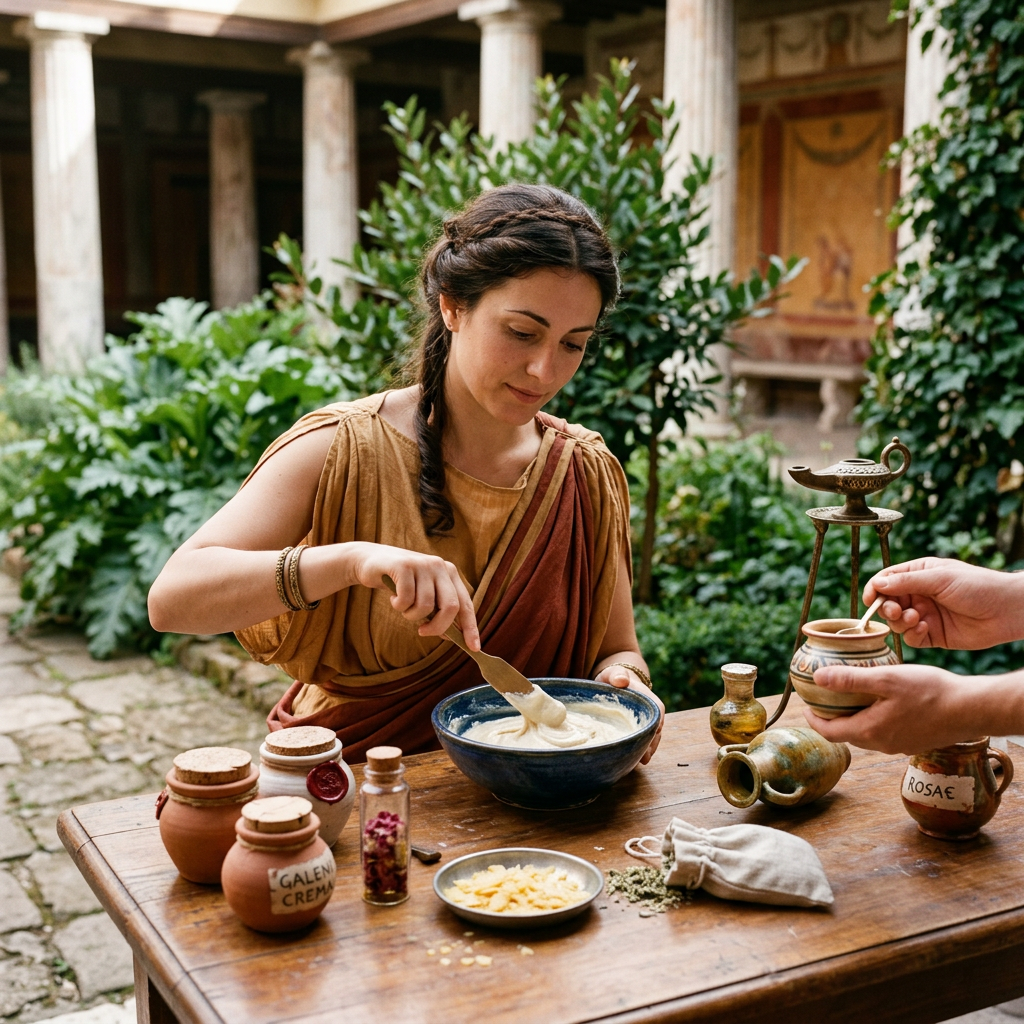
Galen’s formula became the most famous. He combined olive oil, beeswax, and rosewater, creating a cream that emulsified into a smooth, cooling balm. This was revolutionary. The mixture softened the skin, removed dirt and pigments, and left a delicate floral veil. It was both functional and sensorial — a hallmark of Roman beauty culture.
But Galen didn’t invent the concept from nothing. Roman households already used variations of oil‑and‑wax balms, often infused with herbs like chamomile, myrtle, or lavender. These early creams acted as protectants against the elements and as bases for cosmetics. Wealthier Romans stored their creams in carved alabaster or glass jars, turning skincare into a symbol of refinement.
What makes Roman cold creams compelling today is their simplicity. The ingredients — oil, wax, water — mirror modern balm cleansers and moisturizers. Their purpose remains unchanged: soften, cleanse, restore.
Ancient Rome reminds us that cold cream isn’t just a product; it’s a lineage. A ritual that has travelled through centuries, evolving but never disappearing — proof that some beauty traditions are truly timeless.
I’m Stacey Hobbs, thanks for reading Face by Stace! Until next time.
do you feel fabulous today?

