Rococo beauty culture, flourishing in the mid‑18th century, was defined by softness, sensuality, and indulgence. While Georgian cosmetics leaned theatrical, Rococo skincare focused on refinement — creating a complexion that appeared delicate, luminous, and effortlessly pampered. Beneath the powdered wigs and vivid rouge was a surprisingly gentle approach to skin care.
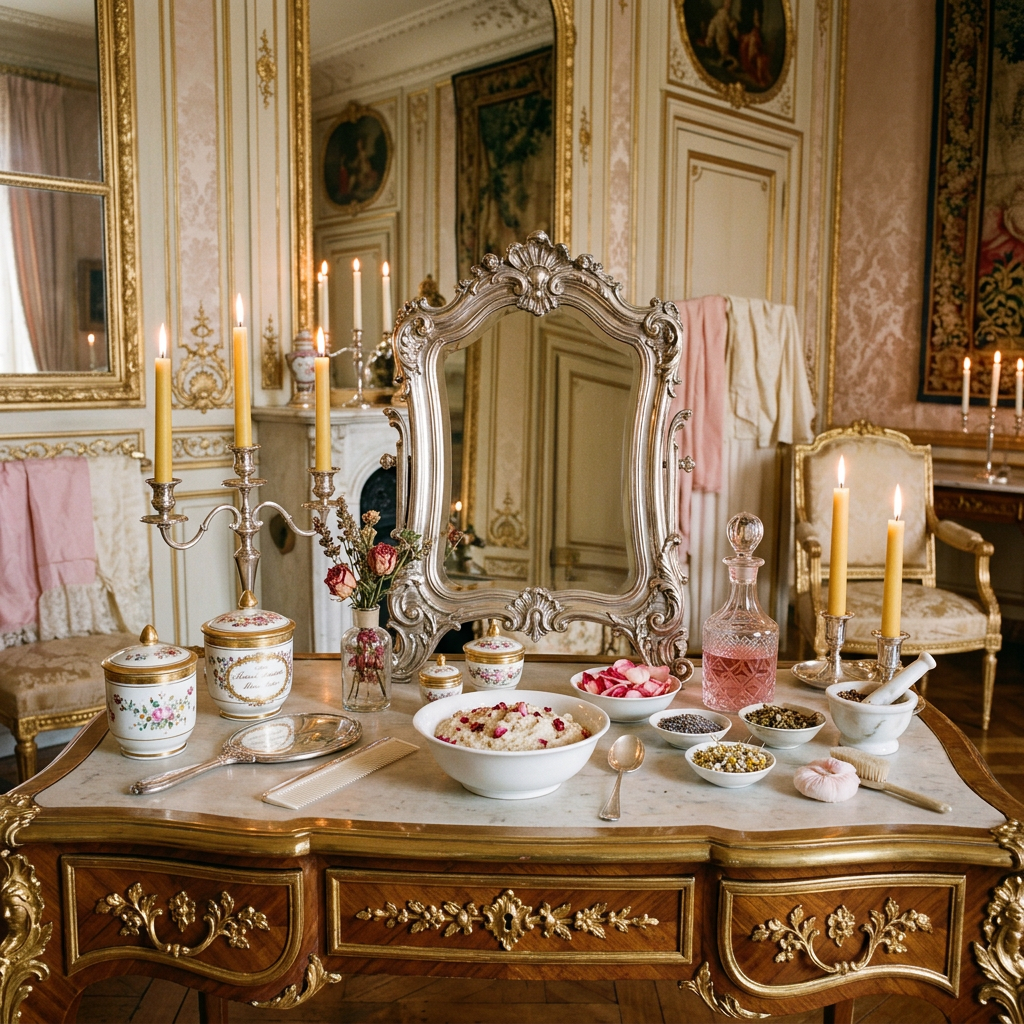
Moisturizing was central. Women used almond oil, rose oil and cold‑cream‑like balms to soften the skin and counteract the dryness caused by heavy powders. These emollients were massaged into the face at night, creating a ritual that felt intimate and restorative. Rosewater, a favourite across Europe, acted as a toner to refresh the complexion and add a subtle floral veil.
Masks were crafted from bread soaked in milk, mashed berries, or herbal infusions — early attempts at soothing and brightening treatments. Honey, a long‑standing beauty ingredient, was used to hydrate and calm irritation. Even the aristocracy embraced these simple, kitchen‑based remedies, proving that Rococo beauty blended luxury with practicality.
Bathing rituals also shaped Rococo skincare. Warm baths infused with herbs, citrus peels, or floral petals prepared the skin for oils and powders. These baths weren’t merely hygienic; they were sensory experiences that aligned with Rococo’s love of pleasure and elegance.
Rococo skincare reminds us that historical beauty wasn’t only about spectacle. Beneath the ornate fashion and powdered faces was a culture that valued softness, fragrance, and gentle care. Their rituals echo today’s desire for skincare that feels both effective and indulgent — beauty as a tactile, sensory escape.
I’m Stacey Hobbs, thanks for reading Face by Stace! Until next time.
do you feel fabulous today?

