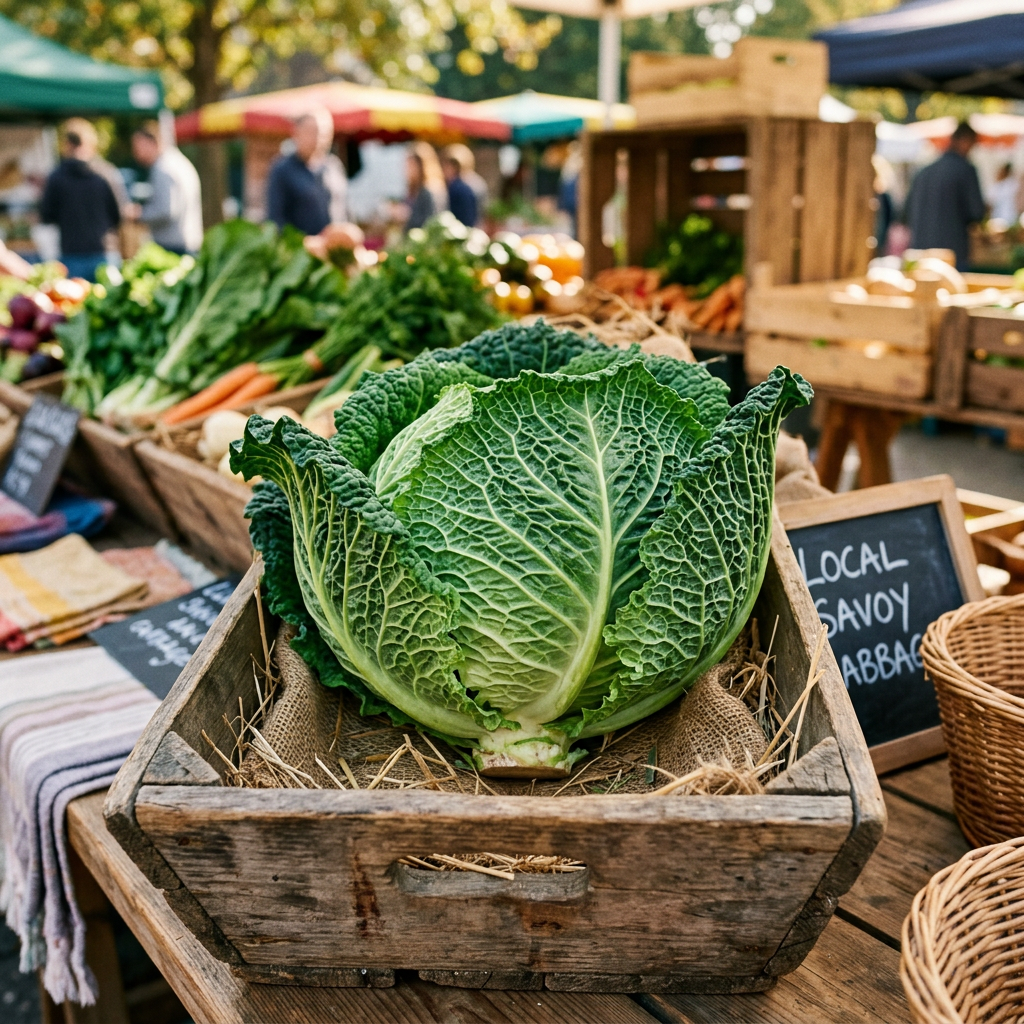
Cabbage is one of history’s most unassuming beauty foods — a humble vegetable with a surprisingly rich cultural lineage. Long before it appeared in modern soups and slaws, cabbage was cultivated by both the Ancient Greeks and Romans, who valued it not only as nourishment but as a restorative plant with medicinal and cosmetic potential. Early texts describe cabbage as a “strengthening” vegetable, believed to support vitality, digestion and overall resilience.
By the Middle Ages, cabbage had become a staple across Europe. Its ability to thrive in cool climates made it essential for winter survival, and its nutrient density earned it a reputation as a protective food. Rich in vitamin C, vitamin K, and antioxidants, cabbage supported immunity and skin health long before those terms existed. Healers used cabbage leaves in poultices to soothe inflammation, while cooks relied on its versatility to create broths that nourished both body and complexion.
Cabbage’s beauty relevance continues today. Its antioxidants help defend the skin from environmental stressors, while its fibre supports the gut‑skin connection — a concept ancient cultures intuitively understood. Even fermented cabbage, like sauerkraut and kimchi, carries centuries of tradition and modern probiotic benefits.
What makes cabbage historically compelling is its dual identity: practical yet powerful, simple yet deeply supportive. Across eras, it has remained a quiet cornerstone of nourishment and wellness. In beauty history, cabbage stands as a reminder that radiance often begins with the most un-pretentious ingredients.
I’m Stacey Hobbs, than

