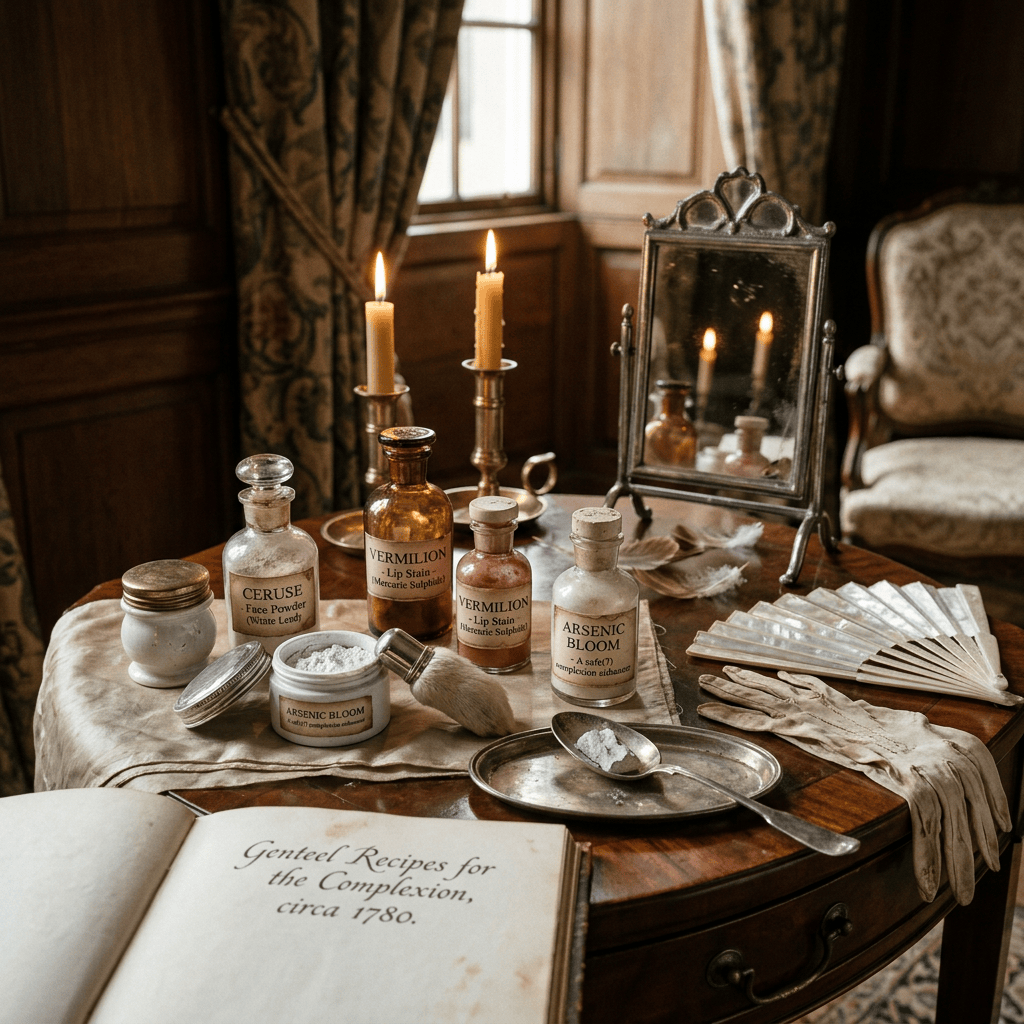
Georgian beauty culture was dazzling on the surface and dangerous underneath. The 18th century embraced artifice with enthusiasm — pale skin, vivid rouge, and powdered hair — but the ingredients behind these looks carried risks that modern readers find shocking. Beauty was a performance and the cost was often health.
The most notorious cosmetic was white lead, used to create the era’s signature porcelain complexion. Women and men applied lead‑based creams and powders daily, unaware that the substance slowly poisoned the body. Lead caused hair loss, tooth decay, tremors, and severe skin damage, yet its smooth, opaque finish made it irresistible in a society that equated pallor with refinement.
Rouge, though glamorous, was equally hazardous. Many formulas relied on vermilion, a mercury‑sulfide pigment that delivered a brilliant red flush. Mercury exposure led to mood changes, neurological decline, and chronic illness. Still, heavy rouge remained essential for court appearances, salons, and social gatherings — a visual shorthand for vitality and flirtation.
Even eye cosmetics carried risks. Kohl mixtures sometimes included lead or antimony, while hair powders contained irritants that caused respiratory issues. Perfumed pomatums, used to style wigs, could harbour mould or attract insects.
Georgian beauty was built on contradiction: elegance achieved through ingredients that undermined health. These toxic cosmetics remind us that historical beauty often demanded sacrifice. Beneath the powdered glow and painted cheeks lay a truth the era rarely acknowledged — glamour came with a dangerous price.

