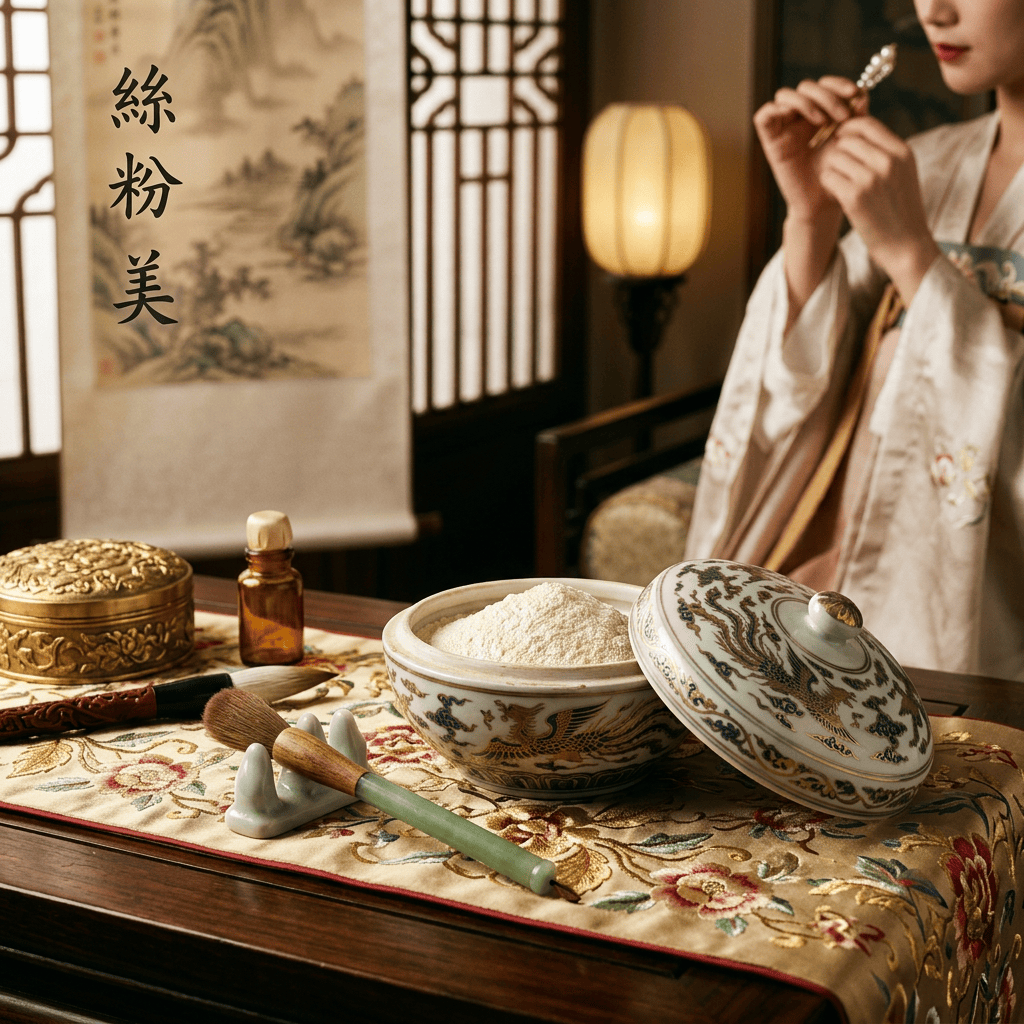
Silk powder was one of the most refined beauty ingredients in Ancient China — a luxurious cosmetic that embodied softness, elegance, and social status. Made by finely milling silk fibres into a delicate, airy powder, it created a smooth, brightened finish that felt weightless on the skin. Silk powder wasn’t just makeup; it was a symbol of grace.
Women across the Han, Tang, and Song dynasties used silk powder as a finishing cosmetic. Applied after herbal creams or light oils, it set the complexion, reduced shine, and left a velvety texture that reflected the era’s ideal of porcelain‑soft skin. Its natural proteins helped absorb excess moisture while maintaining a gentle glow, making it both practical and aesthetic.
Silk powder was especially popular among elite women and performers. Court ladies prized its cooling sensation during hot seasons, while dancers and entertainers used it to create a flawless base under rouge and eye pigments. The powder’s subtle luminosity aligned with Chinese beauty philosophy — radiance should appear effortless, never heavy.
Its symbolism ran deeper. Silk represented refinement, purity, and high status. To wear silk on the skin was to embody elegance itself. Stored in carved boxes or porcelain jars, silk powder transformed daily grooming into ritual.
Ancient Chinese silk‑powder cosmetics reveal a culture that valued softness, subtlety, and artistry. Beauty wasn’t loud — it was delicate, intentional and deeply tied to identity.
I’m Stacey Hobbs, thanks for reading Face by Stace! Until next time.
do you feel fabulous today?

