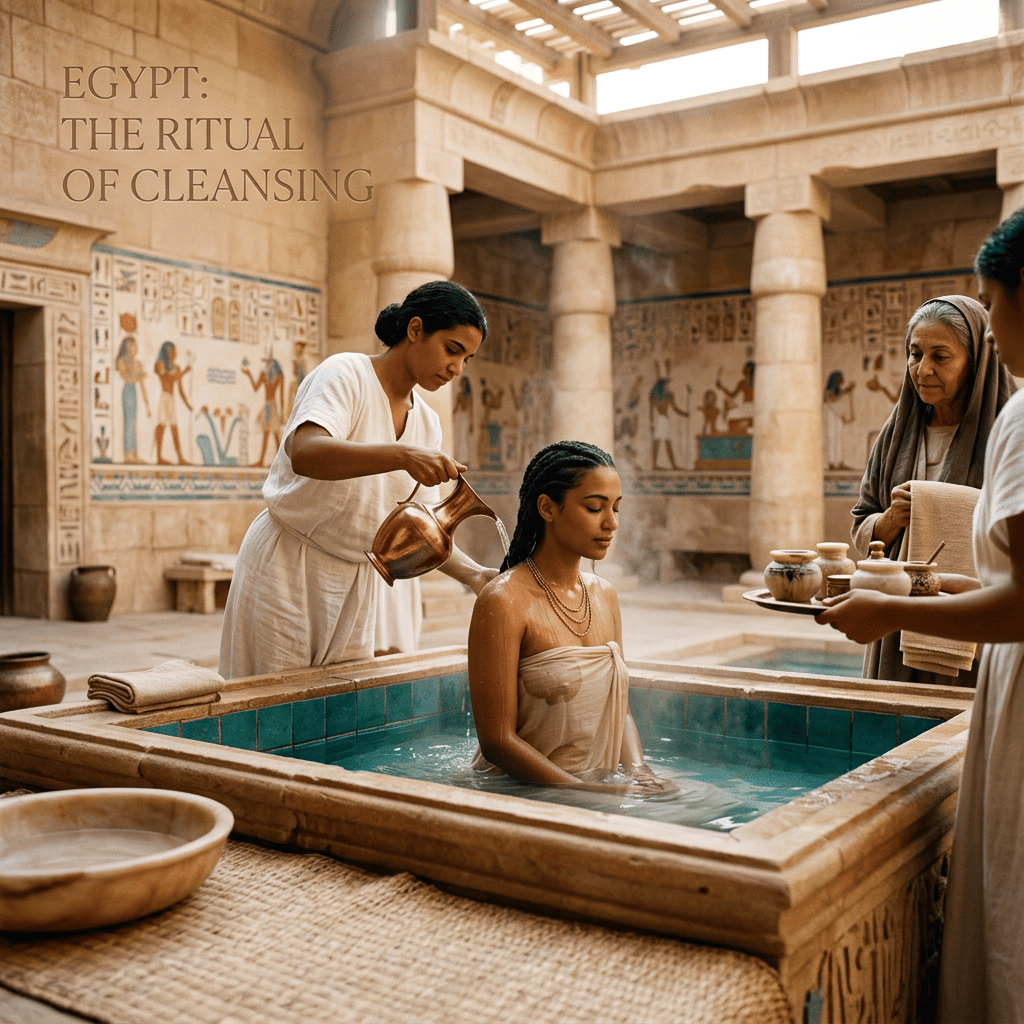
Bathing in Ancient Egypt was a ritual of purity, wellness, and beauty — a daily practice shaped by climate, culture, and spirituality. Egyptians believed cleanliness connected the body to the divine, and their cleansing routines were far more sophisticated than many imagine.
The foundation of Egyptian bathing was natron, a naturally occurring mineral blend of sodium carbonate, bicarbonate, and salt. Used as a cleanser, deodoriser, and exfoliant, natron removed oils, softened the skin, and left a matte, fresh finish. Mixed with water, it became a gentle paste used on the face and body.
Milk and honey baths were another luxurious ritual. Milk offered lactic‑acid exfoliation, while honey soothed and hydrated — a combination that left the skin smooth and radiant. Wealthier Egyptians added herbs, lotus petals, or essential oils to their bathwater, turning cleansing into a sensory experience.
Sand served as an early exfoliant, especially for labourers and travellers. Its fine grains buffed away sweat and dust, preparing the skin for oils. After bathing, Egyptians applied moringa, castor, or balanos oil to moisturize and protect against the desert sun.
Bathing also held spiritual meaning. Priests performed purification baths before rituals, and households cleansed before celebrations or temple visits. Clean skin symbolized respect, renewal, and readiness.
Egyptian bathing and cleansing rituals reveal a culture that understood beauty as holistic — a blend of hygiene, nourishment and sacred intention.
I’m Stacey Hobbs, thanks for reading Face by Stace! Until next time.
do you feel fabulous today?

