Lip and cheek colour in Ancient Egypt was vibrant, symbolic, and deeply tied to identity. Egyptians loved warmth in the complexion — a look that signalled vitality, health, and sensuality. Their pigments came from earth materials, botanicals and carefully crafted balms that blended beauty with ritual.
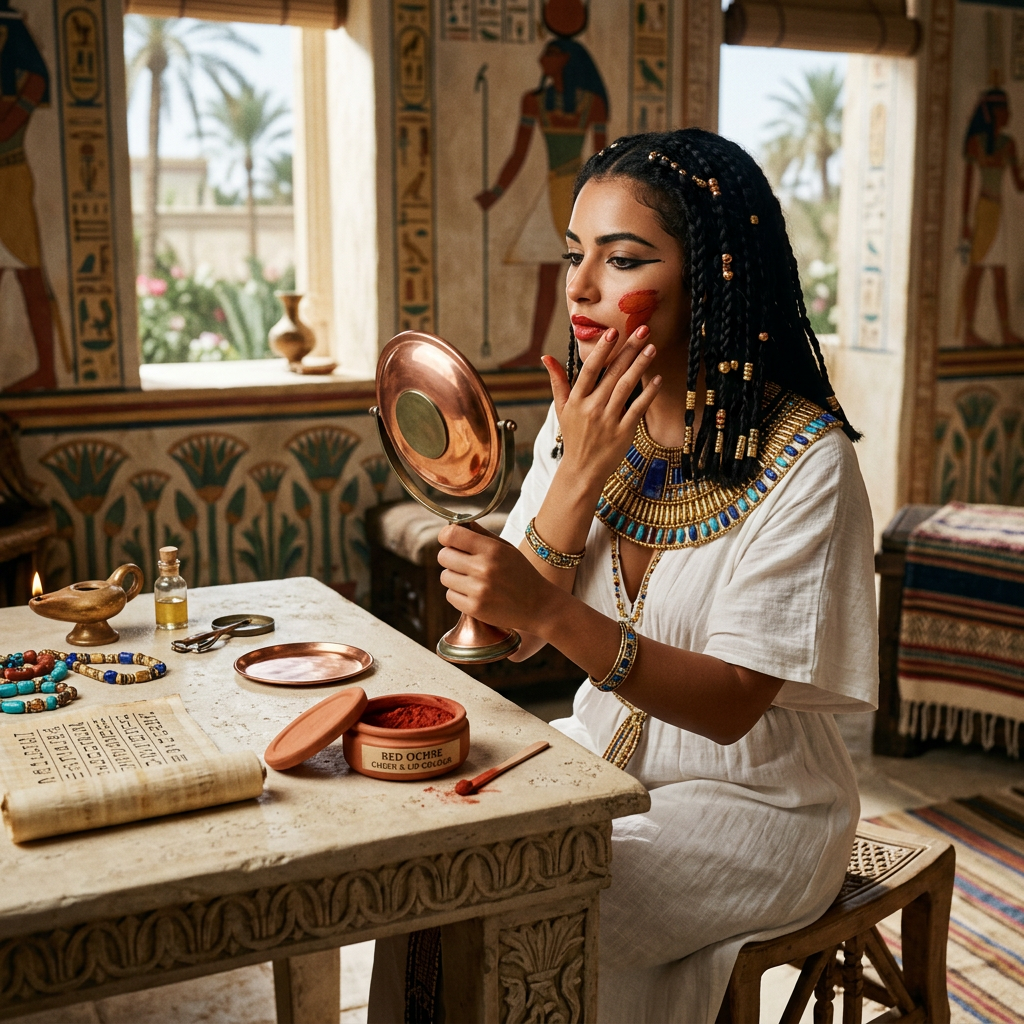
The most common pigment was red ochre, a naturally occurring iron‑rich clay that produced earthy reds ranging from terracotta to deep brick. Mixed with water, oils, or beeswax, ochre became a smooth paste applied to the lips and cheeks. Its colour echoed the life‑giving power of the Nile and the sun, making it both aesthetic and symbolic.
Wealthier Egyptians used more refined blends. Carob, berries, and pomegranate offered softer, fruit‑based tints, while beeswax added shine and moisture. Some balms included resin or gum for longer wear — the ancient version of a long‑lasting lip stain.
Colour also carried meaning. A warm flush represented youth, fertility, and divine favour. In art, goddesses and noblewomen were often depicted with softly tinted cheeks, reinforcing the association between colour and beauty. Even men used subtle ochre tones for ceremonies or public appearances, showing that cosmetics were not gender‑restricted.
Cosmetic palettes, jars, and applicators elevated the ritual, turning pigment into artistry. Applying colour wasn’t vanity — it was expression, symbolism, and self‑presentation.
Ancient Egyptian lip and cheek colour reveals a culture that understood beauty as both natural and meaningful. Their pigments were simple, sensory and timeless.
I’m Stacey Hobbs, thanks for reading Face by Stace! Until next time.
do you feel fabulous today?

