Kohl was the most iconic element of Ancient Egyptian beauty — a cosmetic that blended aesthetics, medicine, and powerful spiritual meaning. Egyptians lined their eyes with bold strokes of black galena or green malachite, creating the almond‑shaped silhouette seen in tomb paintings and temple reliefs. This look wasn’t simply fashionable; it was protective, symbolic and deeply cultural.
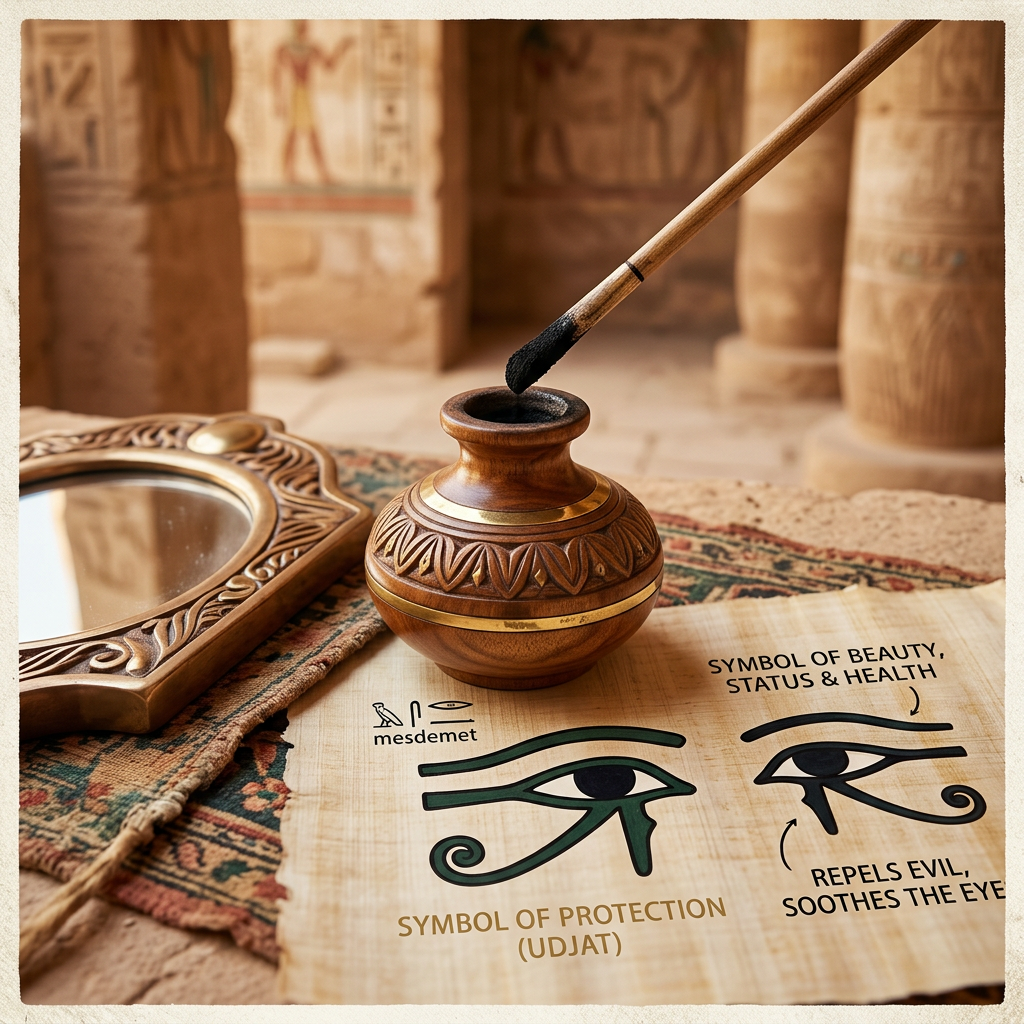
Practically, kohl shielded the eyes from the desert sun, reducing glare much like modern athletic eye‑black. Its mineral composition also offered antimicrobial benefits, helping prevent infections caused by dust, sand, and intense heat. Beauty and health were intertwined.
Symbolically, kohl connected the wearer to divine protection. The elongated eye shape echoed the Eye of Horus and Eye of Wadjet, sacred symbols associated with healing, rebirth, and safeguarding against evil. Lining the eyes wasn’t just cosmetic — it was a ritual invoking spiritual strength.
Green malachite carried its own meaning, linked to regeneration and the fertile Nile. Black galena represented power, clarity, and the ability to ward off harm. Men, women, and children wore kohl daily, demonstrating that beauty in Egypt was universal and functional.
Kohl applicators, palettes, and jars were crafted with care, turning makeup into an art form. Applying kohl was a moment of intention — a blend of protection, identity and divine connection.
Ancient Egyptian eye makeup reveals a culture where beauty was never superficial. It was symbolic, medicinal and profoundly spiritual.
I’m Stacey Hobbs, thanks for reading Face by Stace! Until next time.
do you feel fabulous today?

