Perfume in Ancient Egypt was more than fragrance — it was identity, ritual, and spiritual expression. Egyptians believed scent connected the physical body to the divine, and their perfumes were crafted with extraordinary care. Unguents, the thick, aromatic balms used for skin and hair, formed the foundation of Egyptian beauty culture.
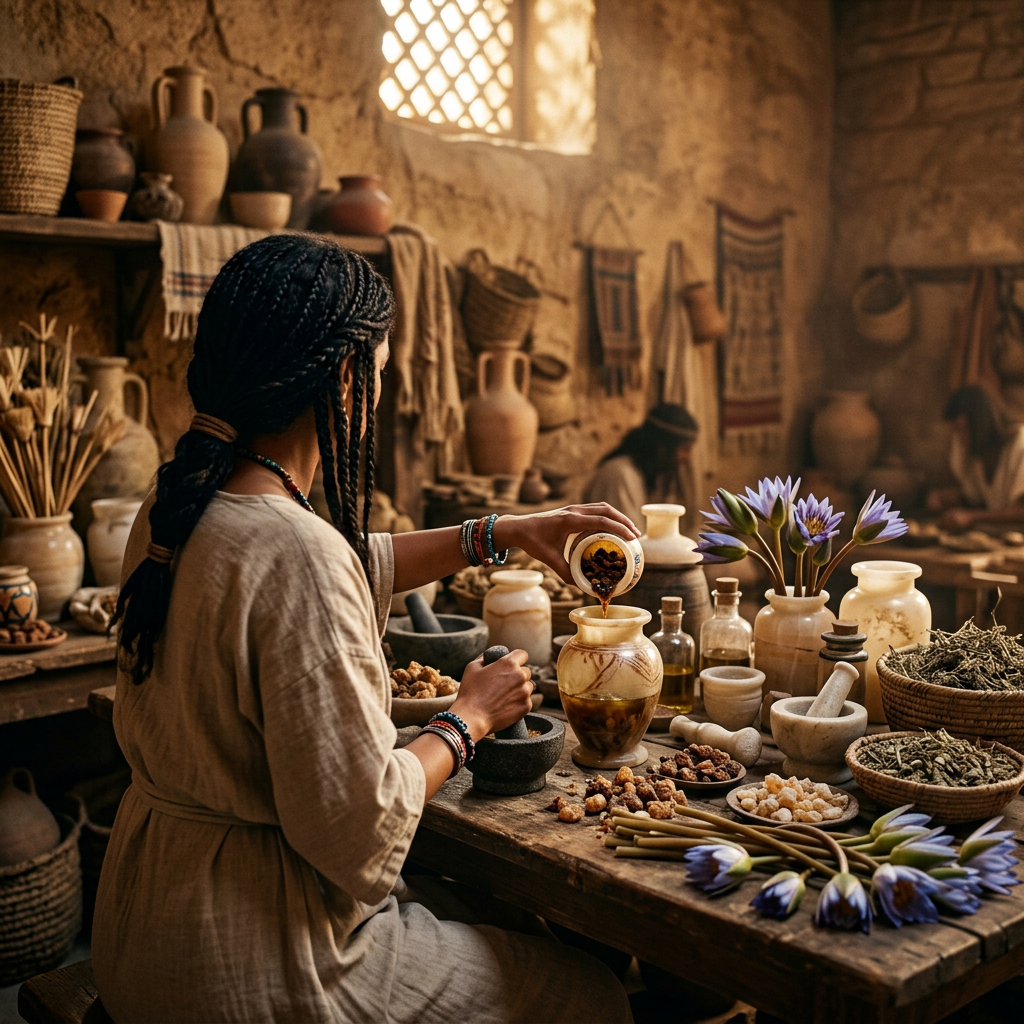
One of the most famous creations was kyphi, a complex temple perfume made from honey, wine, raisins, myrrh, frankincense, cinnamon, juniper, and aromatic resins. Kyphi wasn’t just worn; it was burned in rituals, used for healing, and applied as a luxurious night balm. Its scent symbolized purification, protection, and pleasure.
Daily perfumes were simpler but still refined. Egyptians infused oils — usually moringa, castor, or balanos — with lotus, myrrh, cinnamon, cardamom, or sweet rush. These oils softened the skin, added shine, and left a lingering aroma that signalled cleanliness and status. Perfume cones, worn at banquets, slowly melted in the heat, releasing fragrance through the evening.
Unguent jars made from alabaster, glass, or carved stone elevated the ritual. Their cool surfaces preserved delicate ingredients, turning skincare into an act of luxury.
Egyptian perfumes and unguents reveal a culture that understood beauty as sensory, spiritual, and deeply intentional. Scent wasn’t an accessory — it was a language.
I’m Stacey Hobbs, thanks for reading Face by Stace! Until next time.
do you feel fabulous today?

