Beauty in Ancient Egypt didn’t end with life — it continued into eternity. Egyptians believed the afterlife was a perfected version of earthly existence, so grooming, cosmetics, and fragrance were essential parts of burial preparation. Beauty was a form of identity, protection and spiritual continuity.
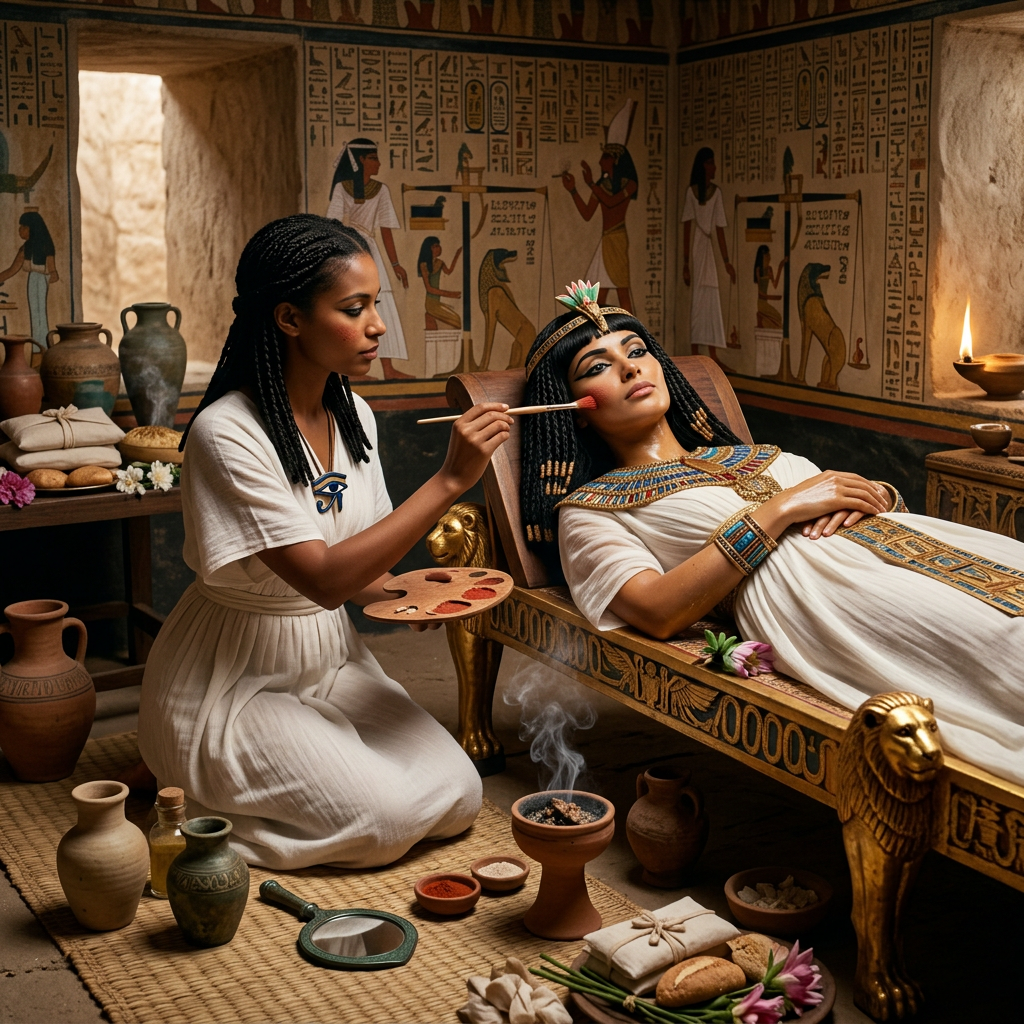
Cosmetics were placed in tombs to ensure the deceased remained radiant in the next world. Kohl jars, unguent pots, and cosmetic palettes were buried alongside the body, symbolizing clarity, protection, and divine favour. Kohl, associated with the Eye of Horus, offered spiritual safeguarding even beyond death.
Perfumed oils played a major role. Jars filled with lotus, myrrh, frankincense, or balanos oil were included to nourish the skin and honour the gods. Scent was believed to attract deities and guide the soul through the afterlife. Some tombs even contained kyphi, the sacred temple perfume, linking the deceased to purification and rebirth.
Wigs, combs, and mirrors were added to maintain beauty and status in eternity. These items weren’t symbolic alone — they reflected how the person wished to be remembered: polished, dignified, and cared for.
Even the body itself was treated with beauty rituals. Oils, resins, and natron preserved the skin, while linen wrappings were applied with precision, transforming the deceased into a perfected, protected form.
Egyptian afterlife beauty reveals a culture where grooming was sacred. Beauty wasn’t temporary — it was eternal.
I’m Stacey Hobbs, thanks for reading Face by Stace! Until next time.
do you feel fabulous today?

