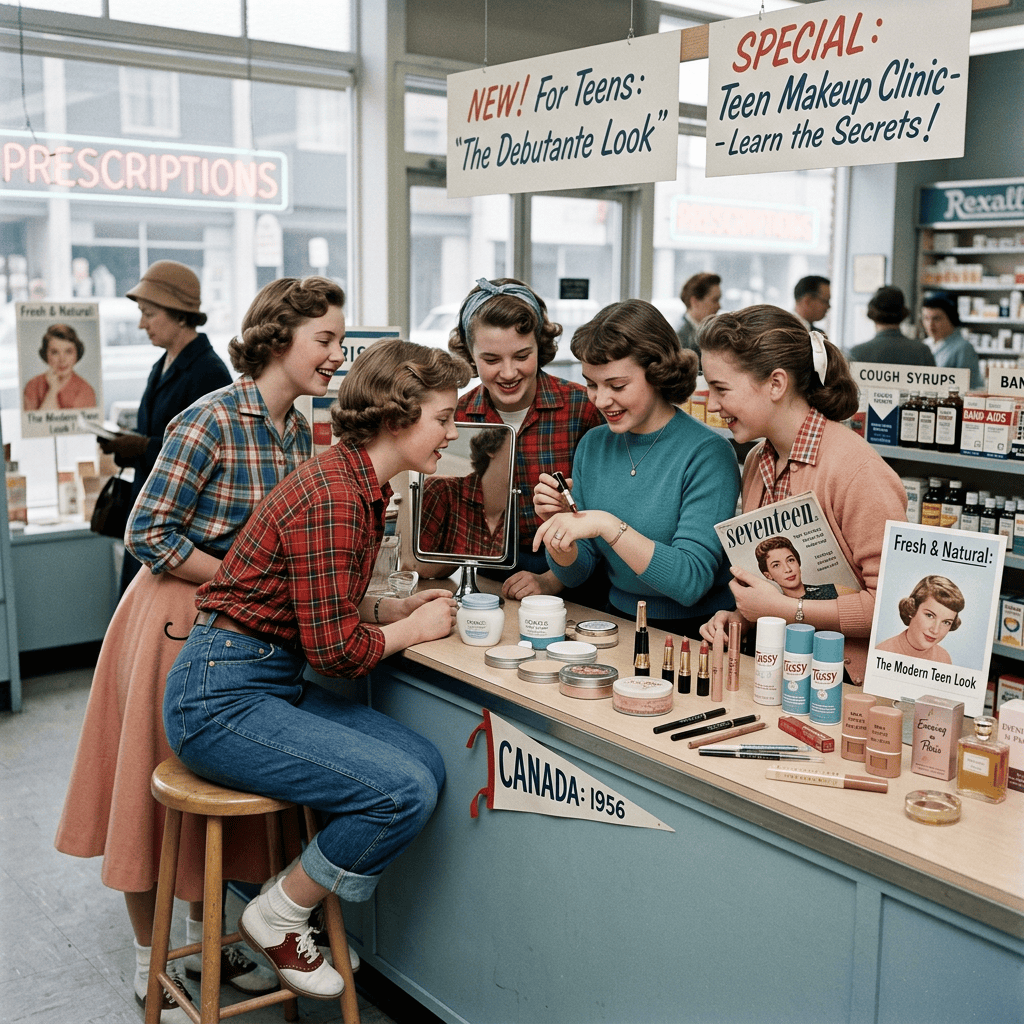
The 1950s introduced something entirely new to Canada: the teenager. For the first time, teens were recognized as a distinct cultural group with their own tastes, trends, and buying power — and their beauty routines reflected this shift.
Teen girls embraced a softer, more playful aesthetic than adult women. Ponytails, headbands, and short bangs became iconic, often styled at home with rollers, bobby pins, and setting lotion. Home perms were popular, giving teens the freedom to experiment with curls without weekly salon visits.
Makeup was light and youthful. Pastel lipstick — pinks, corals, soft roses — replaced the bold reds worn by their mothers. Powder was used sparingly, brows were kept natural, and skincare routines focused on freshness rather than glamour. Magazines like Chatelaine and Maclean’s began publishing teen sections, offering advice on grooming, acne care, and fashion.
Fashion defined the teen identity. Circle skirts, saddle shoes, cardigans, and bright blouses created a look that felt energetic and modern. Department stores responded quickly, opening dedicated teen departments and marketing beauty products directly to young consumers.
Pop culture amplified everything. Early television, radio hits, and Hollywood stars like Debbie Reynolds and Sandra Dee shaped teen ideals. Canadian teens blended these influences with local practicality — warm coats, wool skirts, and weather‑friendly hairstyles.
Teen beauty culture wasn’t frivolous. It marked the beginning of youth identity, independence, and self‑expression in Canada.
I’m Stacey Hobbs, thanks for reading Face by Stace! Until next time.
do you feel fabulous today?

