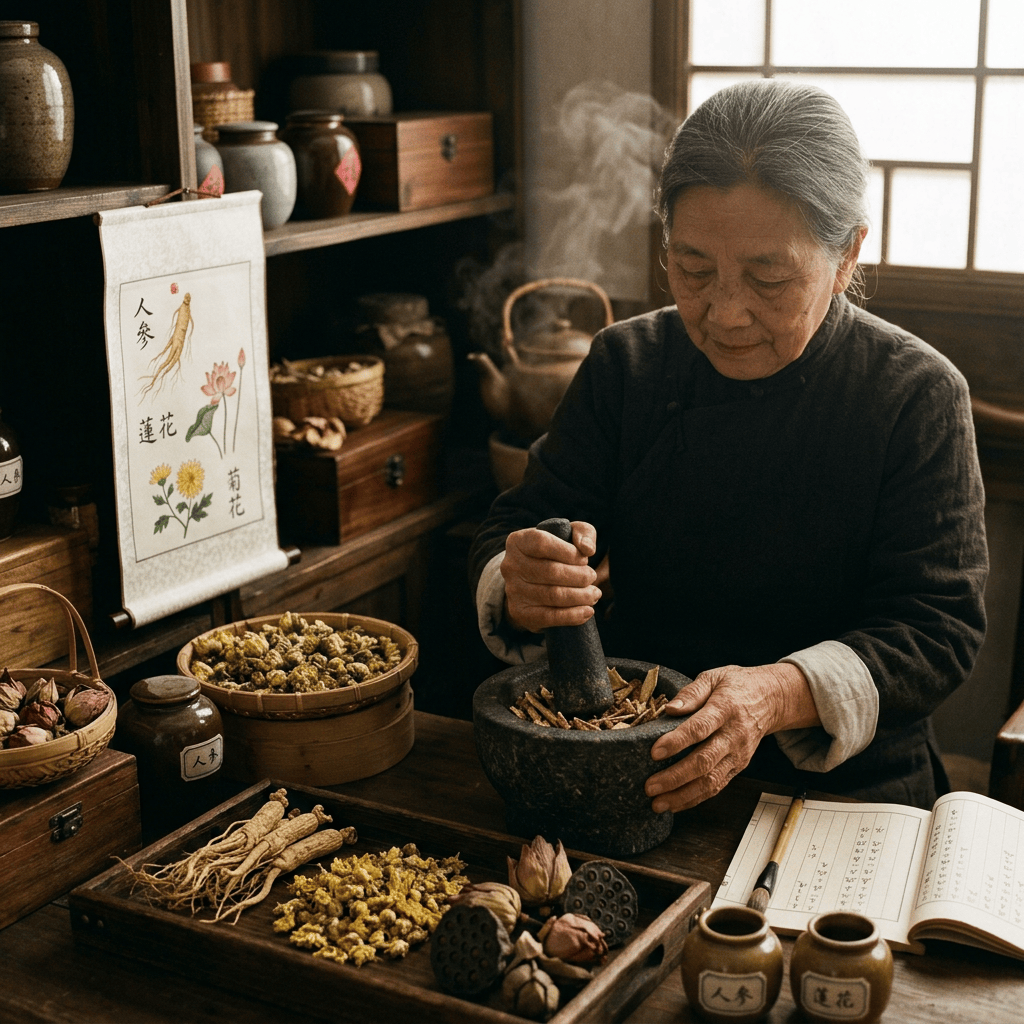
Ancient Chinese skincare was rooted in herbal wisdom, where plants were chosen not only for their effects on the skin but for their symbolism, energy, and connection to harmony. Three of the most treasured beauty herbs were ginseng, lotus and chrysanthemum — each offering its own ritual, meaning, and complexion benefits.
Ginseng was prized for vitality. Known as the “root of life,” it was used in tonics, masks, and infused oils to energize dull skin, improve circulation, and promote a healthy glow. Court women believed ginseng brought both radiance and resilience, aligning with the cultural ideal of inner strength reflected outward.
Lotus symbolized purity and spiritual elevation. Its petals and seeds were used in soothing creams and hydrating rinses, offering moisture and calming benefits. Lotus was associated with clarity — clear skin, clear mind, clear spirit. Beauty rituals featuring lotus were often performed in the morning to invite balance for the day.
Chrysanthemum was the herb of calm. Steeped into cooling waters or ground into pastes, it reduced redness, softened the complexion, and refreshed tired skin. Its gentle nature made it ideal for sensitive skin, and its symbolism of longevity reinforced its place in daily beauty routines.
Together, these herbs created a skincare philosophy rooted in nature, balance, and intention. Ancient Chinese herbal beauty wasn’t just topical — it was holistic, nurturing both the skin and the spirit.
I’m Stacey Hobbs, thanks for reading Face by Stace! Until next time.
do you feel fabulous today?

