Nail and hand care in Ancient Egypt was a blend of grooming, symbolism, and status. Hands were constantly exposed to sun, sand, and labour, so Egyptians developed rituals to keep them soft, protected and beautifully presented. Well‑kept hands signalled refinement, hygiene, and social standing — especially for women and nobles.
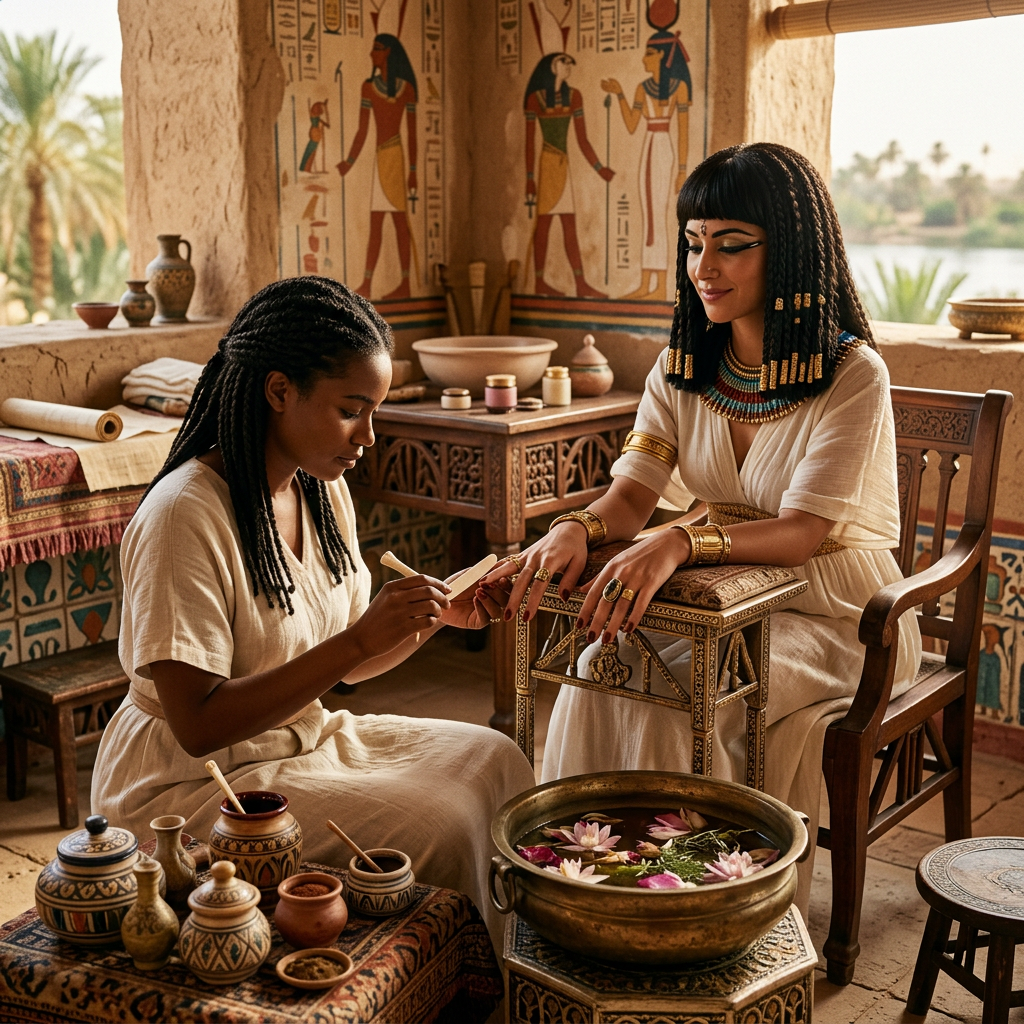
Henna was the most iconic element of Egyptian nail beauty. Applied as a paste made from crushed leaves, henna tinted nails and fingertips in shades of warm red and deep rust. Beyond aesthetics, the colour symbolized vitality, protection, and celebration. Henna was worn for festivals, weddings, and religious rituals, linking beauty to joy and ceremony.
Moisturizing oils played a major role. Castor, moringa, and balanos oil were massaged into the hands and cuticles to soften skin and prevent cracking in the desert climate. Wealthier Egyptians added fragrant herbs or lotus essence, turning hand care into a sensory ritual.
Exfoliation was simple but effective. Fine sand or ground pumice smoothed rough patches, preparing the skin for oils and balms. Some households used honey‑based salves to heal dryness and maintain a supple texture.
Nail grooming tools — small knives, files, and sticks made from bone or bronze — kept nails neat and shaped. These tools were often stored with other cosmetics, reinforcing that hand care was part of daily beauty.
Ancient Egyptian nail and hand care reveals a culture that valued detail, ritual, and symbolism. Beauty wasn’t only on the face — it lived in the hands.
I’m Stacey Hobbs, thanks for reading Face by Stace! Until next time.
do you feel fabulous today?

