Hairpins in Ancient China were far more than accessories — they were symbols of status, elegance, protection, and personal identity. Worn by women across dynasties, hairpins reflected artistry, craftsmanship, and the cultural belief that beauty should express harmony and meaning.
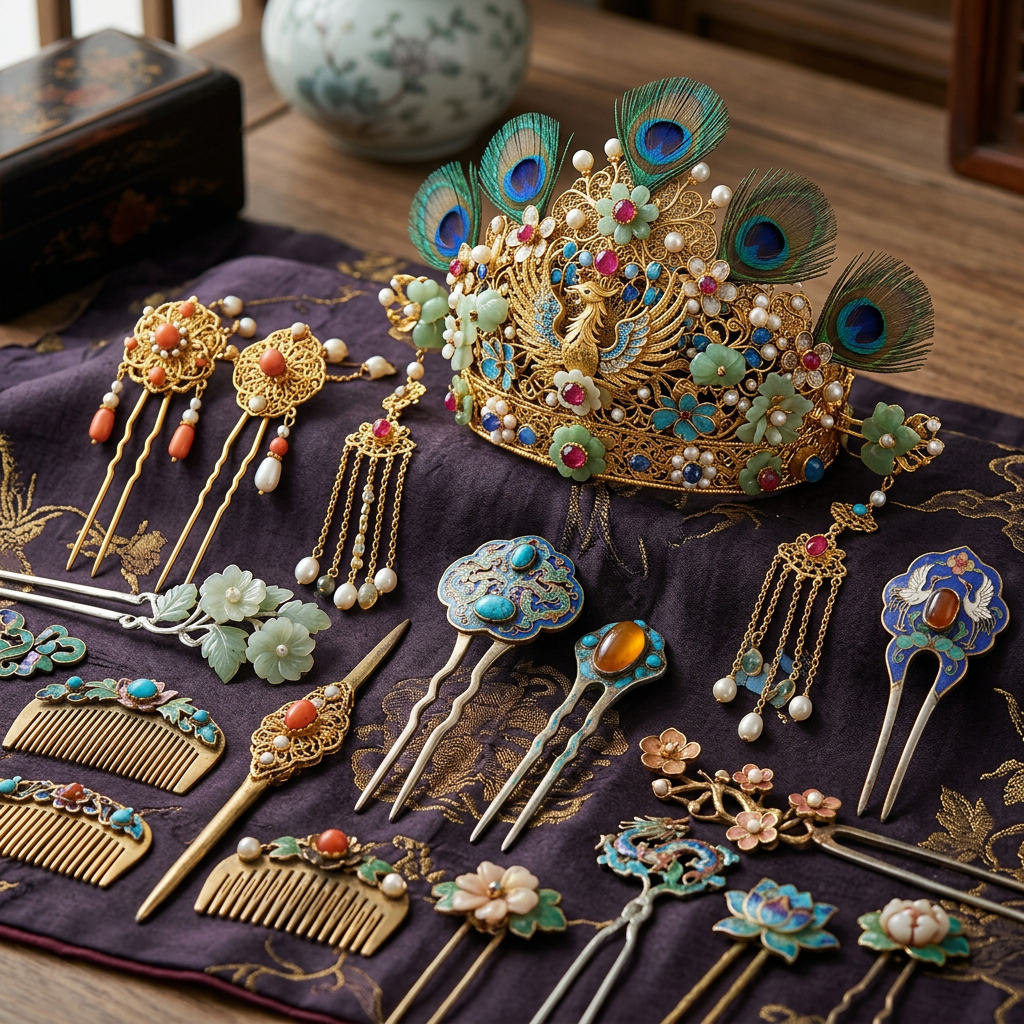
The earliest hairpins, known as ji, were simple bone or wooden pieces used to secure buns and coils. Over time, they evolved into elaborate works of art crafted from jade, gold, silver, and kingfisher feathers. Jade pins symbolized purity and longevity, while gold and silver designs signalled wealth and refinement.
Motifs carried deep symbolism. Phoenixes represented feminine power and rebirth. Peach blossoms symbolized youth and vitality. Lotus flowers conveyed purity and spiritual elevation. Women chose hairpins intentionally, aligning their adornment with personal values, seasonal festivals, or life milestones.
Hairpins also marked social transitions. During the coming‑of‑age ceremony (ji li), a young woman received her first formal hairpin, signifying maturity and readiness for adult life. Brides wore ornate pins decorated with pearls or floral designs to represent prosperity and protection.
Adornment extended beyond pins. Combs, ribbons, and hairpieces were used to create structured styles that balanced symmetry and softness — a core Chinese beauty ideal. Together, these elements turned hairstyling into ritual.
Ancient Chinese hairpins reveal a culture where beauty was symbolic, intentional, and deeply tied to identity. Every pin told a story — of status, artistry and the quiet power of adornment.
I’m Stacey Hobbs, thanks for reading Face by Stace! Until next time.
do you feel fabulous today?

