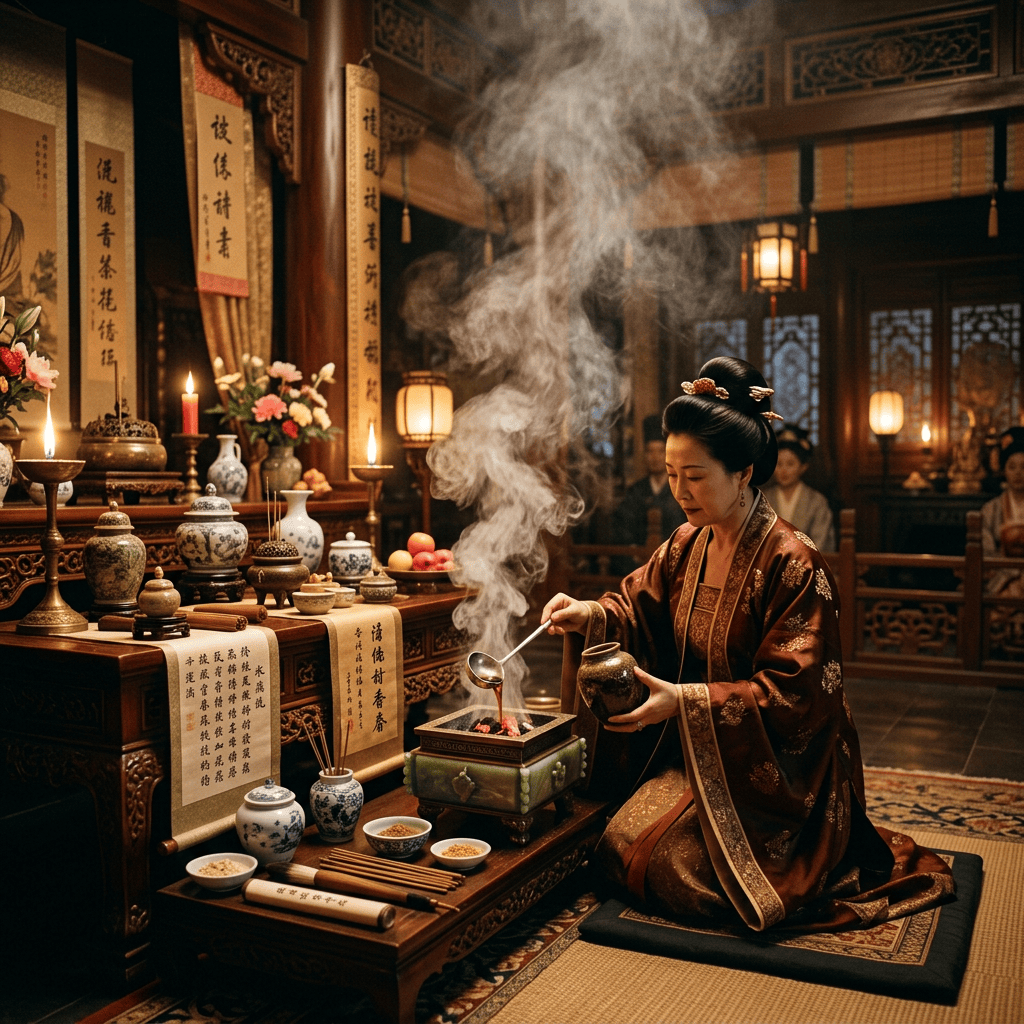
Perfume in Ancient China was more than scent — it was protection, elegance, and spiritual clarity. Fragrance shaped daily life across dynasties, blending botanical artistry with ritual meaning. Incense, oils, and scented sachets were used to refine the body, calm the mind and honour the divine.
Incense rituals were central. Blends of sandalwood, agarwood, frankincense, lotus, and clove were burned during morning grooming, meditation, and evening wind‑down. Each ingredient carried symbolism: sandalwood for purity, agarwood for wisdom, lotus for spiritual elevation. The rising smoke represented harmony between the earthly and celestial realms.
Women in the imperial courts used fragrant oils to soften the skin and enhance presence. Lotus oil, plum blossom oil, and osmanthus oil were applied to the wrists, neck, and hair. These scents were subtle — never overpowering — reflecting the Chinese ideal that beauty should whisper, not shout.
Scented sachets were another signature. Small embroidered pouches filled with herbs and florals were worn under clothing or tucked into hair. They offered gentle fragrance while symbolizing protection, good fortune, and emotional balance. Court women often matched sachet blends to seasons or festivals.
Perfume also played a role in social and romantic expression. A well‑chosen scent signalled refinement, intellect, and inner harmony. Fragrance was a language.
Ancient Chinese perfume culture reveals a world where beauty was sensory, symbolic, and deeply tied to ritual. Scent wasn’t decoration — it was identity.

