Ancient Japanese beauty was built on subtlety, purity, and seasonal harmony. From the Yayoi period to the refined Heian court, beauty rituals blended nature, symbolism, and quiet elegance. The goal wasn’t dramatic transformation — it was balance.
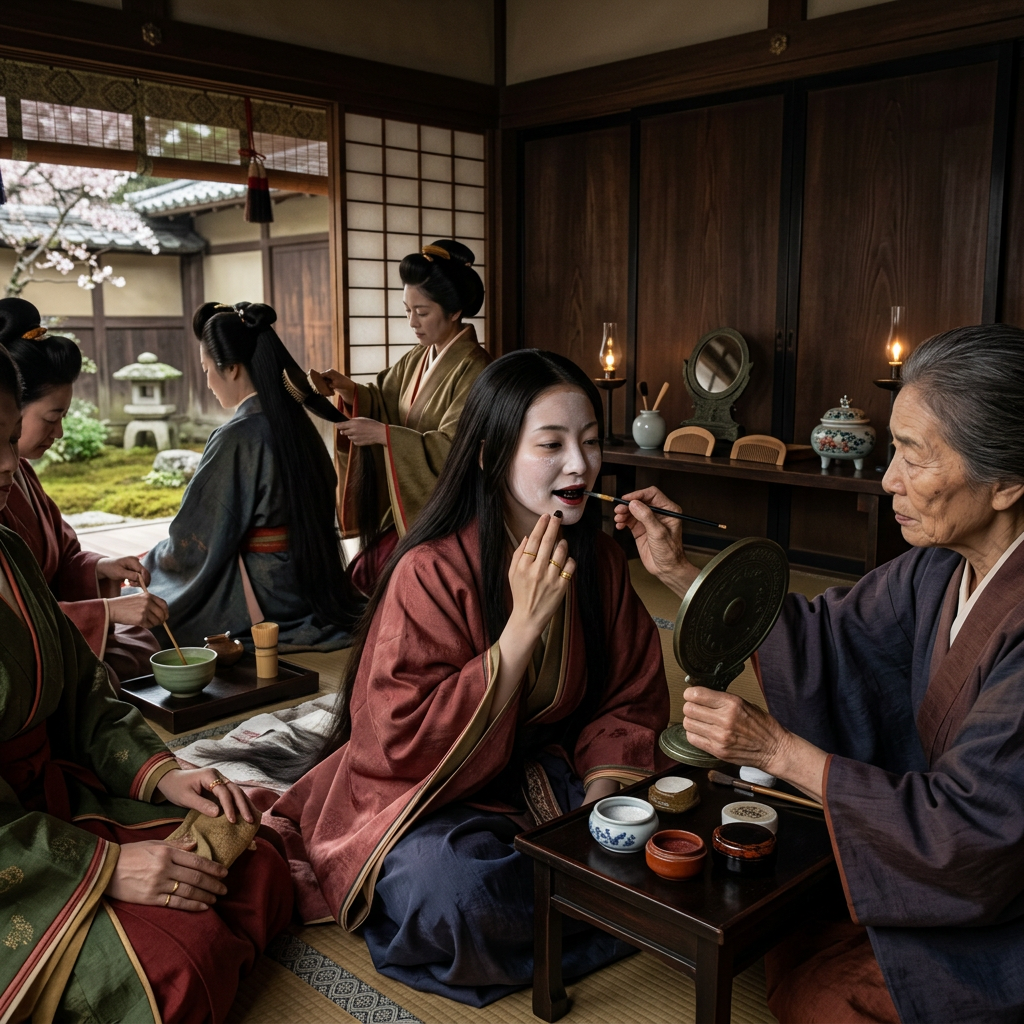
Camellia oil (tsubaki) was the star ingredient. Used for centuries, it softened the skin, added shine to hair, and protected against dryness. Women applied it to the ends of long, glossy hair, a symbol of refinement and feminine grace. Camellia oil represented nourishment and understated luxury.
White face powders were another signature. Made from rice flour or lead‑free minerals, they created a soft, pale complexion associated with purity and poetic beauty. In the Heian era, noblewomen used white powder as a base before adding delicate touches of colour to the lips and cheeks.
Fragrance played a quiet but powerful role. Incense blending (kōdō) became an art form — a ritual of selecting woods, herbs, and resins to create scents that expressed mood and identity. Court women wore scented robes, allowing fragrance to move gently with them.
Seasonal beauty was essential. Spring called for plum‑blossom water to refresh the skin. Summer relied on cooling chrysanthemum rinses. Autumn brought warming herbal teas, while winter focused on protective oils and gentle cleansing.
Ancient Japanese beauty reveals a culture that valued softness, intention, and emotional harmony. Beauty wasn’t loud — it was poetic.
I’m Stacey Hobbs, thanks for reading Face by Stace! Until next time.
do you feel fabulous today?

