Bathing in Ancient China was more than hygiene — it was purification, balance, and beauty. Across dynasties, bathing rituals blended warm water, fragrant herbs, and mindful practice to cleanse both body and spirit. These rituals reflected the belief that beauty began with harmony.
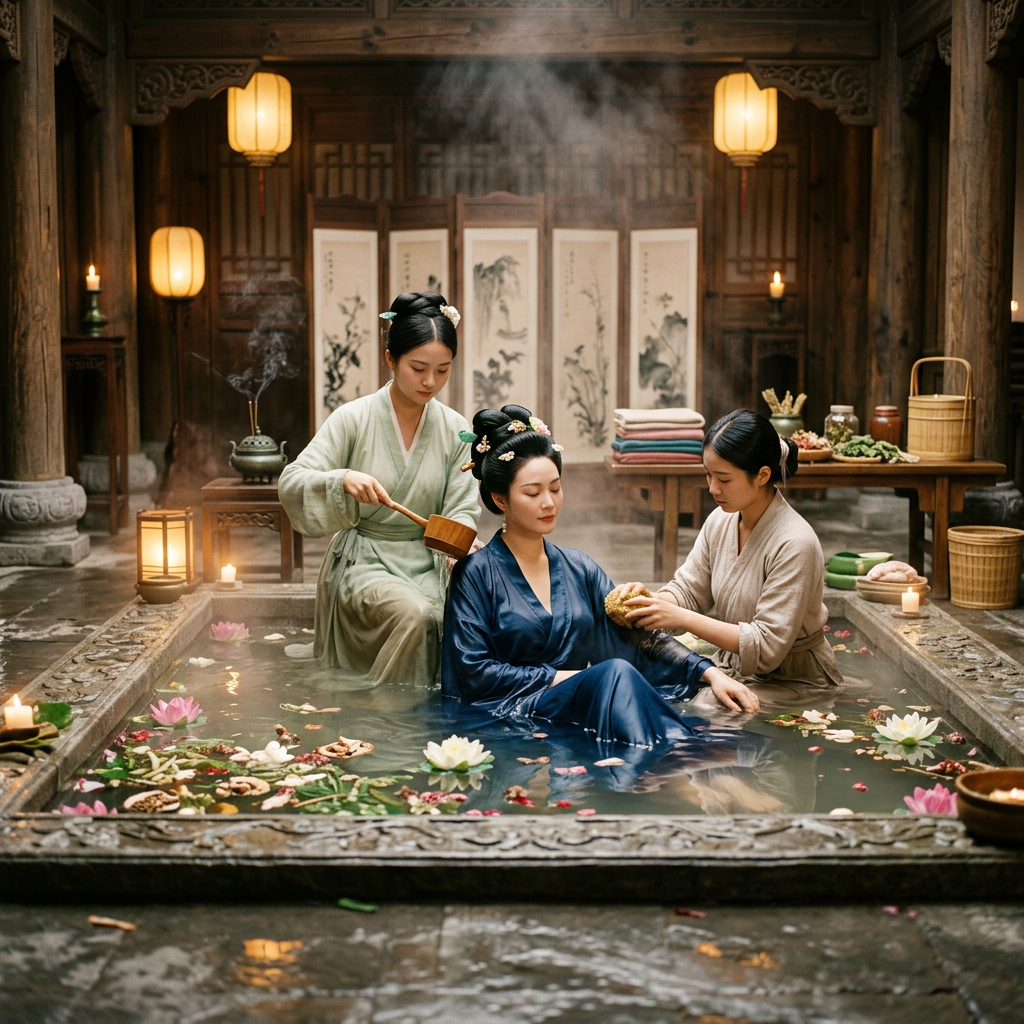
Herbal baths were the foundation. Lotus, chrysanthemum, mugwort and mint were steeped into steaming water to soothe the skin, calm the mind, and restore clarity. Lotus symbolized purity, chrysanthemum longevity, and mugwort protection. Each herb carried meaning, turning a simple bath into ceremony.
Women in the imperial courts often used flower‑petal baths, especially during festivals or seasonal transitions. Peony, plum blossom, and jasmine petals floated on the surface, releasing gentle fragrance and softening the skin. These baths were believed to elevate mood, refine the complexion, and invite good fortune.
Steam rituals were equally important. Hot steam infused with sandalwood or osmanthus opened the pores and relaxed tension. Court women used steam before applying herbal creams or silk powder, ensuring the skin absorbed treatments more effectively.
Bathing also aligned with traditional Chinese medicine. Warm water stimulated circulation, while herbal blends balanced the body’s energy. Evening baths were considered grounding; morning baths awakened vitality.
Ancient Chinese bathing rituals reveal a culture where beauty was holistic, sensory, and deeply connected to nature. A bath wasn’t just cleansing — it was renewal.
I’m Stacey Hobbs, thanks for reading Face by Stace! Until next time.
do you feel fabulous today?

