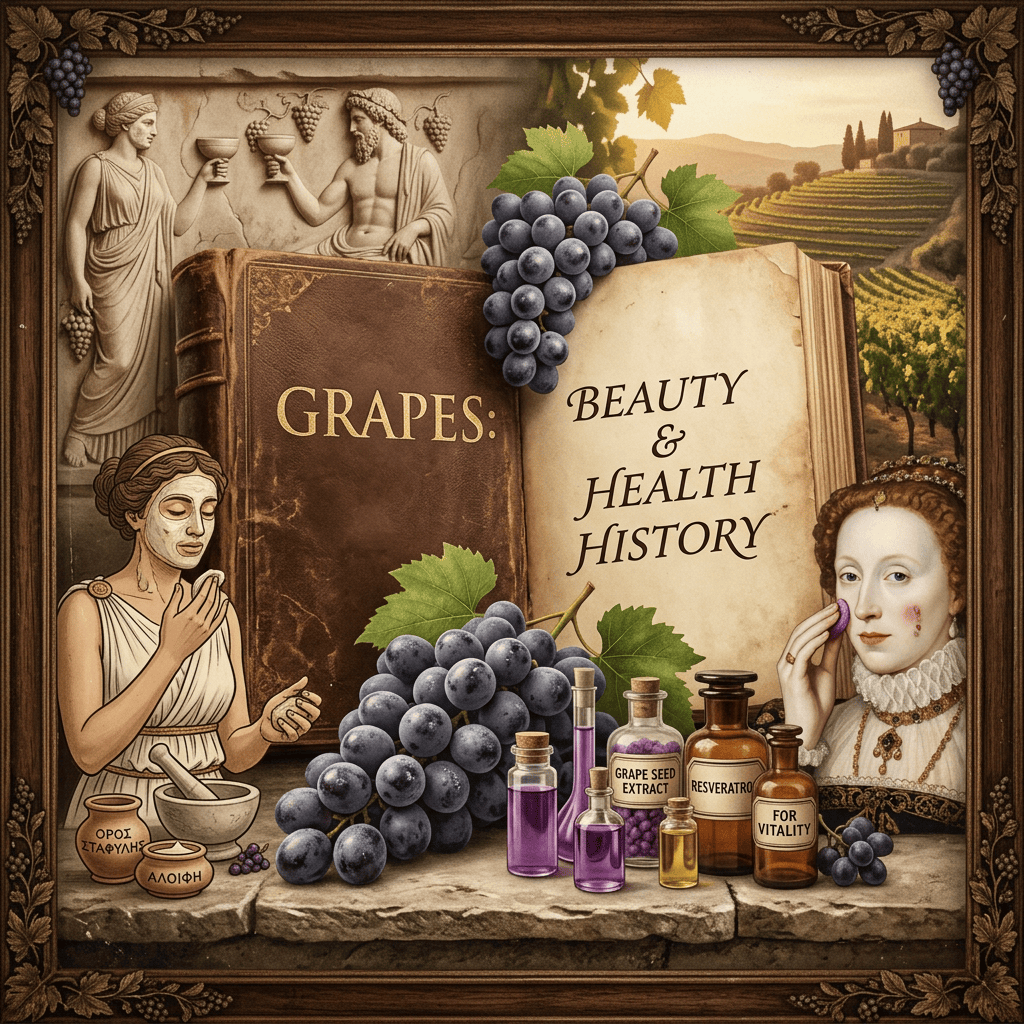
Grapes have one of the richest beauty legacies in global wellness culture. Their story begins in ancient Mesopotamia, Egypt, and Greece, where grapes were symbols of vitality, youthfulness, and abundance. Early healers used grape leaves, oils, and crushed skins in remedies meant to strengthen the body, support circulation, and protect the skin from harsh climates. Wine itself was considered a tonic for longevity — a belief that foreshadowed modern antioxidant science.
In Roman times, grapes were linked to strength and sensuality. Women used grape extracts to soften the skin, while herbalists relied on grape seed preparations to support healing and complexion brightness. Mediterranean cultures later embraced grapes as everyday beauty food, recognising their ability to nourish from within.
Today, grapes are celebrated for resveratrol, anthocyanins, and vitamin C — a trio of powerhouse antioxidants that help defend the skin against environmental stress, support collagen, and enhance natural radiance. Grape seed oil has become a modern skincare favourite for its lightweight texture, soothing properties, and ability to balance moisture without heaviness.
The beauty history of grapes is lush, ancient, and deeply rooted in holistic wellness. They remind us that some of the most luxurious beauty ingredients come from simple, time‑honoured traditions — nourishing the skin, supporting vitality, and adding a touch of Mediterranean glow to everyday life.
I’m Stacey Hobbs, thanks for reading Face by Stace! Until next time.
do you feel fabulous today?

