Wigs in Ancient Egypt were more than fashion — they were identity, status, and artistry. In a hot, desert climate, wigs offered comfort, hygiene, and a polished public appearance. Both men and women wore them, and the style, material and craftsmanship of a wig communicated exactly who you were.
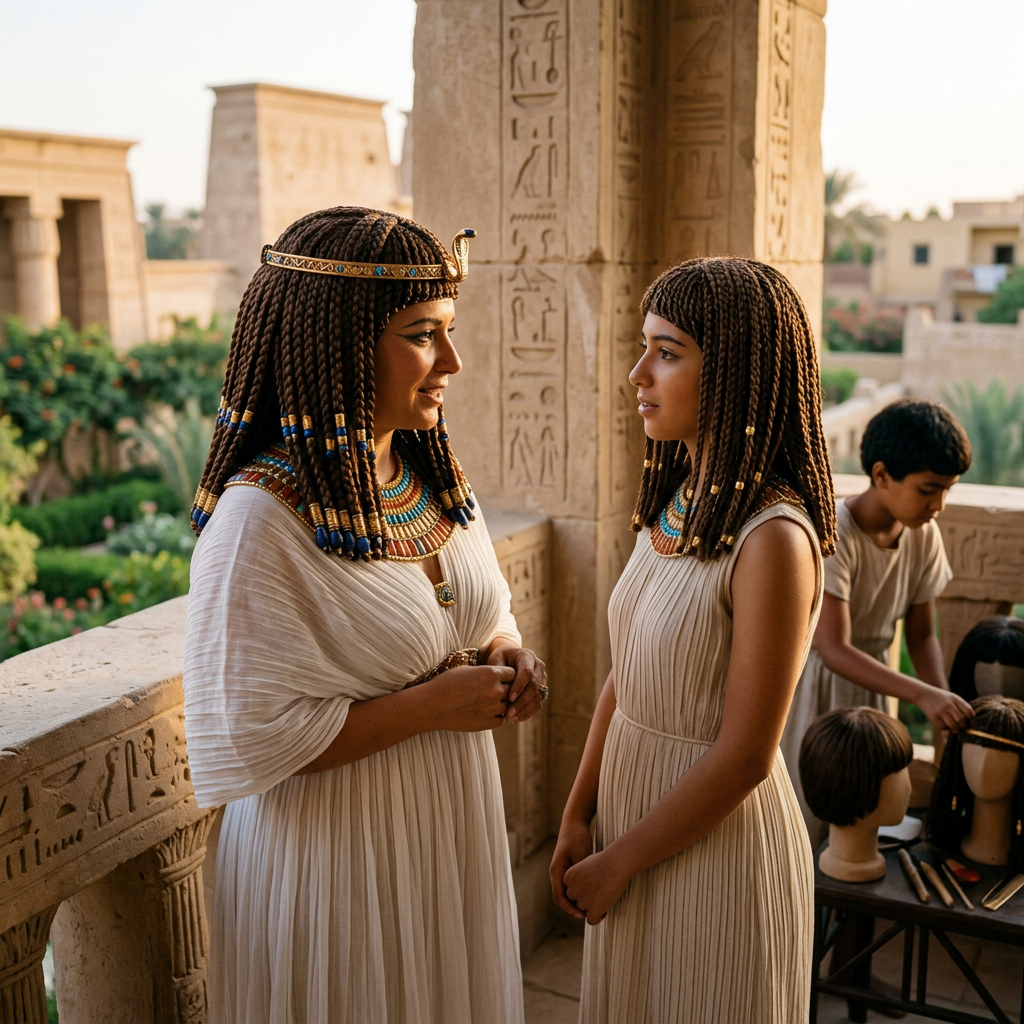
Daily wigs were practical: short, layered, or tightly braided, made from human hair, plant fibres, or a blend of both. They protected the scalp from the sun and allowed Egyptians to keep natural hair shaved or closely cropped for cleanliness. Beeswax pomades helped shape braids and curls, giving wigs their signature sleek finish.
Ceremonial wigs were a different world entirely. These were elaborate, heavy, and luxurious — crafted from high‑quality human hair, decorated with beads, gold ornaments, or faience charms. Some were scented with oils or topped with perfume cones that melted slowly, releasing fragrance during banquets and celebrations.
Wigs also reflected social hierarchy. Nobles and royalty wore fuller, more intricate designs, often styled into cascading curls or long, geometric braids. Priests shaved their heads for ritual purity but wore wigs for formal occasions. Even children had small wigs for festivals, symbolizing protection and divine favour.
Egyptian wig culture reveals a civilization that treated hair as both aesthetic and symbolic. A wig wasn’t just an accessory — it was a crafted statement of beauty, status, and identity.
I’m Stacey Hobbs, thanks for reading Face by Stace! Until next time.
do you feel fabulous today?

