Beauty in Ancient China’s imperial courts was a full ritual — refined, intentional, and deeply tied to philosophy. Across the Han, Tang, and Song dynasties, court women followed daily routines designed to maintain harmony, clarity and elegance. These rituals weren’t vanity; they were expressions of discipline, status and cultural ideals.
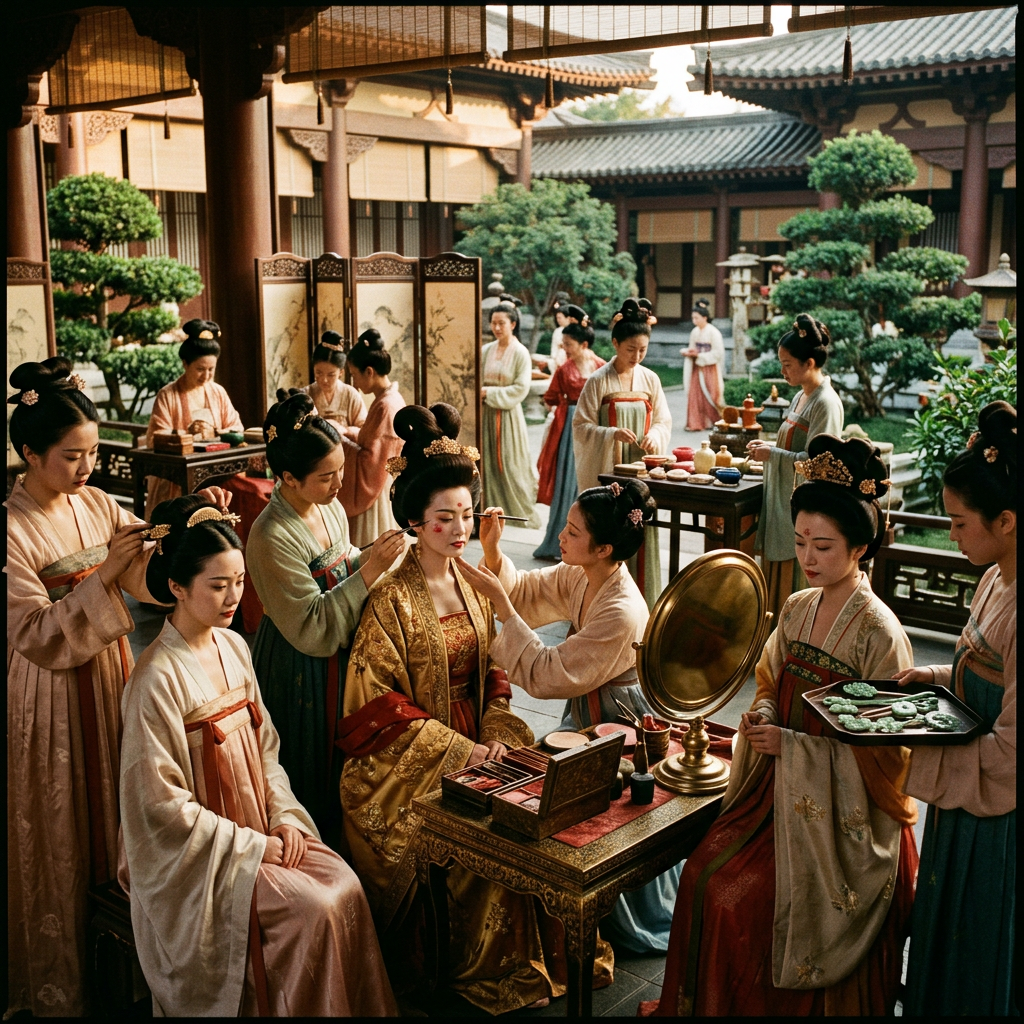
During the Han Dynasty, beauty centred on simplicity and balance. Women used light herbal creams, jade massage tools, and gentle rice‑water rinses. Morning grooming was quiet and meditative, reflecting Confucian values of order and restraint.
The Tang Dynasty embraced opulence. This era is famous for bold rouge, bright floral fragrances, and elaborate hairstyling. Women applied silk powder for a soft matte finish, followed by peony or safflower blush. Bathing rituals included scented steam, lotus‑infused oils, and music meant to elevate the spirit. Tang beauty was expressive, luxurious, and artistic.
By the Song Dynasty, beauty shifted toward subtlety and scholarly elegance. Pale skin, delicate brows, and soft textures were prized. Women used chrysanthemum water to calm the complexion, ginseng tonics for vitality, and fine brushes to shape brows with precision. Song beauty rituals reflected refinement and intellectual grace.
Across all three dynasties, beauty was a daily ceremony — cleansing, massaging, adorning, and scenting the body with intention. These rituals reveal a culture where grooming was spiritual, disciplined, and deeply connected to identity.
I’m Stacey Hobbs, thanks for reading Face by Stace! Until next time.
do you feel fabulous today?

