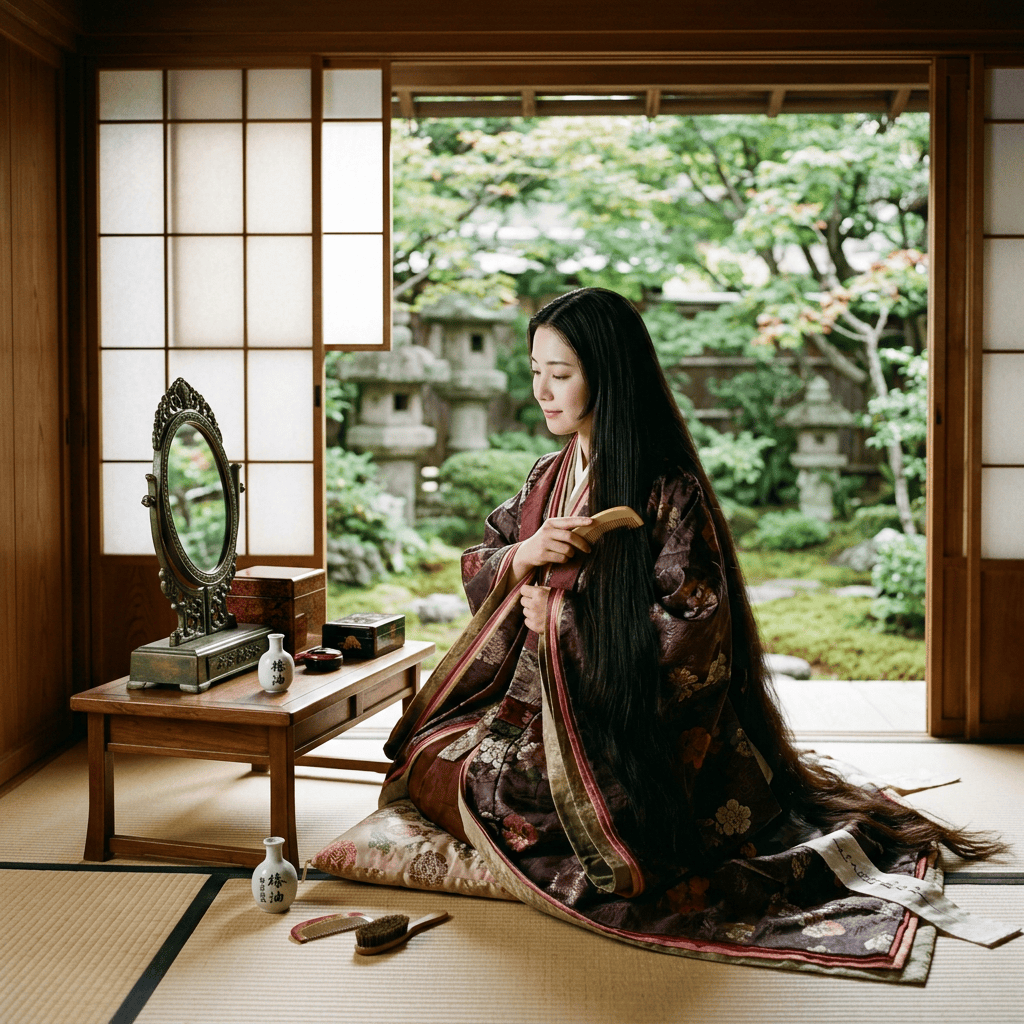
Camellia oil — tsubaki — is one of the most iconic beauty ingredients in Japanese history. For centuries, women used this golden, lightweight oil to nourish their hair, protect it from dryness, and create the signature glossy look associated with elegance and refinement. Camellia oil wasn’t just practical; it was cultural.
Harvested from camellia seeds, the oil is rich in oleic acid, making it deeply moisturising without feeling heavy. Women applied it to the lengths and ends of their hair, especially before combing. This ritual reduced breakage, enhanced shine, and kept long hair smooth — a symbol of feminine grace from the Heian court onward.
Geisha and traditional performers later adopted camellia oil as part of their grooming routines. It helped maintain sleek styles, added lustre under candlelight, and protected hair from the friction of elaborate adornments. The oil’s subtle sheen aligned perfectly with Japanese beauty ideals: understated, natural, and quietly luxurious.
Camellia oil also carried symbolism. It represented purity, resilience, and seasonal harmony. The camellia flower blooms in winter, standing strong against the cold — a reminder that beauty can be both delicate and enduring.
Stored in ceramic jars or lacquered containers, camellia oil transformed haircare into ritual. Each application was slow, intentional, and sensory.
Ancient Japanese camellia‑oil haircare reveals a culture that valued softness, nourishment, and quiet elegance. Beauty wasn’t loud — it was luminous.
I’m Stacey Hobbs, thanks for reading Face by Stace! Until next time.
do you feel fabulous today?

