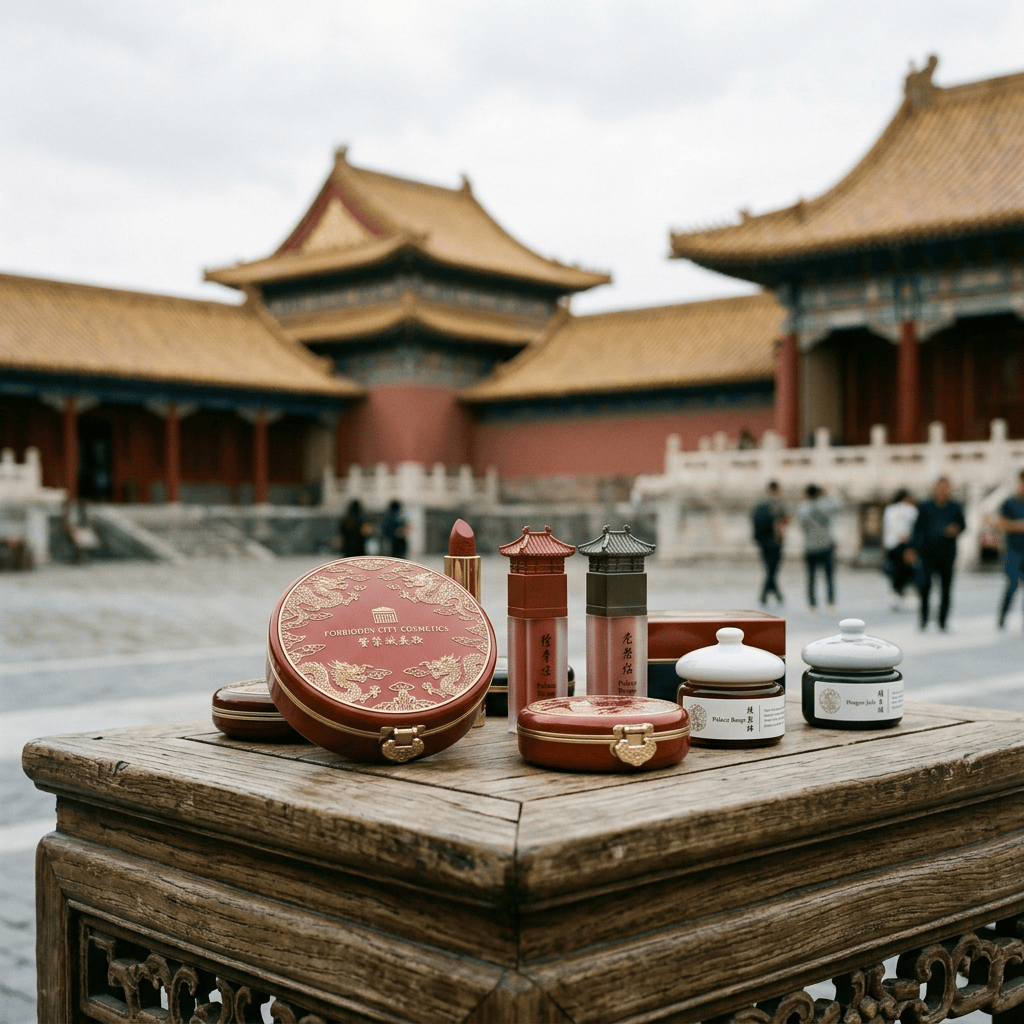
Cosmetics inside the Forbidden City were refined, symbolic, and deeply tied to imperial hierarchy. Palace beauty wasn’t about extravagance — it was about precision, harmony, and representing one’s rank through subtle, intentional choices. Every powder, pigment, and fragrance carried meaning.
The foundation of court cosmetics was silk powder, a finely milled blend that created a soft, matte finish. It offered clarity without starkness, aligning with the palace ideal of quiet elegance. Women applied it after herbal cleansing rituals, allowing the powder to blend seamlessly with the skin. Silk powder symbolized purity, discipline, and refinement — qualities expected of imperial women.
Rouge added warmth and vitality. Made from safflower, peony petals, or mineral‑safe cinnabar alternatives, rouge was applied lightly to the cheeks and lips. The shade depended on occasion: deeper tones for festivals, softer hues for daily court life. Rouge wasn’t simply colour; it represented emotional balance and feminine strength.
Eyebrow styling was another art. Palace women shaped brows using charcoal or mineral pigments, creating delicate, elongated arches that conveyed grace and intellect. Brow shapes often followed seasonal trends or imperial preferences, turning grooming into cultural expression.
Fragrance infused cosmetics as well. Powders and balms were scented with lotus, plum blossom, or sandalwood, adding a sensory layer to beauty. These scents weren’t overpowering — they whispered status and serenity.
Cosmetics in the Forbidden City reveal a world where beauty was ceremonial, symbolic, and deeply intertwined with identity. Every product was chosen with intention, reflecting the quiet power of imperial femininity.

