Bette Davis was one of the few Golden Age stars who refused to be trapped by glamour. While studios pushed their actresses toward flawless beauty, Davis pushed back. She believed character came before vanity, and she used “unpretty” choices — deliberate, strategic ones — to deepen her performances and sharpen the emotional truth of her roles.
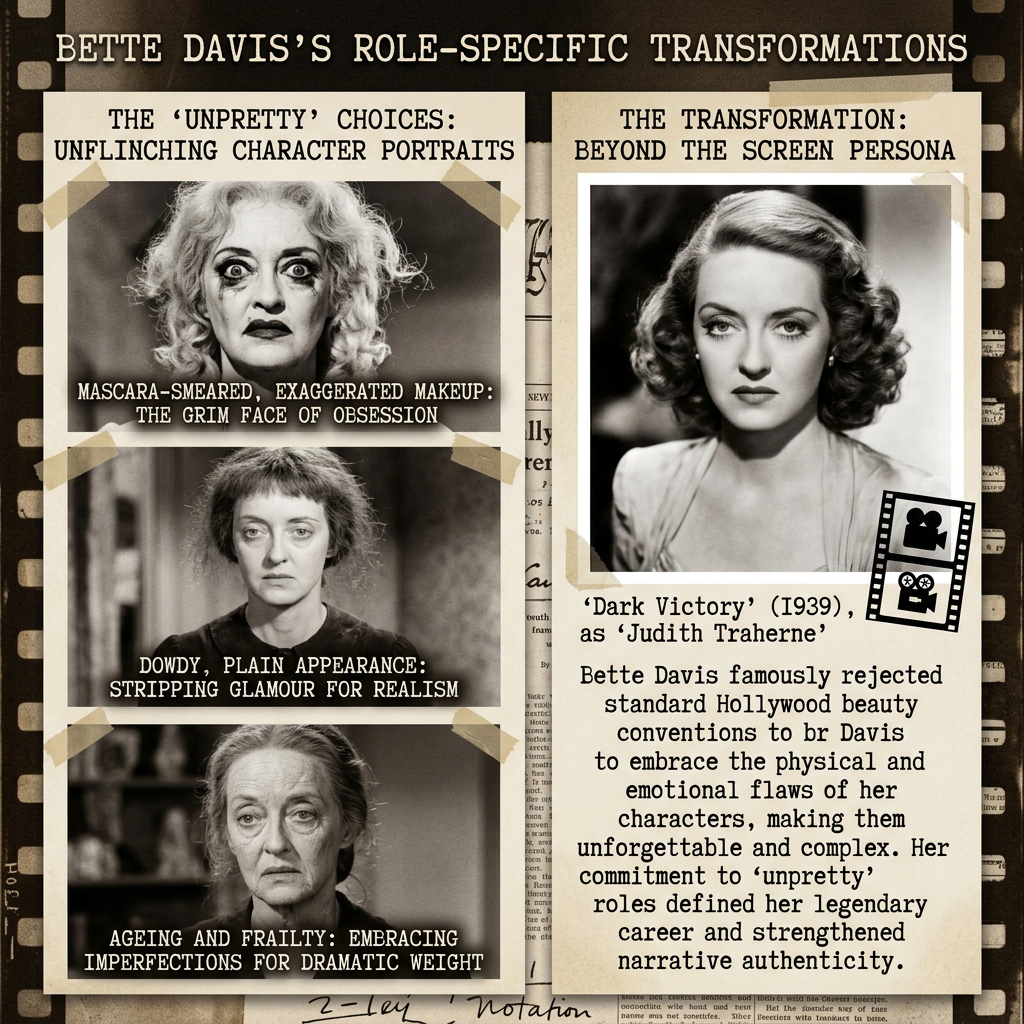
For Davis, beauty was a tool, not a requirement. If a character was exhausted, she allowed her skin to look sallow. If a role demanded tension, she let her brows appear harsher. If a woman was meant to be worn down by life, Davis didn’t soften the edges — she intensified them. She famously insisted on minimal powder for certain scenes so the camera could capture every line, every shadow, every flicker of strain.
She also manipulated her mouth shape. Davis often thinned out her lip line for roles that required severity, creating a sharper, more unforgiving expression. Conversely, she softened her lips for vulnerable characters, using subtle shading to change the emotional temperature of her face.
Her eyes were equally adaptable. She sometimes avoided whitening drops to let the whites appear slightly dull — a subtle but powerful way to convey fatigue or despair. She even adjusted her blinking patterns, slowing or quickening them to match the psychological rhythm of the character.
These choices weren’t accidents. They were crafted, intentional, and fearless. Davis didn’t chase beauty — she chased truth. And in doing so, she expanded what screen beauty could be: expressive, emotional, and utterly uncompromising.

