Elizabeth Taylor’s Cleopatra eye look wasn’t just makeup — it was architecture, mythology, and cinematic strategy fused into one of the most influential beauty designs of the 20th century. Her eyes became the film’s visual anchor, engineered through graphic liner, precise geometry, and colour symbolism that echoed Ancient Egyptian iconography.
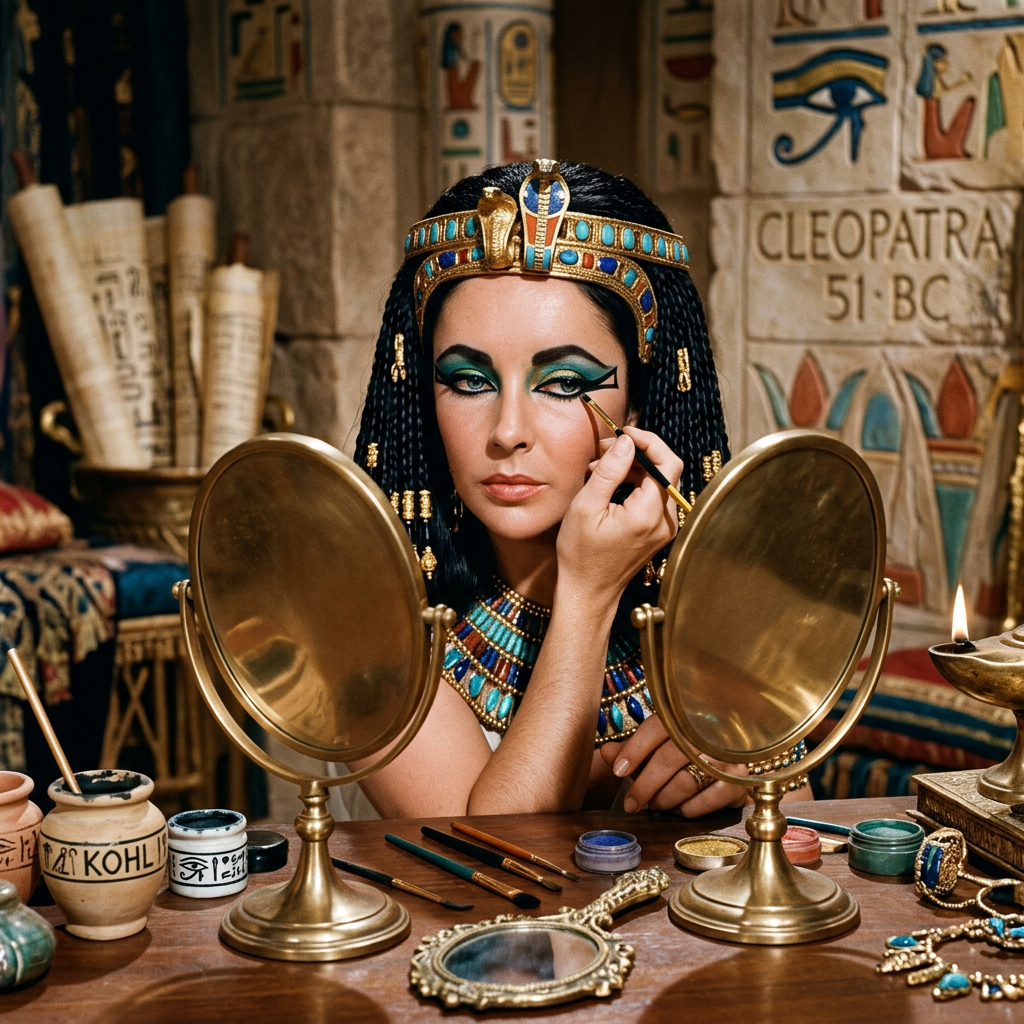
The liner was the foundation. Makeup artist Alberto de Rossi created architectural wings that extended far beyond Taylor’s natural eye shape, lifting her gaze and sharpening her profile. These wings weren’t soft flicks — they were bold, graphic lines that carved space around her eyes, giving her a regal, commanding presence. Taylor embraced the intensity, holding her gaze steady so the liner became part of her character’s power.
Above the crease, de Rossi added a floating line, drawn parallel to the lid to mimic the stylised eye shapes seen in Egyptian art. This graphic element added dimension and drama, making Taylor’s eyes appear larger and more sculptural on camera. It was an editorial technique decades ahead of its time.
Colour symbolism completed the look. Gold shadow represented royalty and divine protection. Lapis‑blue accents referenced Egyptian murals and the sacred stone associated with truth and the heavens. Black kohl‑style liner grounded the design, connecting Taylor visually to ancient beauty rituals.
Every close‑up became a beauty editorial. Every scene reinforced Cleopatra’s authority through shape, colour, and precision.
Elizabeth Taylor didn’t just wear eyeliner. She wielded it — as a queen, a symbol, and a cinematic force.

