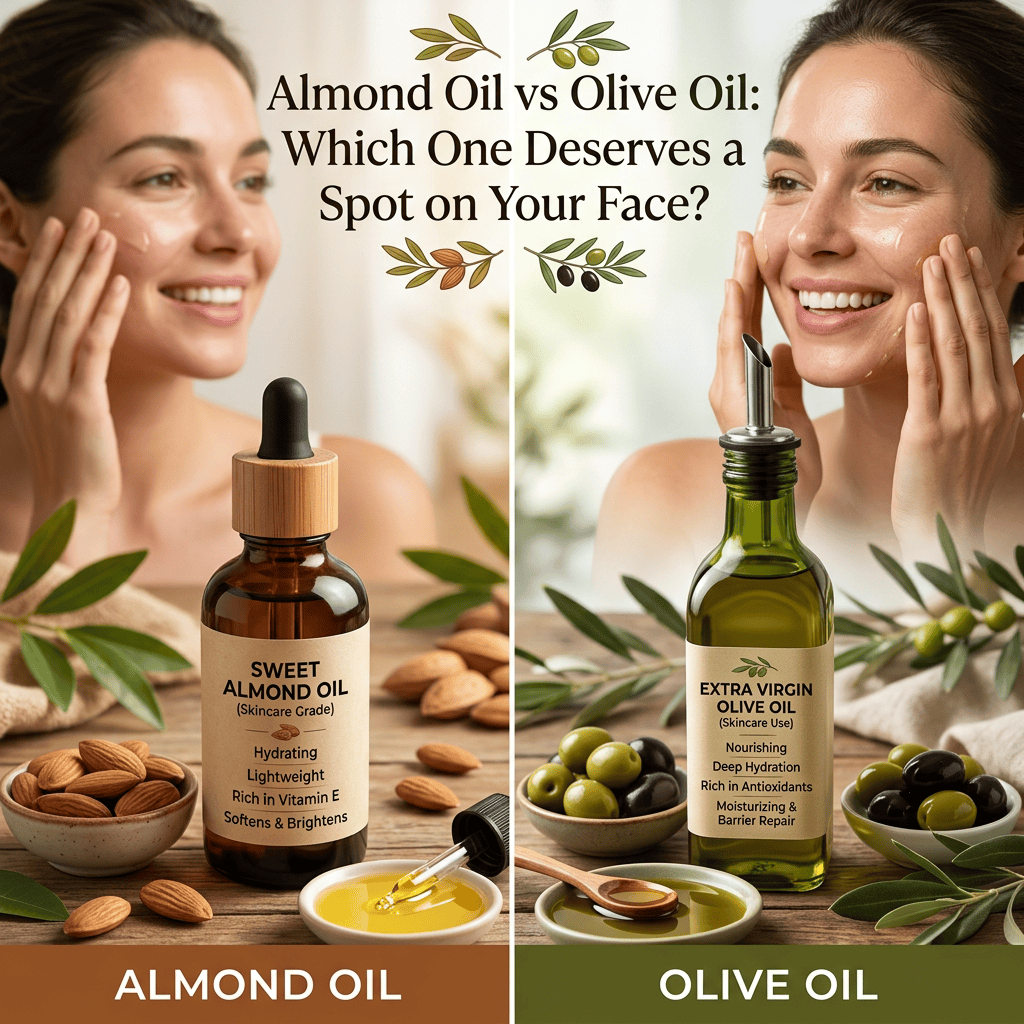
If you’ve ever stood in your kitchen staring at your oils and wondering, “Could I just put this on my face?” — welcome, you’re in the right place. Today we’re comparing two glow‑boosting classics: almond oil and olive oil. Both are nourishing, both are natural, and both have been skincare darlings for centuries… but they’re definitely not twins.
Let’s break it down — Face by Stace style.
Almond Oil: The Soft, Sweet Skin Soother
Almond oil is basically the gentle friend who always knows what to say. It’s lightweight, silky, and packed with vitamin E and fatty acids that make your skin feel instantly comforted.
Why your skin loves it:
- Softens dry, flaky patches
- Calms irritation (sensitive skin’s BFF)
- Helps lock in hydration without feeling greasy
- Great for dehydrated skin when layered over a water-based serum
Vibe: Soft, sweet, lightweight, and glow‑giving. Skin types: Dry, dehydrated, sensitive, combo — basically everyone except very oily or acne‑prone.
Olive Oil: The Rich, Bold Skin Conditioner
Olive oil is the dramatic, full‑bodied cousin who enters the room with confidence. It’s thicker, richer, and loaded with antioxidants — but it’s also heavier, which means it’s not for everyone.
Why your skin might love it:
- Deeply moisturizing
- Amazing for very dry or mature skin
- Antioxidant-rich (hello, glow)
- Great for body care or slugging-style routines
Why your skin might not love it:
- Comedogenic (can clog pores)
- Too heavy for oily or acne-prone skin
- Can feel greasy on the face
Vibe: Bold, rich, deeply nourishing. Skin types: Very dry, mature, or compromised skin — avoid if you’re breakout-prone.
So… Which One Wins?
Honestly? It depends on your skin’s personality.
If your skin is sensitive, dehydrated, or easily irritated → Almond oil wins.
It’s gentle, lightweight, and plays well with other products.
If your skin is very dry, mature, or craving deep moisture → Olive oil wins.
It’s rich, comforting, and great for barrier repair.
If your skin is oily or acne-prone → Neither.
Choose non-comedogenic oils like squalane or jojoba instead.
My Face by Stace Verdict
Almond oil is the everyday glow booster — soft, sweet, and easygoing. Olive oil is the winter warrior — rich, intense, and best used sparingly.
Both have their place, but almond oil is usually the safer, more versatile choice for most faces.

