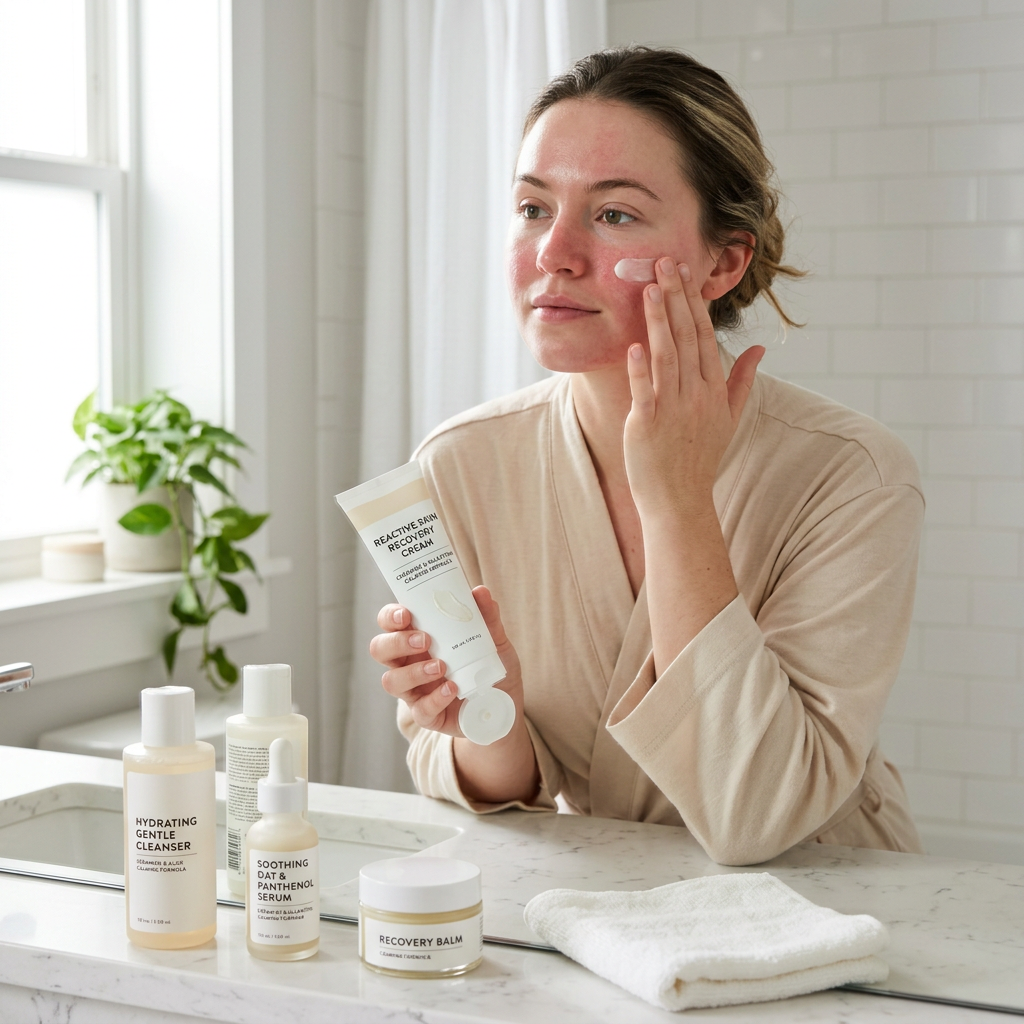
A calm‑down protocol for overstimulated, inflamed, “hot” skin.
Reactive skin needs simplicity, cooling, and barrier repair. The goal is to stop inflammation fast, remove triggers and rebuild protection.
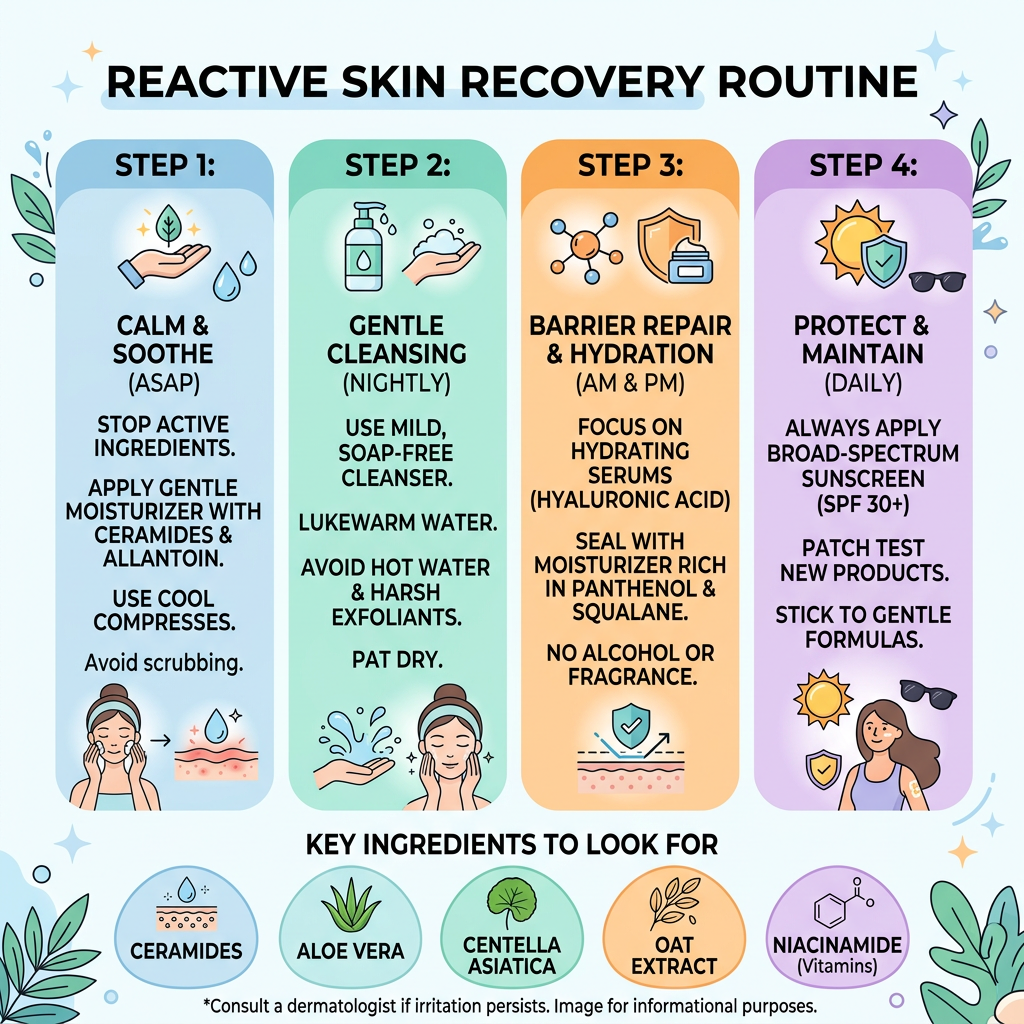
1. Stop All Actives Immediately
No retinoids, no AHAs/BHAs, no vitamin C, no scrubs, no peels. Reactive skin cannot heal if you keep stimulating it.
2. Switch to a Gentle, Non‑Foaming Cleanser
Look for:
- gel‑cream or milk textures
- no fragrance
- no essential oils
- pH‑balanced formulas
Cleansers should comfort, not “deep clean.”
3. Add a Cooling, Hydrating Layer
Reactive skin is thirsty and inflamed. Use:
- aloe vera (pure, not perfumed)
- centella asiatica
- panthenol (B5)
- thermal water sprays
These ingredients calm heat, reduce redness, and hydrate without irritation.
4. Seal With a Barrier‑Repair Moisturiser
Look for:
- ceramides
- squalane
- glycerin
- oat extract
- petrolatum (if severely reactive)
Barrier repair is the fastest way to stop reactivity.
5. Avoid Makeup for 48–72 Hours
If you must wear makeup, choose:
- cream formulas
- no fragrance
- no long‑wear or mattifying products
Powders and long‑wear foundations worsen inflammation.
6. Protect With a Mineral Sunscreen
Chemical filters can sting reactive skin. Choose zinc oxide or titanium dioxide only.
7. Lifestyle Reset
- Reduce caffeine and alcohol
- Prioritise sleep
- Lower stress where possible
- Avoid heat, saunas, and hot showers
Reactive skin heals fastest when the whole system calms down.

