
Dehydrated skin happens when the skin’s water levels drop, and anything that increases water loss or reduces water retention can trigger it. These are the main factors:
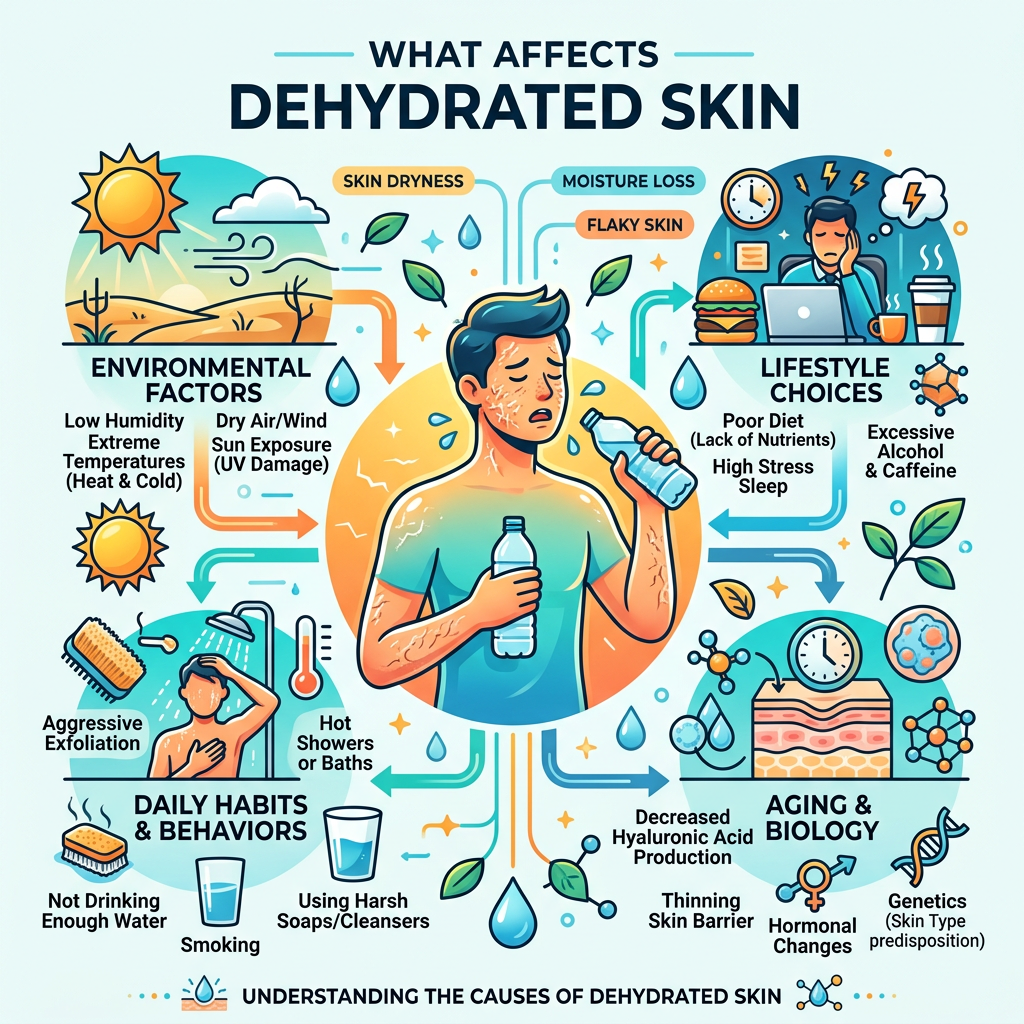
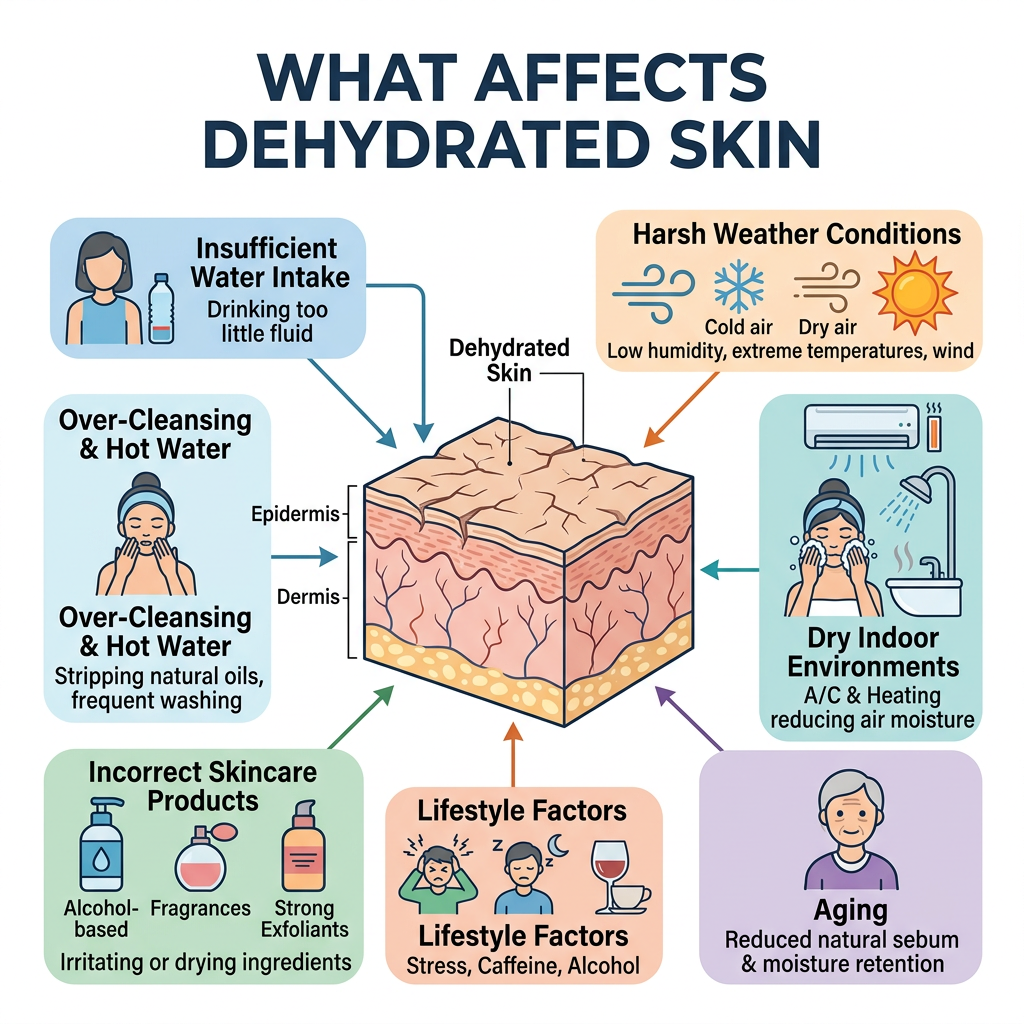
Environmental Factors
- Cold weather — low humidity pulls moisture from the skin.
- Indoor heating — dries the air and accelerates transepidermal water loss.
- Hot showers — strip water from the surface layers.
- Wind exposure — disrupts the barrier and increases evaporation.
- Air travel — cabin air is extremely dry, causing rapid dehydration.
Lifestyle Factors
- Low water intake — reduces internal hydration.
- High caffeine or alcohol — both are dehydrating and reduce moisture retention.
- Stress — increases cortisol, which weakens the barrier.
- Lack of sleep — slows repair processes, making the skin lose water faster.
Skincare Routine Factors
- Over‑cleansing — removes natural moisture and weakens the barrier.
- Harsh exfoliation — creates micro‑damage that lets water escape.
- Skipping moisturiser — leaves the skin without protection.
- Using strong acne treatments — retinoids, acids, and benzoyl peroxide can dry the skin.
- Mattifying makeup — powders and long‑wear formulas absorb moisture throughout the day.
Skin‑Type Factors
Even oily skin becomes dehydrated. When water drops, the skin overproduces oil to compensate, creating the “tight but shiny” feeling.

