
Reactive skin is triggered when the moisture barrier becomes overwhelmed, inflamed, or disrupted. These are the major factors that push skin into reactivity:
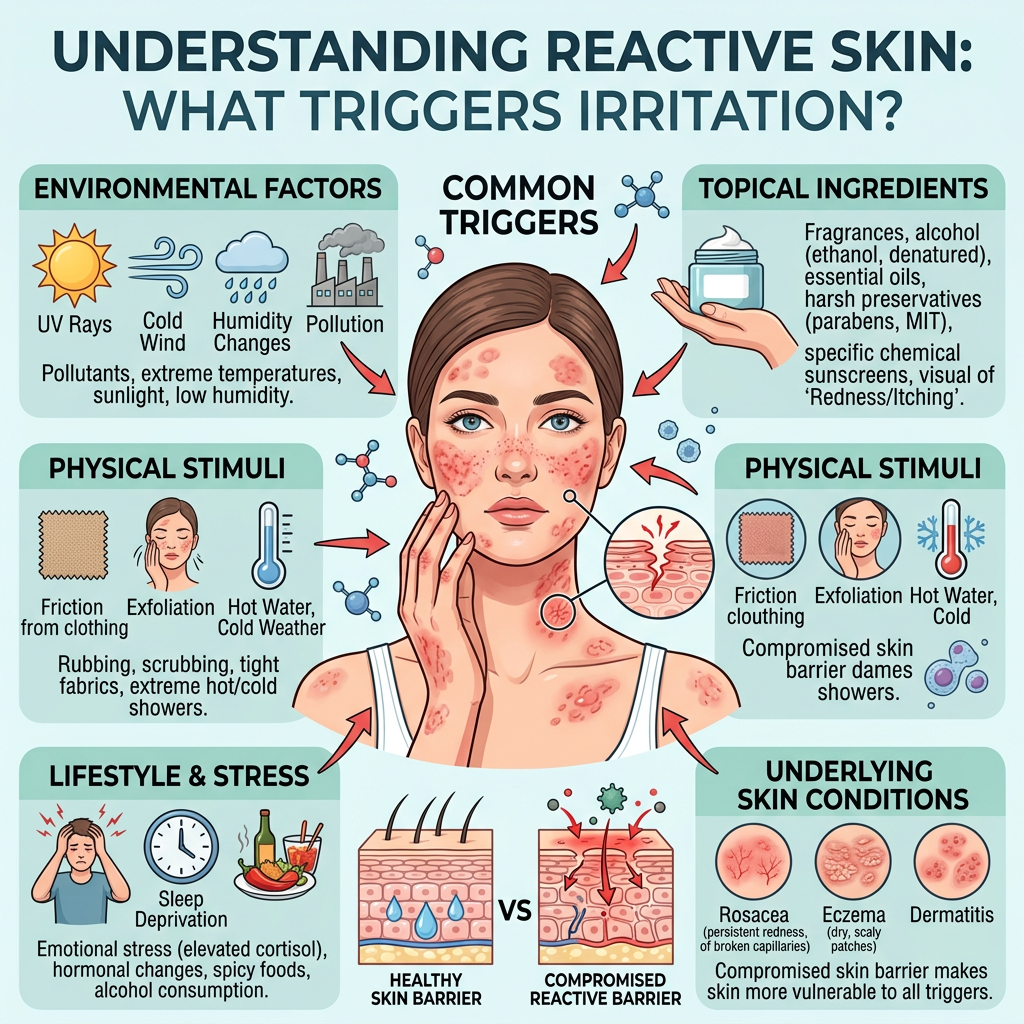
Environmental Triggers
- Sudden temperature changes — moving from cold air to heated indoor air causes instant flushing and stinging.
- Low humidity — dry air pulls moisture from the skin, making it hypersensitive.
- Heat and sun exposure — increases inflammation and creates the “hot skin” sensation.
- Wind — physically stresses the barrier and accelerates water loss.
- Pollution — particles cling to the skin and trigger inflammatory responses.
Lifestyle Triggers
- Stress — cortisol spikes make the skin more reactive and prone to flare‑ups.
- Lack of sleep — slows repair processes, leaving the barrier vulnerable.
- Alcohol and spicy foods — cause flushing and increase surface inflammation.
- High caffeine intake — can dehydrate the skin and heighten reactivity.
Skincare Triggers
- Over‑exfoliation — the number‑one cause; acids, scrubs, and retinoids thin the barrier.
- Strong actives — retinoids, AHAs, BHAs, benzoyl peroxide, vitamin C (high strength).
- Layering too many products — ingredient overload leads to unpredictable reactions.
- Harsh cleansers — strip moisture and disrupt pH balance.
- Fragrance and essential oils — major triggers when the skin is already inflamed.
The Core Pattern
Reactive skin is fast, intense, and unpredictable. It flares suddenly, often from a combination of stress, climate, and overuse of actives.

