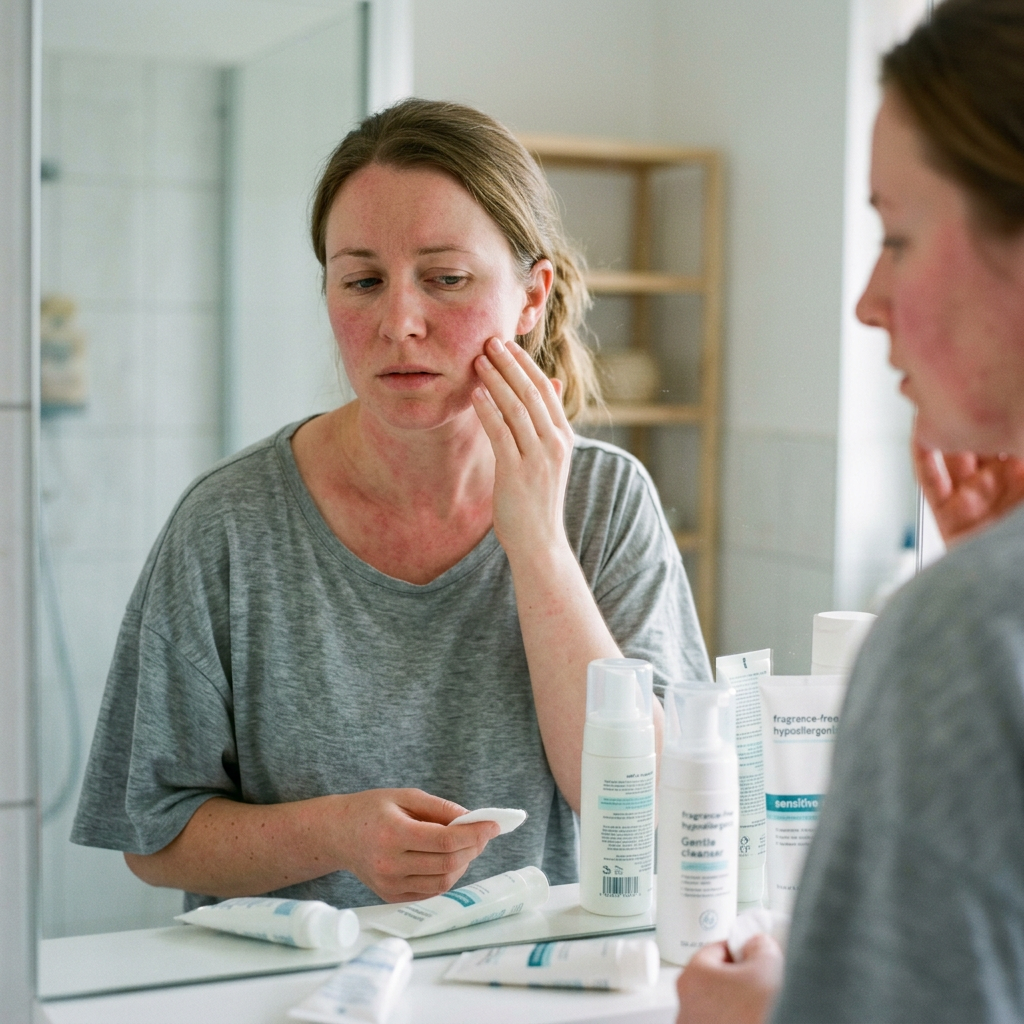
Sensitive skin reacts faster and more intensely than balanced skin. These are the main triggers:
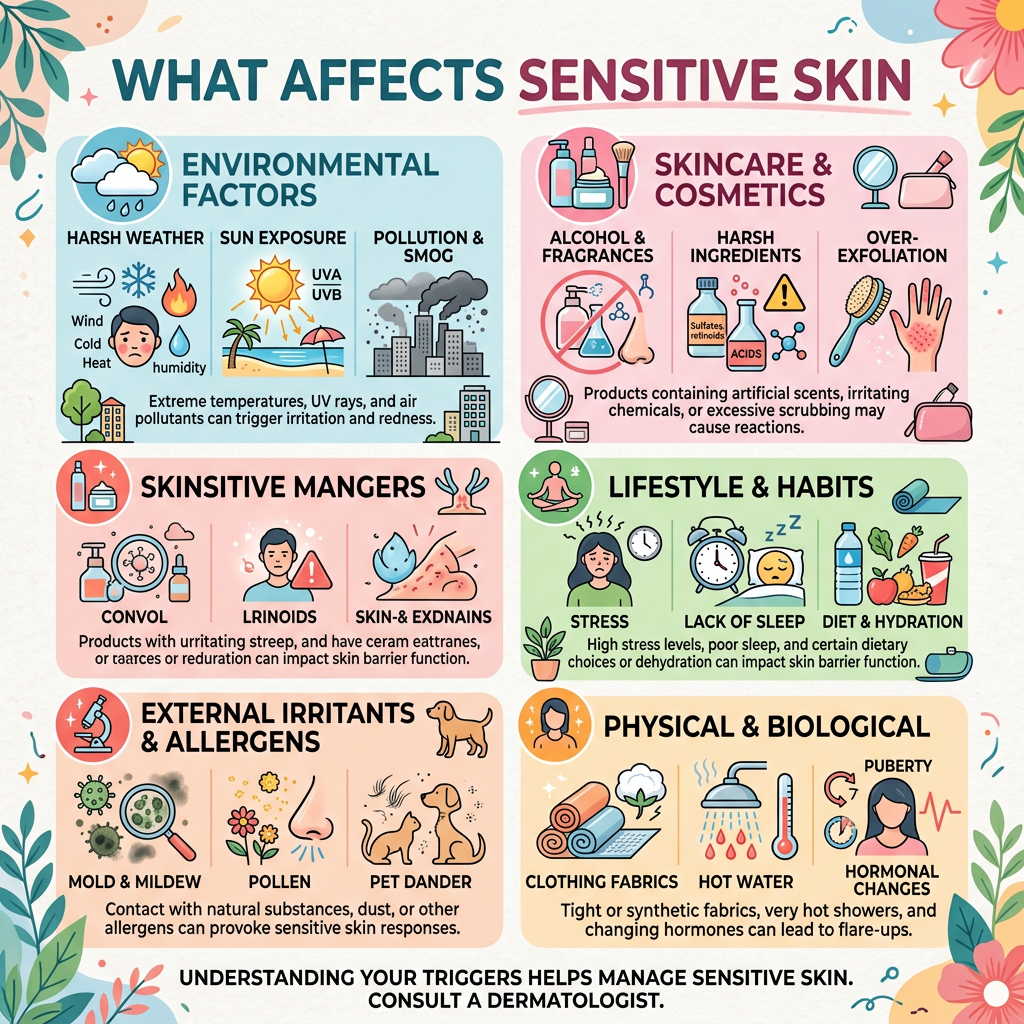
Environmental Factors
- Cold, dry weather — reduces barrier function and increases irritation.
- Heat and humidity — can cause redness, flushing, and inflammation.
- Wind exposure — physically stresses the skin and worsens sensitivity.
- Pollution — particles cling to the skin and trigger inflammatory responses.
- UV exposure — sunlight is one of the strongest sensitivity triggers.
Lifestyle Factors
- Stress — raises cortisol, making the skin more reactive.
- Lack of sleep — weakens repair processes and increases inflammation.
- Diet high in spicy foods or alcohol — can cause flushing and irritation.
- Smoking — reduces oxygen flow and damages the barrier.
Skincare Routine Factors
- Over‑exfoliation — the biggest culprit; it thins the barrier and causes stinging.
- Harsh cleansers — strip natural oils and disrupt pH balance.
- Fragrance (synthetic or natural) — a major trigger for redness and itching.
- Essential oils — often too strong for sensitive skin.
- Strong actives — retinoids, AHAs, BHAs, benzoyl peroxide can cause burning or peeling.
- Layering too many products — increases the chance of ingredient conflict.
Skin‑Type Factors
Sensitive skin can be dry, oily, or combination — sensitivity is about reactivity, not moisture or oil levels. Genetics also play a role; some people naturally have thinner, more reactive barriers.

