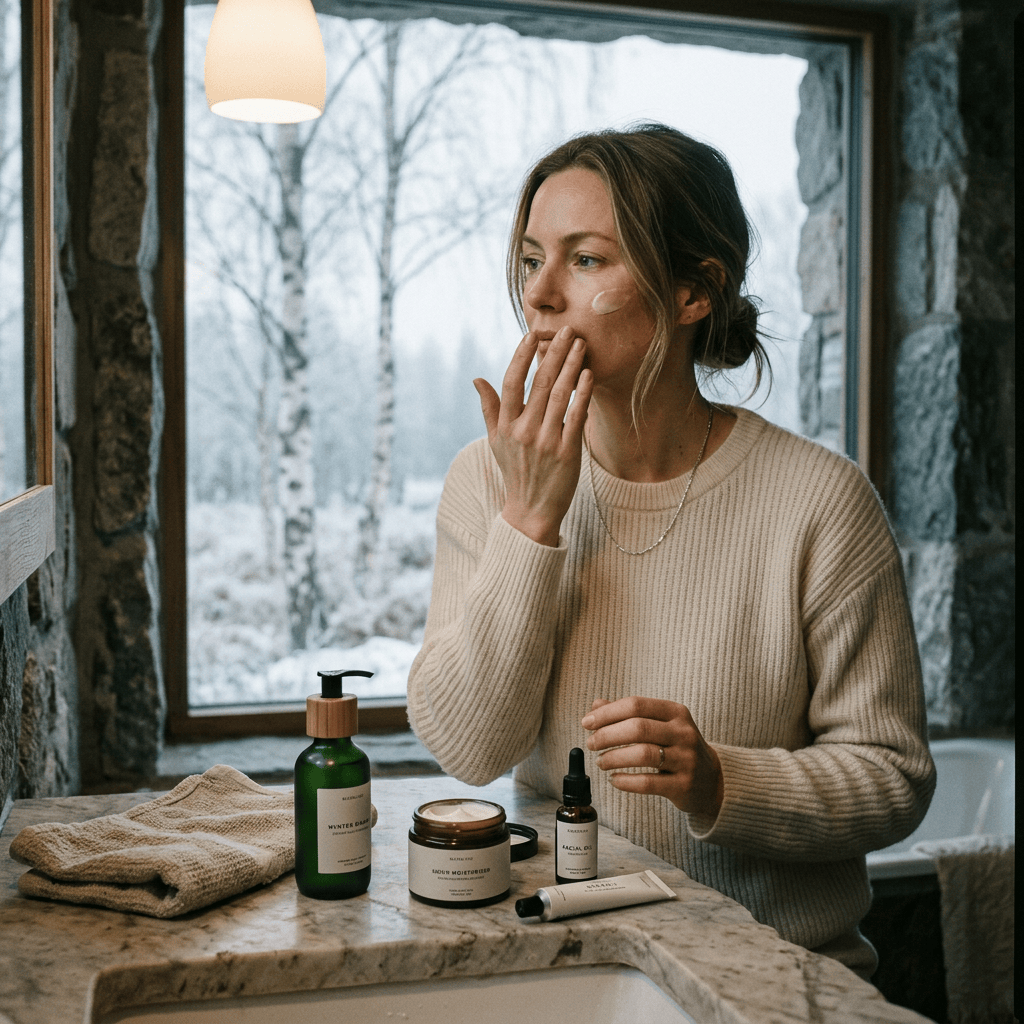
A cold‑weather routine for skin that is easily irritated, reactive, or prone to redness.
Winter can be particularly challenging for sensitive skin. Cold temperatures, indoor heating, wind, and low humidity can weaken the skin barrier, leading to dryness, tightness, flaking, and increased sensitivity. The goal is to keep the skin calm, hydrated, and protected throughout the season.
Step 1: Gentle Cream Cleanser
Choose a cleanser that cleans without disturbing the skin barrier.
Look for:
- Cream or milk cleansers
- Fragrance-free formulas
- Colloidal oatmeal
- Ceramides
Avoid:
- Foaming cleansers
- Scrubs
- Essential oils
- Hot water
Your skin should feel comfortable after cleansing, not tight or squeaky clean.
Step 2: Soothing Hydration Serum
Winter-sensitive skin benefits from calming hydration.
Look for:
- Centella asiatica (cica)
- Panthenol (Vitamin B5)
- Glycerin
- Beta-glucan
- Aloe vera
These ingredients help reduce redness while attracting moisture to the skin.
Step 3: Barrier-Repair Moisturizer
This is the most important winter step.
Choose formulas containing:
- Ceramides
- Squalane
- Colloidal oatmeal
- Shea butter
- Fatty acids
A healthy barrier is the best defence against winter irritation.
Step 4: Daily Mineral Sunscreen
Winter sun and reflected UV rays can still trigger sensitive skin.
Look for:
- Zinc oxide
- Titanium dioxide
- Hydrating cream formulas
- SPF 30 or higher
Mineral sunscreens are generally less irritating than chemical filters for sensitive skin.
Step 5: Weekly Comfort Treatments
Once or twice weekly:
- Oat masks
- Hydrating cream masks
- Cica masks
- Overnight moisture masks
Avoid peels, scrubs, and strong exfoliating acids during periods of sensitivity.
Winter Lifestyle Support
- Use a humidifier while sleeping.
- Keep showers short and lukewarm.
- Wear scarves to protect skin from wind.
- Stay hydrated throughout the day.
- Prioritize sleep and stress management.
The Winter Sensitive Skin Formula
Cleanse → Calm → Repair → Protect
When sensitive skin is supported with soothing ingredients and a strong barrier, winter becomes much easier to manage. The focus isn’t on treating the skin aggressively, but on creating an environment where it can remain calm, comfortable, and resilient.

