Before Twiggy’s pixie cut became the face of the Mod movement, the beehive reigned supreme. One of the most recognizable hairstyles of the 1960s, the beehive was known for its dramatic height, smooth shape, and unmistakable silhouette. Elegant, polished, and attention‑grabbing, it became a symbol of sophistication during the decade’s early years.
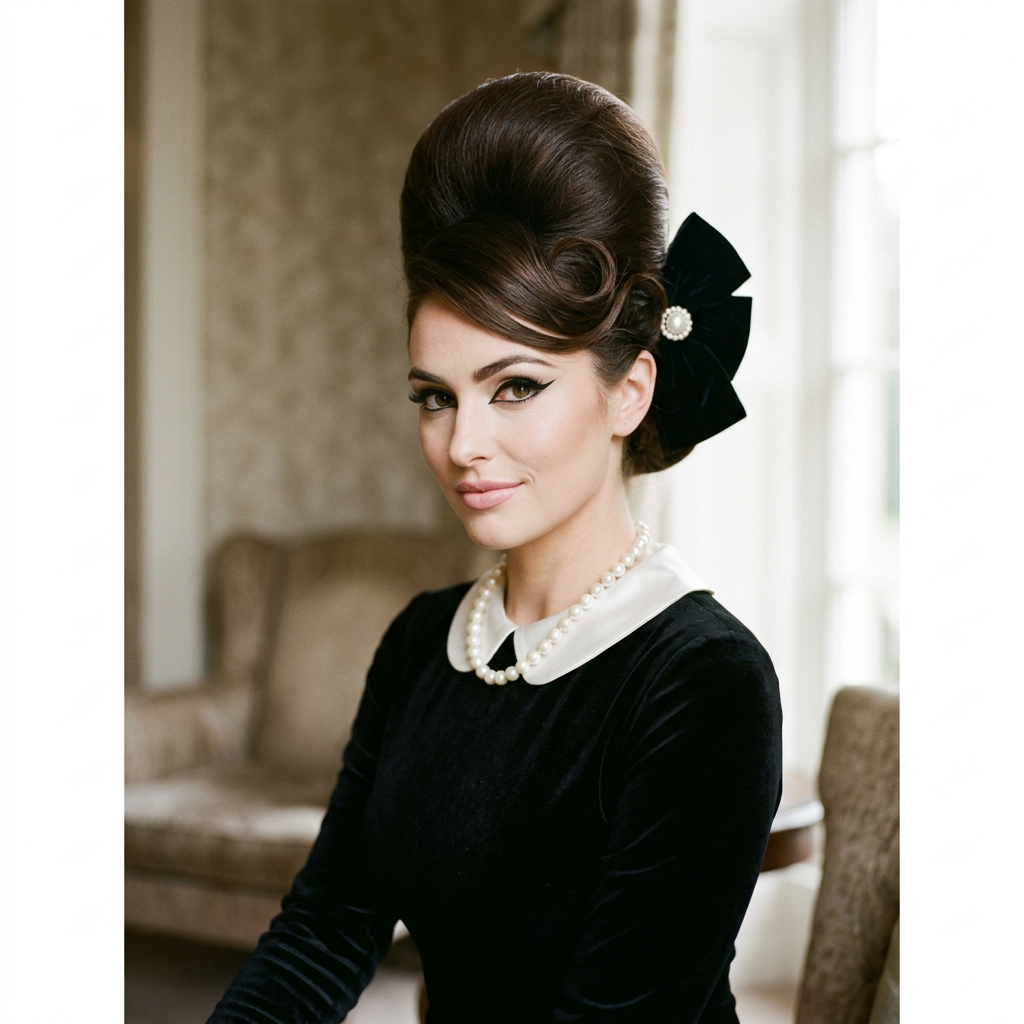
The style was created by teasing and backcombing the hair to build volume at the crown. Hair was then carefully smoothed over the top and secured with pins and generous amounts of hairspray. The result resembled the rounded shape of a beehive, inspiring the hairstyle’s name.
Celebrities such as Dusty Springfield, Aretha Franklin, and Audrey Hepburn helped popularize variations of the look. Some women embraced towering versions that reached impressive heights, while others opted for softer interpretations suitable for everyday wear. The hairstyle paired beautifully with the era’s fitted dresses, pearl earrings, and winged eyeliner.
The beehive reflected the beauty ideals of the time: polished, feminine, and carefully styled. Unlike the free‑flowing hair that would become popular later in the decade, the beehive required patience, skill, and maintenance. Many women visited salons regularly to keep their style perfectly sculpted.
Today, the beehive remains one of the most iconic hairstyles in beauty history. Modern versions are often softer and less structured, but they still capture the glamour and confidence that made the original such a standout trend.
The beehive didn’t just add height to the hair — it elevated an entire era of beauty.

