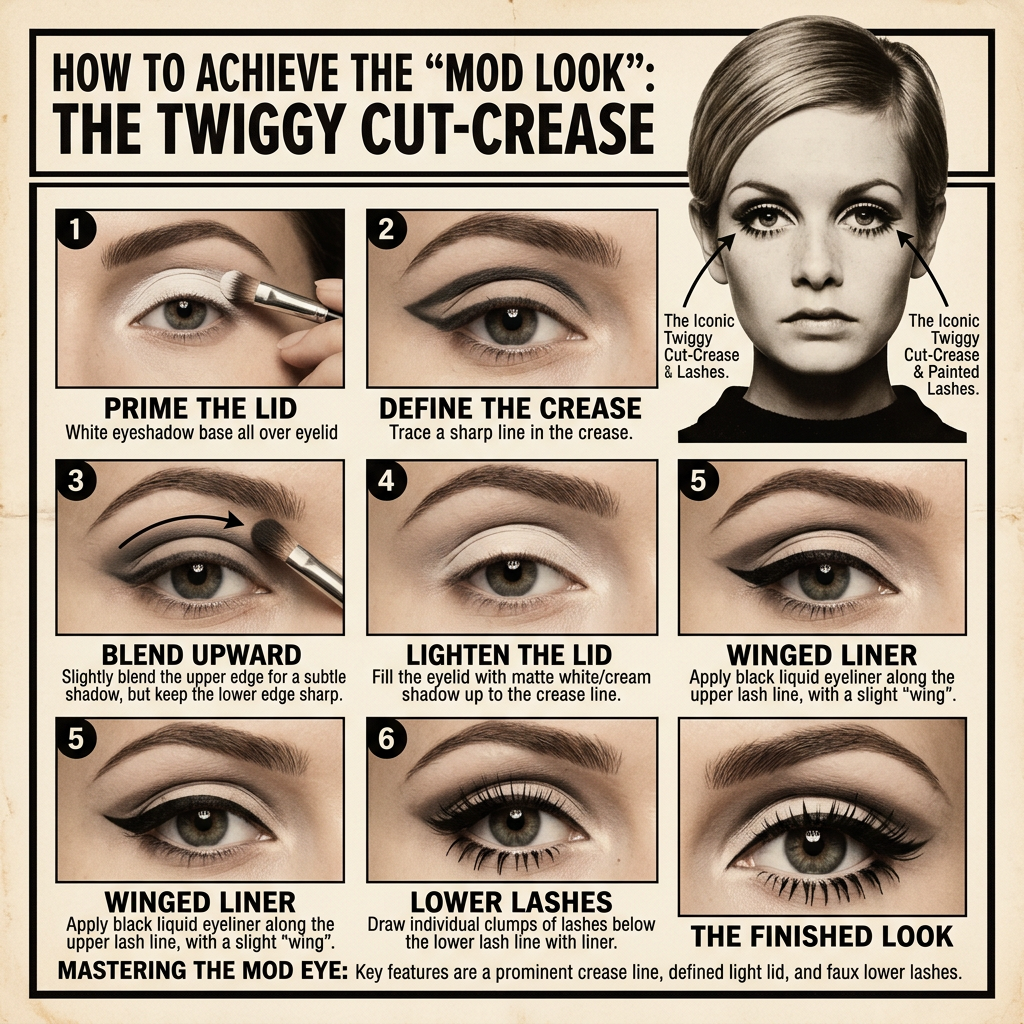
Few makeup techniques are as closely associated with the 1960s as the cut crease. Popularized by Mod icons such as Twiggy, the look was designed to make the eyes appear larger, rounder, and more doll‑like. It became one of the decade’s most influential beauty trends and remains a favourite among makeup artists today.
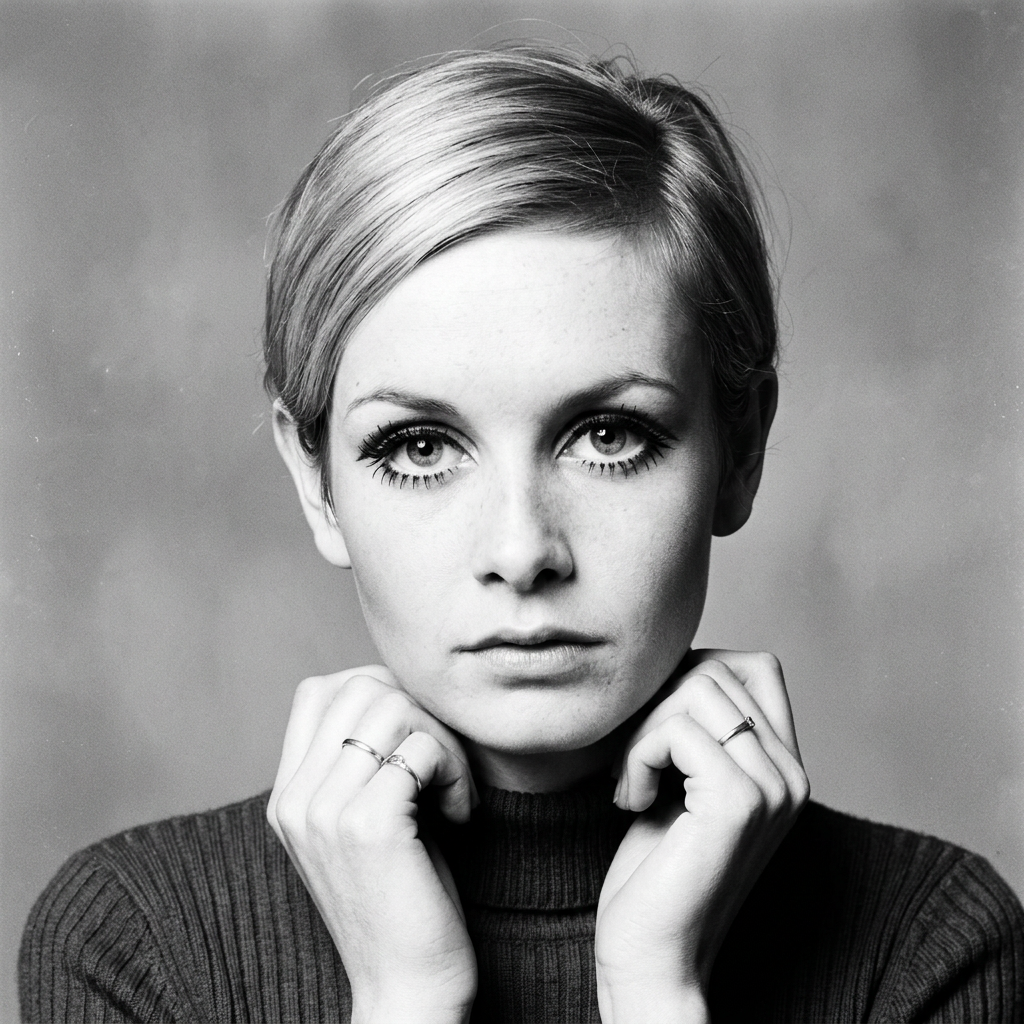
The technique focused on creating a defined crease using a darker eyeshadow while keeping the eyelid itself pale and bright. Soft greys, taupes, and cool browns were commonly used to draw a line slightly above the natural crease, creating the illusion of bigger eyes. Paired with pale ivory or white shadow on the lid, the contrast added depth and drama.
Unlike the smoky eyes of later decades, the 1960s cut crease was crisp and graphic. The emphasis was on shape rather than blending. Combined with black liquid eyeliner, false lashes, and heavy mascara, the result was the wide‑eyed Mod look that became synonymous with Swinging London.
The style reflected the youth‑driven fashion movement of the era. Makeup became playful, artistic, and experimental. Women embraced techniques that enhanced expression rather than simply following traditional beauty standards.
Today, modern cut‑crease looks often feature more blending, shimmer, or bold colours, but the concept remains the same. The trend’s roots can be traced directly back to the 1960s and the fashion‑forward women who made eye makeup the focal point of the face.
The 1960s cut crease wasn’t just a makeup trend — it was a beauty revolution that changed the way people approached eye makeup for generations.