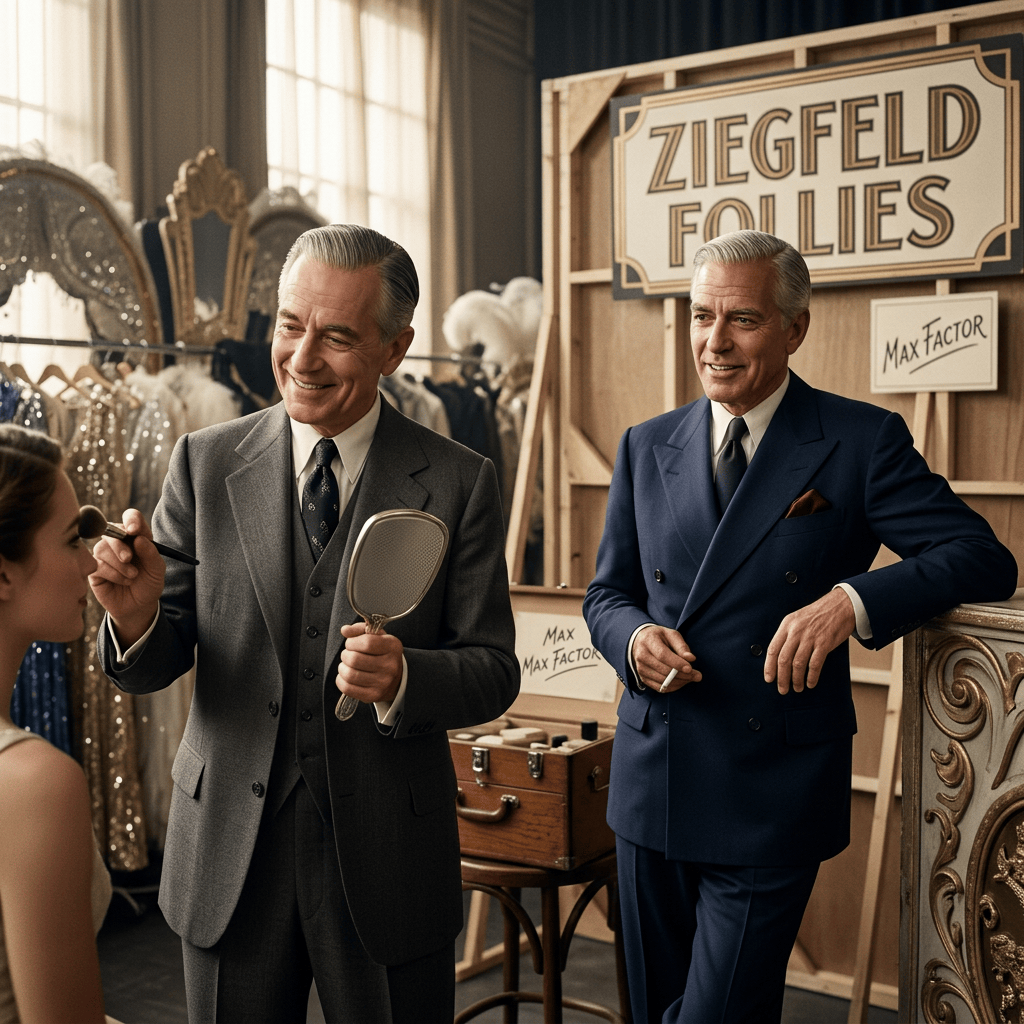
Released in 1936, The Great Ziegfeld was one of Hollywood’s most lavish productions, famous for its spectacular costumes, elaborate musical numbers, and larger‑than‑life glamour. Behind that glamorous screen image was the growing influence of Max Factor, whose makeup innovations were helping transform the way audiences experienced beauty on film. [imdb.com], [britannica.com]
By the mid‑1930s, Hollywood was demanding makeup that could withstand powerful studio lights while still appearing natural on screen. Traditional stage makeup was often too heavy for close‑ups, which led filmmakers to rely on the expertise of Max Factor and his company. Factor had already revolutionized the industry by developing cosmetics specifically for motion pictures, making actors appear more realistic and photogenic under the camera’s unforgiving gaze. [britannica.com], [maxfactor.com]
Company records for The Great Ziegfeld list Max Factor as an uncredited provider of makeup and hair services for the production, reflecting how deeply integrated his organization had become within the Hollywood studio system. [imdb.com]
The film arrived during an exciting period for beauty history. Just one year earlier, Max Factor had introduced Pan‑Cake Make‑Up, developed to solve complexion issues created by Technicolor film. The innovation helped actors appear more natural on screen and would eventually become one of the most influential foundations in cosmetics history. [maxfactor.com], [maxfactor.com]
What makes The Great Ziegfeld fascinating from a beauty perspective is its celebration of Hollywood glamour at a time when makeup itself was being reinvented. The film showcased the polished, camera‑ready aesthetic that Max Factor helped create, proving that makeup had become an essential part of cinematic storytelling.

