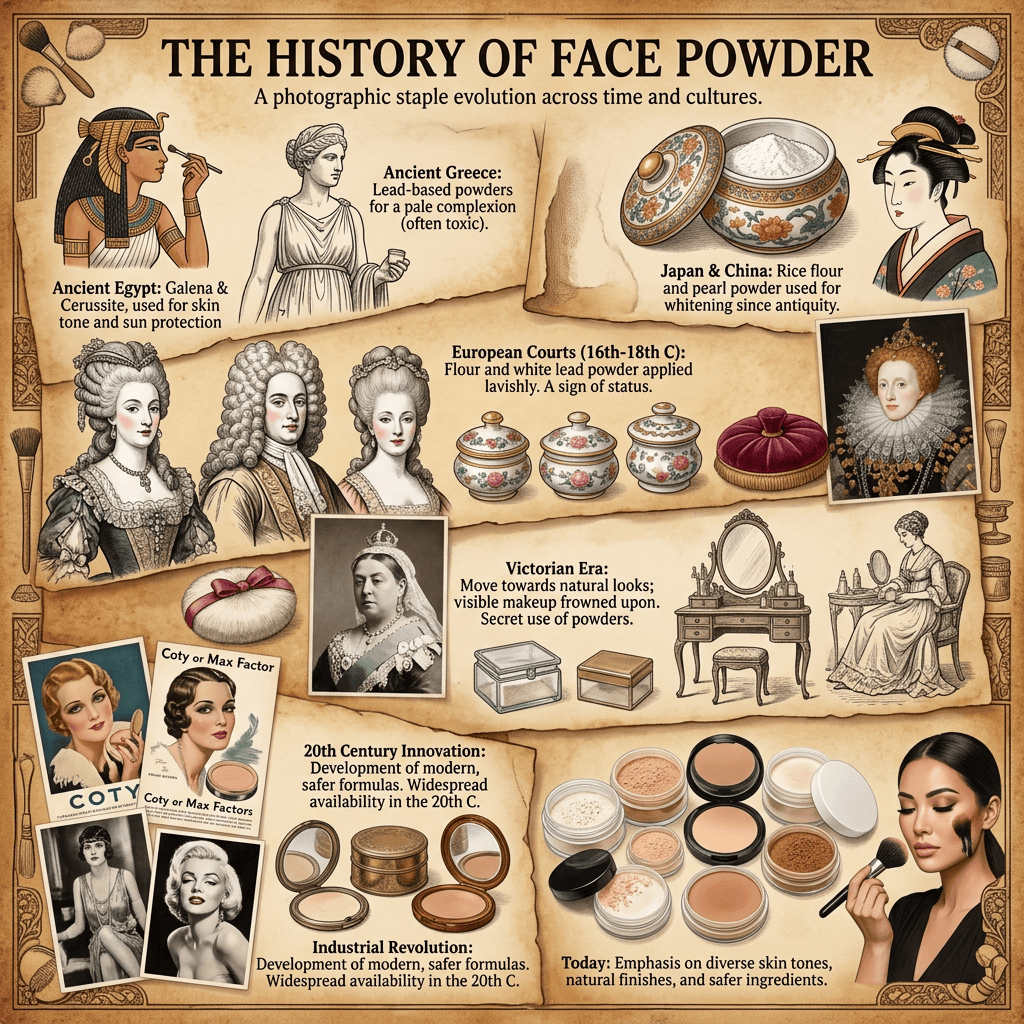
If there were a Beauty Hall of Fame, face powder would undoubtedly earn a place. Long before foundation, concealer, and setting sprays entered the picture, people were dusting their faces with powder in pursuit of fashionable complexions.
The history of face powder stretches back thousands of years. Ancient civilizations, including the Egyptians, Greeks, and Romans, used various powders and pigments as part of their beauty routines. A smooth, even complexion was often associated with status, refinement, and wealth.
By the sixteenth, seventeenth, and eighteenth centuries, pale skin became highly desirable throughout much of Europe. A fair complexion suggested that a person did not work outdoors, making it a visible sign of social standing. Powders were used to create this coveted look, although some historical formulas contained ingredients that would certainly not meet today’s safety standards.
Thankfully, cosmetics improved.
During the Victorian era, face powder remained popular, though beauty ideals shifted toward a more natural appearance. By the early twentieth century, powder became one of the most essential products in a woman’s makeup bag. Compact cases appeared in handbags, department stores expanded their cosmetic offerings, and Hollywood stars helped popularize a polished, matte complexion.
The arrival of modern cinema gave face powder an even larger role. Studio lights created shine on camera, so actors and actresses relied on powder to achieve a smooth, photograph-friendly finish. It quickly became a staple of both professional and everyday beauty routines.
Today, face powder serves many purposes, from setting makeup to reducing shine and blurring imperfections. While formulas have evolved dramatically, the product’s basic goal remains surprisingly unchanged.
For centuries, face powder has helped people put their best face forward.
Beauty History Verdict: Beauty trends may come and go, but face powder has remained a cosmetic essential for generations. That’s an impressive staying power for a product that predates modern makeup itself.

