The Body Care Boom
Once upon a time, body care was refreshingly simple.
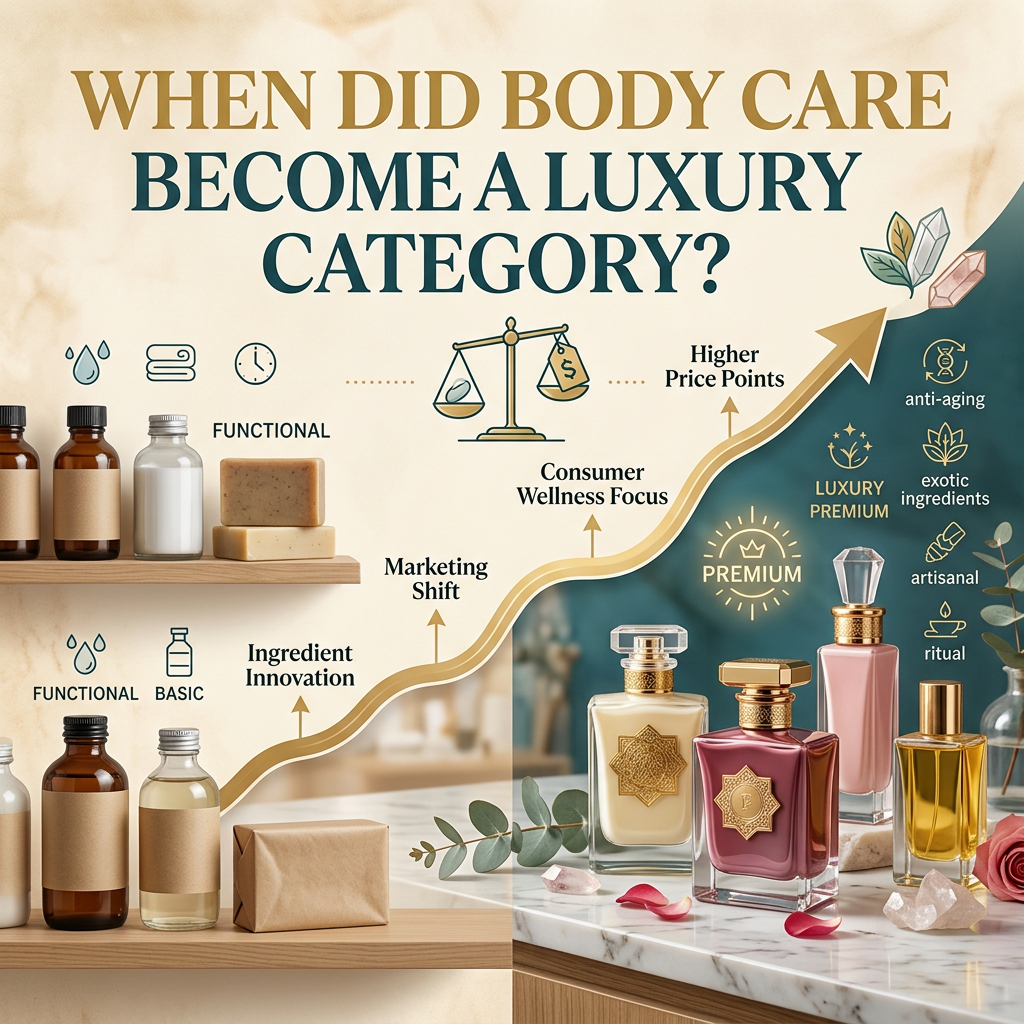
Most people owned a bottle of body lotion, a bar of soap, perhaps a body wash, and maybe a seasonal hand cream for winter. The goal was straightforward: cleanse, moisturize, move on with your day.
Today, body care looks very different.
Consumers can now choose from body serums, body oils, body butters, body exfoliating acids, body retinol treatments, body peptide creams, body masks, body contouring products, body deodorants, and body mists. Entire shelves have been devoted to routines that rival the complexity once reserved for facial skincare.
So what happened?
At first glance, it might seem as though consumers suddenly became more interested in caring for the skin below the neck. While there’s certainly some truth to that, the rise of luxury body care tells a much larger story about how the beauty industry evolves.
For years, facial skincare received the majority of attention, innovation, and marketing investment. Consumers were encouraged to learn about ingredients, develop routines, and invest in increasingly specialized products. Eventually, many skincare enthusiasts became comfortable spending significant amounts on products designed for the face.
The next logical step was obvious.
Why stop at the jawline?
Gradually, ingredients once associated exclusively with facial skincare began appearing in body products. Retinol migrated to body creams. Vitamin C found its way into body serums. Peptides followed close behind. Marketing language evolved as well, introducing concepts such as firming, smoothing, resurfacing, brightening, and renewing for areas that had traditionally been treated with a simple moisturizer.
At the same time, body care became an experience rather than a necessity.
Packaging became more sophisticated. Fragrances became more complex. Daily routines became rituals. What was once considered a practical category began borrowing heavily from the language of wellness, self-care, and luxury.
Of course, some of these innovations offer genuine benefits. Conditions such as body acne, keratosis pilaris, dryness, and uneven texture may respond well to targeted ingredients. Not every new product exists solely for marketing purposes.
Yet the transformation of body care raises an interesting question.
Are consumers demanding these increasingly specialized products, or is the industry creating new categories because growth depends on giving people something else to buy?
The answer may lie somewhere in between.
Many consumers genuinely enjoy elevated body-care experiences. At the same time, beauty brands have become remarkably skilled at expanding routines that once felt complete.
Perhaps the most fascinating aspect of the body-care boom isn’t the products themselves.
It’s how quickly a category once defined by simplicity became one of beauty’s most sophisticated, profitable, and rapidly evolving spaces.
And if body lotion can become a luxury experience, one has to wonder:
What’s the next everyday product destined for reinvention?

