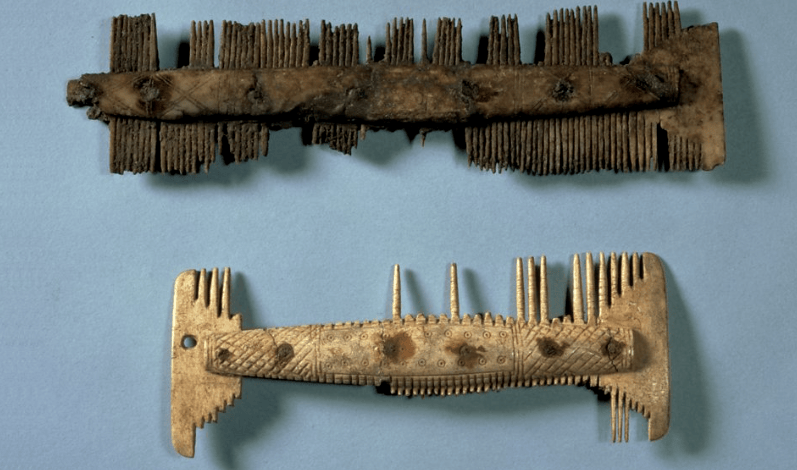
Anglo‑Saxon hair care was simple, natural, and deeply tied to craftsmanship. Hair was considered a symbol of health and femininity, so maintaining it was a daily ritual supported by tools that were both practical and beautiful.


The most essential item was the wooden comb. These combs were carved from boxwood, ash or horn, often decorated with geometric patterns or small symbolic motifs. They were used not only to detangle hair but also to remove dust and maintain scalp health — a vital practice in a world without modern shampoos.
Women also used bone pins and metal clasps to secure braids and coils. These accessories were functional, but they also signaled status. A finely carved pin or a bronze clasp suggested wealth and refinement. Hair was typically worn long, braided or wrapped into intricate knots and these tools helped create styles that were both sturdy and elegant.
Oils infused with herbs like rosemary or lavender were applied sparingly to soften the hair and add fragrance. Combined with careful combing and braiding, these tools created a look that was modest, natural, and quietly sophisticated.
Anglo‑Saxon hair tools remind us that beauty was once rooted in craftsmanship — a blend of utility, artistry, and everyday ritual.
I’m Stacey Hobbs, thanks for reading Face by Stace! Until next time.
do you feel fabulous today?

