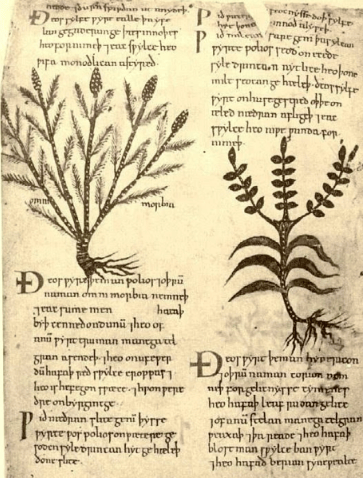
Anglo‑Saxon beauty rituals relied on herbs, grains and natural oils — ingredients gathered from fields, forests and kitchen gardens. These recipes were simple but effective, reflecting a culture that valued purity and practicality.

For cleansing, women used herbal infusions made from chamomile, mint or elderflower. Warm water steeped with these plants refreshed the skin and soothed irritation. A common exfoliant was a mixture of ground oats and barley, rubbed gently onto the face to remove impurities and soften the complexion.
Honey was a prized ingredient. Mixed with a little warm water, it became a moisturizing mask that left the skin smooth and hydrated. Honey’s natural antibacterial properties also made it useful for treating minor blemishes.
For hair, rosemary and nettle were boiled into strengthening rinses that promoted shine and scalp health. Women sometimes added a touch of animal fat or beeswax to create a conditioning salve for dry ends.
Perfume was subtle. Herbs like sweet woodruff, lavender and meadowsweet were crushed and stored in small pouches, releasing gentle fragrance throughout the day.
These recipes were about harmony with nature. Anglo‑Saxon beauty was slow, thoughtful and rooted in the land.
I’m Stacey Hobbs, thanks for reading Face by Stace! Until next time.
do you feel fabulous today?

