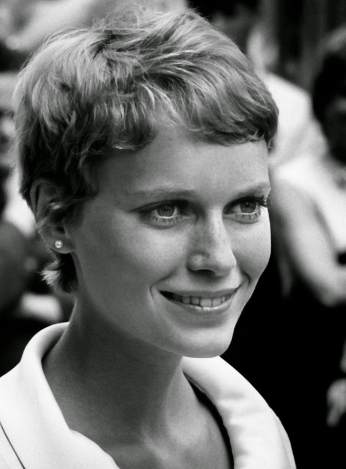
When Vidal Sassoon introduced the pixie cut in the early 1960s, he didn’t just change hair — he changed culture. His geometric approach to styling transformed the haircut from a symbol of rebellion into an emblem of modernity. The pixie became the visual shorthand for a new kind of woman: independent, confident, and unafraid of structure.
1. The Revolution of Shape
Before Sassoon, hair was sculpted through setting, instead of cutting. Women slept in rollers, sat under dryers and relied on lacquer to hold their curls in place. Sassoon’s philosophy was radical: cut hair so that it falls into shape naturally.
He treated hair like architecture. Angles replaced curls. Precision replaced volume. Movement replaced rigidity.
The result was a haircut that moved with the woman. It was a hairstyle that was affiliated with the Mod look, such as with Twiggy. However, anyone lady could and did sport the pixie cut.
2. The Cultural Moment
The pixie cut arrived at the perfect time. The 1960s were an era of liberation — social and aesthetic. Some women were re-entering the workforce, rejecting domestic ideals and re-defining beauty standards.
Sassoon’s clients — Mary Quant, Nancy Kwan, Mia Farrow, and Jean Seberg — embodied this shift.
The pixie was not about prettiness. It was about presence.
3. The Geometry of Freedom
Sassoon’s cuts were mathematical — yet sensual. He used geometry to create movement.
The Key Principles
- Precision cutting over styling
- Natural fall over artificial shape
- Clean lines over ornamentation
- Effortless maintenance over ritual
The pixie was the first haircut that didn’t require a salon to survive. It was self‑sustaining beauty — a concept decades ahead of its time.
4. The Feminine Shift
The pixie cut stripped away the decorative excess of the 1950s and replaced it with clarity.
Women who wore it projected:
- confidence
- independence
- intellect
- modernity
It was the haircut of the thinking woman — the same archetype that defined French New Wave cinema and the rise of minimalist fashion.
5. The Legacy
Sassoon’s pixie cut became the guide for modern hair design. Every contemporary short haircut — from the asymmetrical bob to the textured crop.
It also changed the relationship between women and their stylists. Hair became collaboration, no longer was it about maintenance.
The pixie cut remains timeless because it is not a style — it is a statement.
Vidal Sassoon’s pixie cut was more than a haircut; it was a cultural revolution. By treating hair as architecture, Sassoon liberated women from the tyranny of styling and introduced a new visual language of modern culture than instantaneously took over the decade as the “it” hairstyle, entering into pop-culture. The pixie became a symbol of independence, intellect and effortless beauty — a legacy that continues to shape the way we define “modern” today.
I’m Stacey Hobbs, thanks for reading Face by Stace! Until next time.
do you feel fabulous today?
 Face by Stace