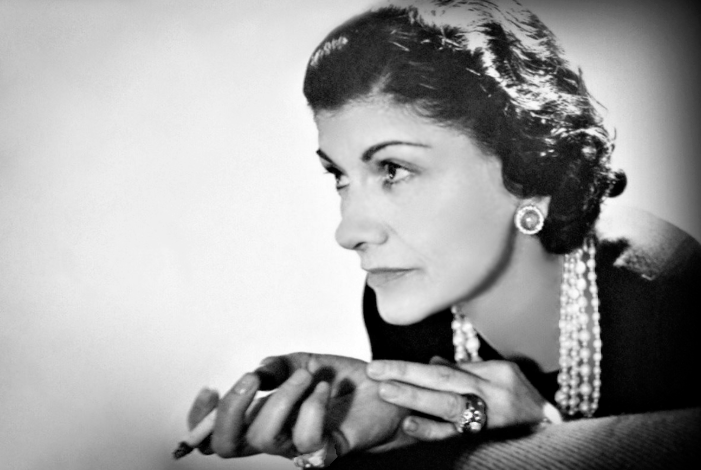
Chanel may have liberated women, but Patou taught them how to be seen.
By the late 1920s, Paris fashion had become a battlefield — not of fabric, but of ideology. And at the centre of it stood two titans who could not have been more different: Jean Patou and Gabrielle Chanel.
They were not rivals in the petty sense. They were rivals in the philosophical sense — two designers fighting for the soul of modern womanhood.
Chanel believed in stripping everything down:
- jersey
- simplicity
- uniformity
- the democratization of chic
Patou believed in elevating everything:
- luxury sportswear
- elongated lines
- aristocratic ease
- the glamour of movement
Where Chanel flattened the silhouette, Patou lengthened it. Where Chanel erased the waist, Patou sculpted it. Where Chanel insisted women should dress like themselves, Patou insisted they should dress like their best selves.
And Paris noticed.
The feud wasn’t loud — it was architectural.
Chanel’s women walked like they were ready to take over the office. Patou’s women walked like they were ready to take over the room.
Chanel gave women freedom. Patou gave them presence.
The press began to pick sides. Fashion editors whispered that Patou’s lines were “a rebuke to Chanel’s severity.” Chanel, famously territorial, dismissed Patou’s elegance as “too much effort.”
Patou responded the only way a couturier could: He made the long, vertical, Patou silhouette the look of the decade.
And then came the moment that cemented the feud:
The Hemline War of 1929.
Chanel kept her hems stubbornly short. Patou dropped his — dramatically — almost overnight.
Women followed Patou.
The fashion world gasped. Chanel was furious. Patou smiled.
It wasn’t just a hemline. It was a declaration.
Patou had changed the direction of fashion with a single gesture — and he had done it in direct opposition to Chanel’s aesthetic rule.
I’m Stacey Hobbs, thanks for reading Face by Stace! Until next time.
do you feel fabulous today?
 Face by Stace