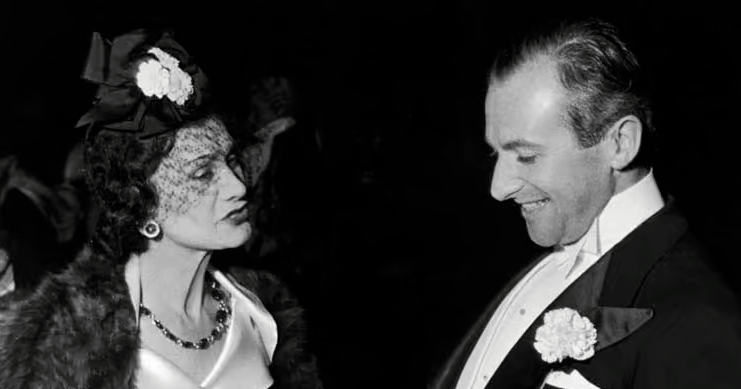
The legend of Chanel often centers on one woman — the visionary, the rebel, the icon. But the truth behind the Chanel empire is far more complicated. While Coco Chanel created the aesthetic, the myth, and the un-mistakable style, it was the Wertheimer family who built the global business machine that turned her name into a century‑spanning empire.
And during World War II, the battle between them revealed exactly who held the real power.

Chanel: The Creative Genius with a Business Blind Spot
Coco Chanel was brilliant at branding before branding existed. She understood simplicity, modernity, and the psychology of desire. But she was not a business strategist. By 1924, she had already sold 90% of the rights to Chanel No. 5 to Pierre and Paul Wertheimer — a deal she later regretted bitterly.
Coco Chanel believed she deserved more.
Chanel believed she had been cheated.
And she spent decades trying to reclaim control.
The Wertheimers: The Quiet Architects of a Global Luxury House
The Wertheimers were not designers. They were industrialists — disciplined, discreet, and ruthlessly efficient. They financed the production of No. 5, built the factories, managed distribution, and turned the perfume into a worldwide phenomenon.
They understood something Chanel didn’t:
A brand is only as powerful as its infrastructure.
World War II: The Power Struggle Reaches Its Peak
When Nazi occupation began, Chanel saw her chance. Because the Wertheimers were Jewish, she attempted to use Nazi “Aryanization” laws to seize full ownership of Parfums Chanel.
But the Wertheimers had anticipated her move. Before fleeing France, Pierre Wertheimer transferred his shares to a Christian businessman, Félix Amiot, placing the company safely out of Nazi reach — and out of Chanel’s reach.
It was a genius of a strategy, one may say. He outsmarted Coco Chanel. Chanel’s petition to take over the company failed instantly.
After the War: The Ultimate Irony
When the war ended, Amiot returned the company to the Wertheimers. Chanel had no legal claim, no leverage, and no path to ownership.
And yet — in one of the most astonishing twists in fashion history — the Wertheimers still chose to support her. They paid her a generous lifetime stipend and financed her 1954 couture comeback, ensuring the Chanel name remained relevant long after her influence had faded.
So Who Really Built the Empire?
Chanel built the vision. The Wertheimers built the empire.
One created the dream. The other ensured it survived wars, scandals, and the passage of time.
The modern House of Chanel — the global powerhouse worth billions — is the result of their uneasy, intertwined legacy: Chanel’s genius and the Wertheimers’ strategy, locked together forever.
I’m Stacey Hobbs, thanks for reading! Until next time.
do you feel fabulous today?
 Face by Stace