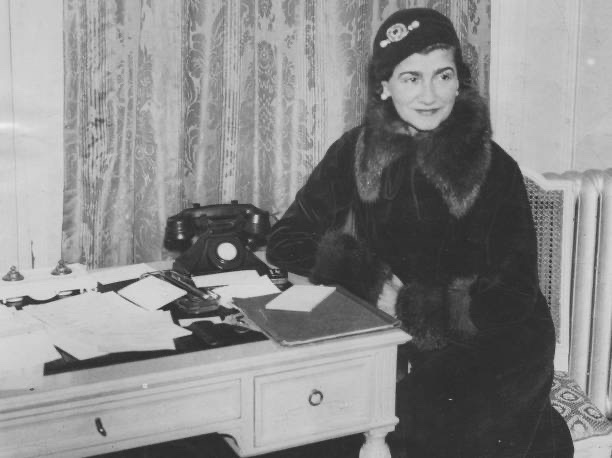
When Paris fell under German Occupation in June 1940, Gabrielle “Coco” Chanel made one of the most controversial decisions of her career. That decision was for her to close her couture house. At the height of her influence with 4,000 employees and a global reputation, Chanel abruptly declared, “Fashion is not important right now.” Her salons went dark, her ateliers emptied and her mannequins were stored away. For the first time since 1910, Chanel stepped back from the world she had dominated. Risking more than she would ever realize but would later discover upon returning in 1954.
Her decision was not purely patriotic or symbolic. Chanel had long resented the powerful unions within her workforce and the war offered a convenient moment to halt operations without negotiation. She dismissed her employees overnight, a move that would haunt her reputation for decades. While other couturiers — including Lelong, Balmain, and later Dior — kept Parisian fashion alive during the occupation, Chanel retreated entirely from couture.
During these years, she lived at the Ritz, a hotel favoured by high‑ranking German officers and entered a relationship with Baron Hans Günther von Dincklage, a German diplomat. This association further complicated her legacy, intertwining her personal life with the political tensions of wartime Paris. Her perfume business, however, continued to operate, controlled largely by the Wertheimer family, a fact that frustrated Chanel, who attempted to use wartime laws to regain ownership.
By 1944, as liberation approached, Chanel’s wartime choices cast a long shadow. Her closure symbolized both withdrawal and survival — a pause that allowed her to re-emerge in 1954 with a radically modern vision. But the years she spent away from couture remain one of the most debated chapters of her life.
I’m Stacey Hobbs, thanks for reading Face by Stace! Until next time.
do you feel fabulous today?

