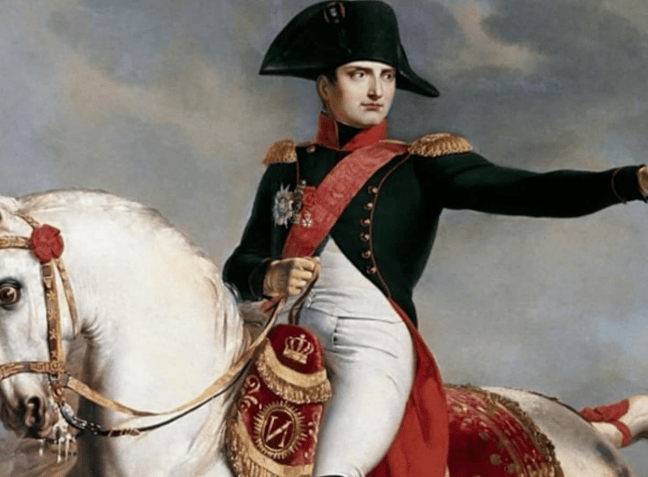
Welcome to the Napoleonic Era in French Beauty History! Have you got your snack, a drink perhaps? Get oh-so comfortable, as we begin the next journey into French Beauty History, by delving into the Napoleon era!

When the French Revolution ended, France entered a strange, suspended moment — a nation exhausted by terror, stripped of monarchy, and un-sure of what beauty meant in a world where extravagance had once been punishable by death. As Napoleon Bonaparte rose to power, French women found themselves quietly reclaiming the rituals they had abandoned. Beauty became a form of recovery, a way to rebuild identity after years of political upheaval. Gone were the towering powdered wigs and jewel‑encrusted faces of the ancient régime; in their place emerged a new aesthetic shaped by restraint, classical influence, and emotional caution.
Women embraced a return to Greek and Roman simplicity, inspired by the neoclassical art Napoleon adored. Hair was parted down the centre and arranged in soft curls that framed the face, a gentle, feminine contrast to the severity of revolutionary years. Complexions remained pale, but not powdered; the matte, natural skin reflected a desire for purity rather than aristocratic excess. Rouge was used sparingly, applied only to revive the cheeks rather than to signal status. Dresses followed the same classical revival: high waists, flowing fabrics, and silhouettes that skimmed the body rather than sculpted it. Beauty became quiet, intellectual, and symbolic of a nation trying to steady itself.
Perfume culture also began its slow return. After years of political suspicion toward luxury, women cautiously re-introduced light floral scents of violets, roses, and orange blossom, scents that felt safe, feminine, and un-controversial. Joséphine de Beauharnais, not yet Empress, but already a cultural force, championed this new softness. Her influence helped shift beauty away from revolutionary austerity and toward a refined, classical elegance that felt modern for its time.
This first phase of Napoleonic beauty is the bridge between the horror of the Revolution and the lush imperial glamour that follows. It marks the moment when French women re-claimed their mirrors, their perfumes, and their sense of self — quietly, deliberately, and with a new understanding of beauty as resilience rather than excess.
I’m Stacey Hobbs, thanks for reading. Until next time!
do you feel fabulous today?
 Face by Stace