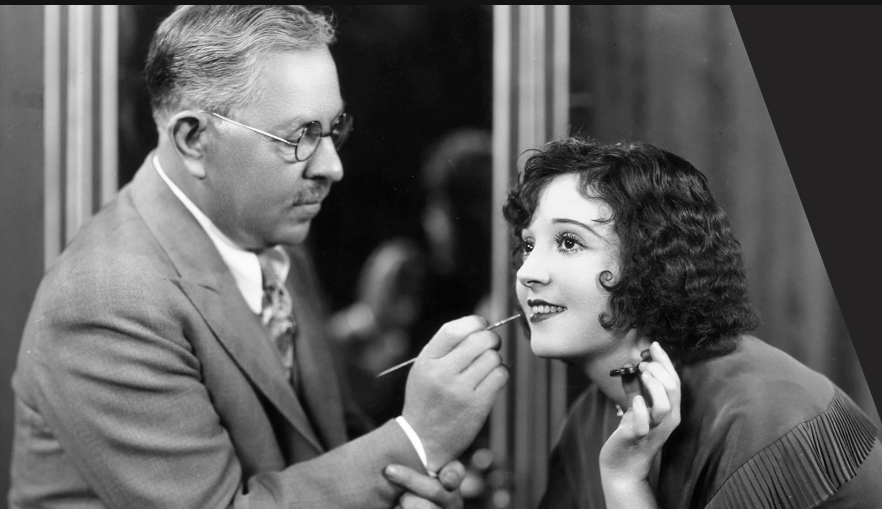
You may have heard of Ben Nye, let’s take it back even further to the father of Make-up, the gentleman who invented make-up and “make-up”, the legendary Max Factor.


Every make-up artist wouldn’t be where they are today if it weren’t for Max Factor. Let’s throw it out there. Not only is Max Factor the father of make-up, Max Factor invented make-up and the word make-up.
Max Factor is a combination of a person and a brand, a bridge between early Hollywood and modern consumer beauty.
Origins of Max Factor and the brand
Max Factor Sr. was born Maksymilian Faktorowicz, a Polish-Jewish, in 1872 in Poland, then under the Russian Empire.
By age eight he was assisting a dentist and pharmacist; by nine he was apprenticed to a wig maker and cosmetician while in Poland, gaining hands‑on experience with hair, wigs and rudimentary cosmetics.
Factor later opened his own shop in Ryazan, selling hand‑made rouges, creams, fragrances and wigs, and became known when a travelling theatrical troupe used his products to perform for Russian nobility.
Factor’s success led to an appointment as cosmetics expert to the Russian royal family and the Imperial Russian Grand Opera, an early indication that his work sat at the intersection of performance, aesthetics and technical craft, long before he arrived in Hollywood.
Concerned about rising antisemitic persecution in the Russian Empire, Factor emigrated to the United States in 1904.
Factor’s re-location to Los Angeles, saw an opportunity in the film industry, this led to him moving his family and his business to L.A., he supplied made-to-order wigs and theatrical make-up to studios and performers.
Max Factor & Company was formally founded in 1909, becoming a specialist in movie make‑up and later a global cosmetics brand.
From the beginning, the brand’s identity was inseparable from Hollywood—its lab was effectively an R&D arm for the film industry.
Technical innovations and product firsts
When Factor first laid his eyes on motion pictures, he found traditional stage greasepaint “terrifying” on screen. Factor had found greasepaint to be too heavy, mask‑like and ill‑suited to the camera.
1914 Flexible Greasepaint
In response, he created the first make‑up specifically for film, which is a “flexible greasepaint” that could be applied thinly and had a more human-look on camera.
With the success of flexible greasepaint, this innovation effectively launched screen make‑up and positioned Max Factor as the authority on cosmetics for film.
In 1918, Factor introduced the Colour Harmony principle—co-ordinating make‑up shades to complement a woman’s natural complexion, eye colour and hair colour.
He developed powders and shades that worked with evolving film technologies, ensuring faces appeared matte and natural on camera while still flattering in person.
This was an early, systematic approach to shade matching and undertones.
Coining the term “make‑up” and democratizing glamour
Around 1920, Factor introduced a full range of cosmetics to the general public and coined the term “make‑up” for these products.
Factor launched “Society Make‑up,” allowing regular women to emulate the looks of their favourite movie stars, breaking the boundary between studio and street.
His guiding belief “You are not born glamorous. Glamour is created.”—framed beauty as a craft and a set of tools, not an accident of birth.
Relationship with Hollywood and star‑making
Make‑up artist to the Golden Age
In Hollywood’s Golden Age, Max Factor became synonymous with movie glamour.
Factor created signature looks for icons such as Ava Gardner, Jean Harlow, Marlene Dietrich, Marilyn Monroe, Katharine Hepburn, Rita Hayworth, Bette Davis, and others
Factor often customized shades and textures for individual stars, adjusting for lighting, film stock and facial structure.
This work shaped how these actresses appeared on screen but also how audiences imagined “glamour” itself.
From studio lab to consumer aspiration
As women saw these stars on screen, they wanted to replicate their looks. Max Factor’s business model bridged their desire.
Products developed for film like Pan‑Cake make-up, were later released to the general public when actresses began taking them home for personal use.
Campaigns marketed Max Factor as the brand that could give “movie‑star glamour” to any woman, reinforcing the idea that professional techniques were now accessible to regular women.
This dynamic helped cement the modern pattern where professional artistry drives consumer trends.
Brand evolution and corporate history
Max Factor, Sr. died in 1938 at age 66. His son Francis adopted the name Max Factor, Jr., continuing the business and developing products like Tru‑Color lipstick and Pan‑Stik. Max Factor Sr.’s great-grandsons, Dean and Davis Factor are founders of Smashbox Cosmetics.
The company remained family‑owned for several generations, expanding internationally and maintaining its Hollywood association.
Max Factor & Company was sold in 1973 and later acquired by Procter & Gamble in 1991; today the brand is owned by Coty.
Max Factor now operates as a global cosmetics line, with heritage storytelling emphasizing its Hollywood roots and “iconic firsts.”
The brand’s official materials highlight its timeline from 1872 onward, positioning its innovations as milestones in the history of make‑up.
The corporate shifts reflect a broader pattern in beauty: founder‑driven artistry evolving into large‑scale, multi-national brand management.
Cultural and industry legacy
Max Factor has influence is both linguistic and conceptual.
With Factor popularizing the term “make‑up” re-framed cosmetics as a deliberate act of construction rather than mere paint or powder.
His insistence that glamour could be created with the right tools and skills democratized beauty, anticipating today’s emphasis on technique, tutorials and artistry.
Technical foundations of modern beauty products
Many contemporary products trace back to Max Factor innovations.
Film‑ready foundation: Pan‑Cake and Pan‑Stik pre-figure HD and long‑wear foundations.
Lip gloss and long‑wear lipstick: Lip Pomade and Tru‑Color lipstick anticipate today’s glosses and transfer‑resistant formulas.
Shade systems: Colour Harmony fore-shadows the extensive shade ranges and undertone‑based complexion lines now standard in prestige and mass markets.
Hollywood glamour as a global template
By codifying the looks of Hollywood’s Golden Age, Max Factor helped export a specific vision of beauty worldwide.
The platinum blonde of Jean Harlow, the sultry glamour of Rita Hayworth, and the sculpted features of Marlene Dietrich were all, in part, Max Factor constructions.
Re-creations of classic Hollywood glamour, the red lips, sculpted brows, flawless matte skin, still draw on techniques and products pioneered in his lab.
Max Factor stands at the origin point of modern make‑up: a trained wig maker and cosmetician who became Hollywood’s go‑to innovator, then transformed that insider expertise into a consumer brand. Through inventions like Flexible Greasepaint, Pan‑Cake, lip gloss, and Colour Harmony, he solved technical problems for film while simultaneously redefining what everyday women could do with cosmetics.
Max Factor’s legacy is visible every time the discussion of make-up is present, to chase camera‑ready skin or to reference Old Hollywood glamour. The fascinating history of Max Factor is foundational in the history of beauty as an accessible, constructed and creative art form.
I’m Stacey Hobbs, thanks for reading. Until next time!
do you feel fabulous today?
 Face by Stace