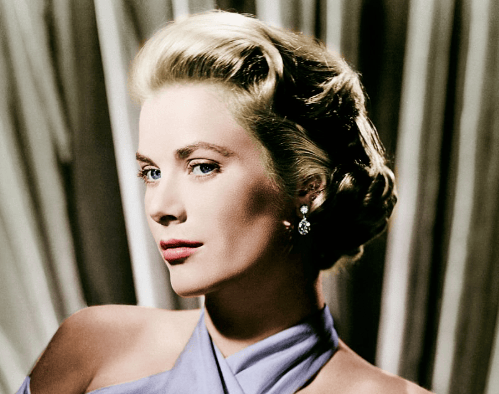
A minimalist, architectural approach to sculpting the face, long before, decades before social media turned contouring into a trend.
Grace Kelly’s beauty philosophy, as well as her regime was rooted in restraint. This is where modern contouring often relies on opaque creams, sharp lines and dramatic transformation. Whereas, Kelly’s method was the opposite of the modern version of contouring. Kelly’s light placement, soft shadow and bone‑structure enhancement rather than reinvention. Her look was built on precision, instead of product.
Grace Kelly’s contouring is a soft, two‑blush technique, which consisted of a cooler, deeper shade placed under the cheekbone to create shadow, then a lighter/rosier shade on the apples to lift and brighten, blended until invisible.

Below is the re-constructed, documented technique used by Kelly’s make-up artists in the 1950s, a method that has sustained flawlessly today.
1. Start With a Matte, Velvety Base
1950s cameras were un-forgiving, so actresses relied on matte foundations, to eliminate shine on screen, so the appearance is appeasing for the audiences, in addition to the screen, also happened to photographed cleanly. Kelly preferred a finish that looked like skin, not shine, the perfect canvas for subtle sculpting.
Modern translation
Use a satin‑matte foundation or skin tint. Avoid overly dewy formulas; they blur structure.
2. Contour With Shadow, Not Bronzer
Grace Kelly’s make-up artists used cool, taupe‑based shadows to mimic natural bone structure, as opposed to a sun‑kissed warmth.
Where the contour went:
- Under the cheekbone, but blended upward, not downward.
- Along the temples, kept extremely soft.
- Under the jawline, feathered to avoid harsh edges.
This created a lifted, aristocratic silhouette without visible “make-up.”
3. Highlight With Light, Not Glitter
Kelly’s signature radiance came from brightness, not from shimmer.
Her makeup artists used
Grace Kelly’s make-up artists used pale cream products, ivory matte powders and sometimes a touch of petroleum jelly for a subtle sheen (radiance), but never sparkle.
Placement:
Placement consisted of tops of cheekbones, bridge of the nose, brow bone and centre of the chin.
This created the illusion of sculpted bone structure through contrast alone.
4. The Grace Kelly Cheek Technique
Grace Kelly’s blush placement is one of the most iconic elements of her look.
She wore blush high, almost at the outer cheekbone, this would lift the face. The shade was typically used was a cool rose or a soft coral. This depended on the film lighting.
This placement kept her look youthful, refined and camera‑ready.
5. Precision Powdering
Instead of setting the entire face, Kelly’s artists powdered only where needed; sides of the nose, under the eyes and around the mouth.
This preserved dimension while keeping the make-up durable under hot studio lights.
6. The Finishing Touch: Symmetry
Grace Kelly’s beauty was defined by balance. Her make-up artists often made micro‑adjustments. These micro-adjustments included a slightly stronger contour on one side, a brighter highlight on the other, to create perfect symmetry on camera.
This is the part most people miss when re-creating Old Hollywood looks.
Why This Method Still Works Today
This method works today, because it is about architecture, as opposed to trends. The Grace Kelly method enhances the features she already posses, by using light and shadow the way a photographer or painter would.
At the end of the day, this contouring classic look of Grace Kelly’s was achieved long before bronzing powders ever came into the picture, but that doesn’t the technique hadn’t already been in existence.
Have you re-created the Grace Kelly contour method? Let me know, I’d love to hear from you!
I’m Stacey Hobbs, thanks for reading. Until next time!
do you feel fabulous today?
 Face by Stace