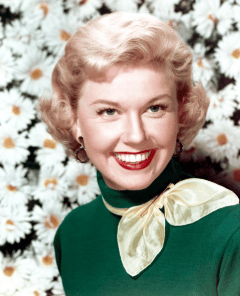
Doris Day’s wardrobe was never just clothing — it was cultural communication. Throughout the 1950s and early ’60s, Hollywood used her style to craft an image of innocence, optimism and approachable femininity. Day’s fashion projected a wholesome ideal that audiences instantly recognized: pastel dresses, pillbox hats, soft knits, tailored skirt suits, and playful pajamas that reinforced her girl‑next‑door charm.
Costume designers like Edith Head, Jean Louis, Bill Thomas, and Irene shaped her on‑screen identity through carefully curated looks. In Pillow Talk, Teacher’s Pet, and Lover Come Back, Day’s polished wardrobe communicated competence and independence while still preserving her “wholesome” persona — a cultural contradiction that defined her era.
Her clothes carried ideological weight. Feminine silhouettes, soft colours and immaculate grooming signaled moral clarity and emotional purity. Even when Day played career women navigating modern life, her wardrobe reassured audiences that she remained wholesome, cheerful and safe within traditional gender expectations. Critics later noted that her fashion reinforced mid‑century ideals of white femininity, shaping how innocence and desirability were visually coded in popular culture.
Yet Day’s style also empowered. Her tailored suits, crisp shirts and structured jackets were more for the modern working woman, influencing real‑world wardrobes and inspiring viewers to see professionalism and femininity as compatible.
Through fashion, Hollywood crafted innocence, and Day wore it with effortless grace.
I’m Stacey Hobbs, thanks for reading Face by Stace! Until next time.
do you feel fabulous today?

