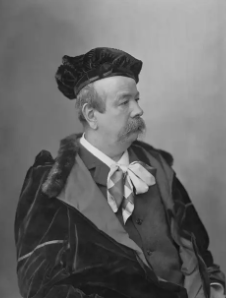
Haute Couture began not as an industry, but as a revolution — one led by designers who transformed dressmaking into an art form. In the mid‑19th century, Charles Frederick Worth reshaped fashion’s entire structure. Before Worth, women chose fabrics and commissioned anonymous seamstresses. Worth reversed the power dynamic. He designed the garment first, presented it on live models, and invited clients to choose from his vision. With this shift, the designer became the author of fashion, not the servant of it.
Worth’s salon in Paris became the epicenter of luxury, attracting royalty, aristocrats and international elites. His innovations — seasonal collections, signature silhouettes and the practice of signing garments — laid the foundation for modern couture. By 1868, the Chambre Syndicale de la Haute Couture formalized the system establishing Paris as fashion’s capital.
Paul Poiret carried the torch into the early 20th century, pushing couture into modernity. He rejected corsets, introduced fluid draping and infused his designs with global influences. Poiret understood fashion as lifestyle, expanding into fragrance, interiors, and branding long before such ideas were commonplace. His bold colours, exoticism and theatrical presentations positioned the designer as a cultural visionary.
Together, Worth and Poiret created the guide for the modern fashion house: a designer with a distinct look, a controlled atelier and a clientele seeking artistry rather than utility. Their work transformed clothing into identity, and Paris into the world’s couture capital.
Haute Couture wasn’t born from fabric — it was born from imagination.
I’m Stacey Hobbs, thak

