French‑inspired · Clean‑eating friendly · Beauty‑nutrition rich
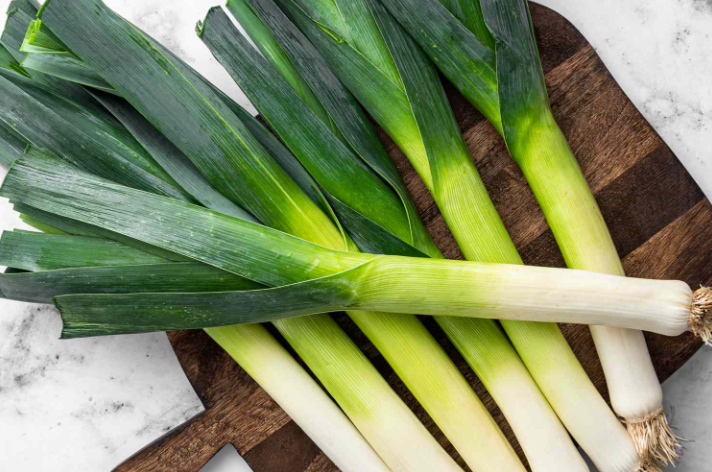
Leeks are one of the most refined vegetables in French cuisine — subtle, sweet, aromatic and beautifully versatile. Their pale green and white layers melt seamlessly into soups, veloutés, gratins, and braises, adding gentle allium warmth without overpowering a dish. They bring a soft, elegant perfume that instantly elevates everyday cooking into something bistro‑worthy. Whether used in rustic comfort dishes or polished French classics, leeks embody sophistication.
Beauty Benefits
Leeks are a glow‑supportive ingredient packed with complexion‑enhancing nutrients:
- Vitamin A precursors — encourage smooth texture and healthy cell turnover.
- Vitamin C — brightens skin and supports collagen formation.
- Antioxidants (kaempferol + polyphenols) — reduce inflammation and protect against environmental stressors.
- Sulfur compounds — support detoxification and clearer skin.
- Potassium — helps maintain hydration and reduces puffiness.
- Prebiotic fibre — nourishes gut health, directly improving skin radiance.
They’re one of the most beauty‑friendly alliums — gentle, nourishing, and ideal for glow‑forward recipes.
Health Benefits
Leeks are nutrient‑dense and supportive of overall wellness:
- High in prebiotic fibre — strengthens digestion and gut microbiome.
- Rich in antioxidants — reduces oxidative stress and inflammation.
- Heart‑healthy — folate, potassium, and polyphenols support cardiovascular balance.
- Immune‑supportive — sulfur compounds help fight pathogens.
- Blood‑sugar friendly — naturally low glycemic and stabilizing.
- Bone‑supportive — contain vitamin K for bone strength.
- Low‑calorie, high‑volume — ideal for clean‑eating and wellness‑forward cooking.
Substitutions
Leeks are unique, but here are the closest swaps depending on the recipe:
Closest Flavour Matches
- Shallots — delicate, sweet, perfect for French dishes.
- Green onions (scallions) — lighter, sharper, great for salads and garnishes.
- Sweet onions — stronger but workable for soups and sautés.
Storage
Leeks store beautifully when handled correctly:
- Refrigerator:
- Whole leeks: up to 2 weeks wrapped loosely in a damp paper towel.
- Cut leeks: 3–4 days in an airtight container.
- Freezer:
- Sliced leeks freeze well for up to 3 months (best for soups and sautés).
- Blanch before freezing for best texture.
- Prep Tip:
- Wash thoroughly — dirt hides between layers.
- Slice lengthwise and rinse under running water to remove grit.
History on Leeks
Leeks have one of the longest and most culturally rich histories of any vegetable in the allium family. They were cultivated over 4,000 years ago in ancient Egypt, where they were prized not only for their gentle flavour but also for their medicinal qualities. Egyptian laborers and royalty alike consumed leeks for strength, digestion, and respiratory health, and they appear in early hieroglyphic records as a valued crop.
From Egypt, leeks spread through the Mediterranean, becoming a staple in Greek and Roman cuisine. The Romans adored leeks for their refined flavour — milder than onions and garlic — and used them in broths, porridges and early versions of veloutés. Roman naturalist Pliny the Elder even wrote that leeks were favoured by Emperor Nero, who believed they improved his singing voice. This association with refinement and wellness carried leeks into European culinary tradition.
Leeks became deeply rooted in French cuisine, where their subtle sweetness and velvety texture made them essential in soups, gratins, braises, and classic dishes like potage parmentier (leek and potato soup). French cooking elevated leeks from a simple vegetable to a symbol of rustic elegance — an aromatic base that transforms dishes without overpowering them.
In Wales, leeks took on symbolic meaning. They became a national emblem, worn by soldiers in battle and celebrated in folklore, poetry and cultural tradition. Their resilience, simplicity and nourishing qualities made them a symbol of strength and heritage.
As global cuisine evolved, leeks found their way into Japanese, Korean, and Chinese cooking, where long alliums like negi and pa share similar flavour profiles. Today, leeks appear in wellness‑forward recipes, beauty‑nutrition dishes and clean‑eating cuisine.
Leeks have travelled through civilizations, cuisines and cultures, always maintaining their identity as a gentle, elegant, nourishing ingredient. Their history is long, layered, and deeply intertwined with both culinary tradition and holistic wellness.
Stacey Says: I love leeks as much as I love winter squash and soup.
I’m Stacey Hobbs, thanks for reading Face by Stace! Until next time.
do you feel fabulous today?

