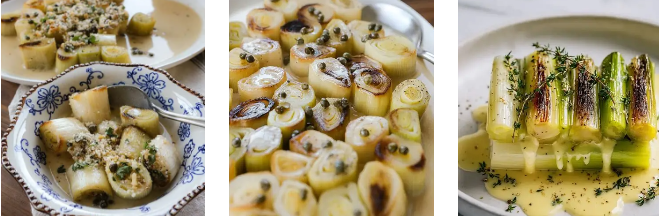
This classic French dish transforms humble leeks into something silky, aromatic, and effortlessly elegant. Slowly braised in white wine, broth, and fresh thyme, the leeks soften into tender layers that taste both delicate and deeply flavourful. A touch of Dijon or butter enriches the braising liquid, creating a glossy finish that feels straight out of a countryside bistro. This is the kind of recipe Pardon Your French excels at — simple ingredients elevated through technique, seasonality and sophistication. It’s gentle and comforting.
Prep 10 min Cook 30 min Serves 4
Ingredients
4 large leeks, trimmed and halved lengthwise
2 tbsp butter
1 tbsp olive oil
2 cloves garlic, minced
1/2 cup dry white wine
1/2 cup vegetable or chicken broth
1 tsp fresh thyme leaves
To taste Salt & pepper
Optional 1 tbsp Dijon mustard
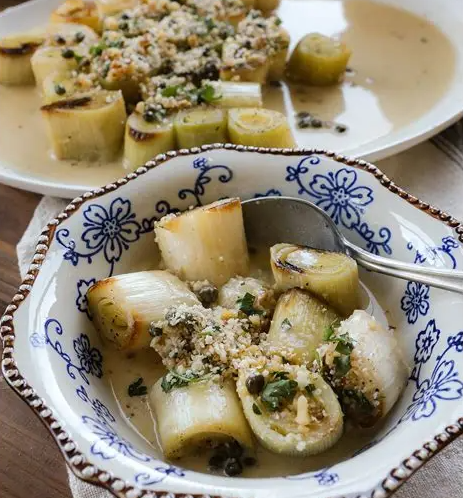
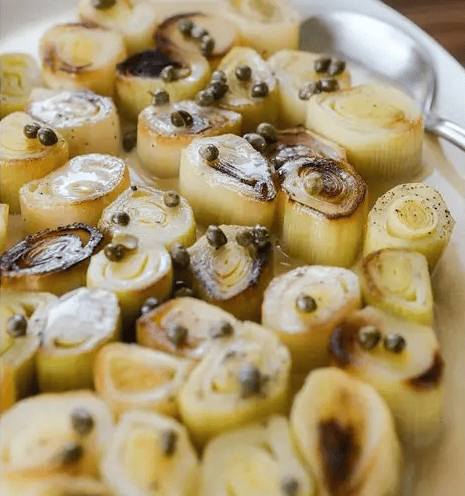
Optional Breadcrumbs or capers for garnish
Instructions
- Prep the leeks
Trim the dark green tops, slice leeks lengthwise, and rinse thoroughly between layers to remove grit. - Sauté aromatics
Warm butter and olive oil in a skillet. Add garlic and cook until fragrant, about 1 minute. - Add leeks
Place leeks cut-side down in the pan. Cook 3–4 minutes until lightly golden. - Deglaze
Pour in white wine and simmer 2 minutes to reduce slightly. - Braise
Add broth, thyme, salt, and pepper. Cover and simmer 20–25 minutes until leeks are tender. - Finish
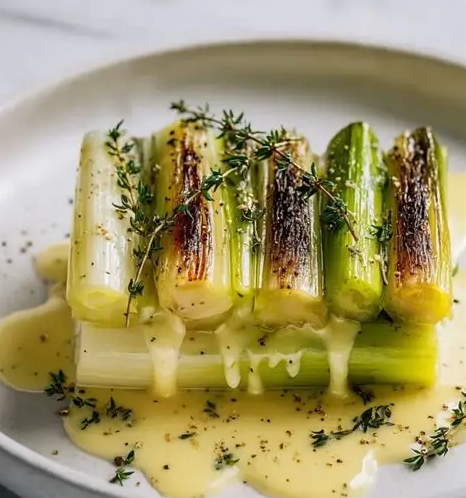
Stir in Dijon mustard if using. Reduce sauce uncovered for 2–3 minutes until glossy. - Serve
Plate leeks with sauce and garnish with breadcrumbs or capers.
Beauty Benefits
Leeks are one of the most complexion‑friendly alliums:
- Vitamin A precursors — support smooth texture and healthy cell turnover.
- Vitamin C — brightens skin and boosts collagen formation.
- Antioxidants (kaempferol + polyphenols) — reduce inflammation and protect against environmental stressors.
- Sulfur compounds — support detoxification and clearer skin.
- Potassium — helps maintain hydration and reduces puffiness.
- Prebiotic fibre — nourishes gut health, directly improving skin radiance.
The white wine braise adds polyphenols, and the olive oil or butter enriches the dish with healthy fats that support a supple, hydrated complexion.
Health Benefits
This dish is nutrient‑dense, gentle on digestion, and wellness‑forward:
- High in prebiotic fiber — supports gut microbiome and digestion.
- Rich in antioxidants — reduces oxidative stress.
- Heart‑healthy — folate, potassium, and polyphenols support cardiovascular balance.
- Immune‑supportive — sulfur compounds help fight pathogens.
- Low‑glycemic — stabilizes blood sugar.
- Low‑calorie, high‑volume — ideal for clean‑eating and beauty‑nutrition cooking.
The slow braise makes leeks easy to digest, making this a perfect dish for gentle, nourishing meals.
Substitutions
Leeks
- Shallots (sweeter, more delicate)
- Green onions (lighter, sharper)
- Fennel (aromatic, soft texture)
White Wine
- Dry vermouth
- Apple cider + splash of vinegar
- Vegetable broth + lemon
Thyme
- Tarragon (classic French herb)
- Rosemary (stronger, more rustic)
- Herbes de Provence
Butter / Olive Oil
- Ghee
- Vegan butter
- Walnut oil (adds a French countryside note)
Broth
- Vegetable broth
- Light chicken broth
- Mushroom broth (earthier)
Storage
- Fridge: 3–4 days in an airtight container
- Freezer: Up to 2 months (texture softens but flavor remains excellent)
- Reheat: Gentle warm‑through in a skillet or low oven
- Make‑ahead:
- Braise fully
- Store with its cooking liquid
- Reheat with a splash of broth or wine to revive glossiness
History
Leeks have been cherished in French cuisine for centuries, valued for their subtle sweetness and ability to elevate simple dishes through aroma and texture. In traditional French cooking, leeks often form part of the mirepoix or serve as the star of veloutés, gratins and braises. Braising leeks in white wine is rooted in classic French farmhouse cooking, where wine was used not only for flavour but also for tenderizing vegetables and creating silky sauces. Thyme, a staple herb in French kitchens, pairs naturally with leeks, adding a gentle earthiness that complements their mild allium character. This dish reflects the essence of French culinary philosophy: take a humble ingredient, treat it with care and transform it into something refined, comforting and luxurious.
I’m Stacey Hobbs, thanks for reading Face by Stace! Until next time.
do you feel fabulous today?

